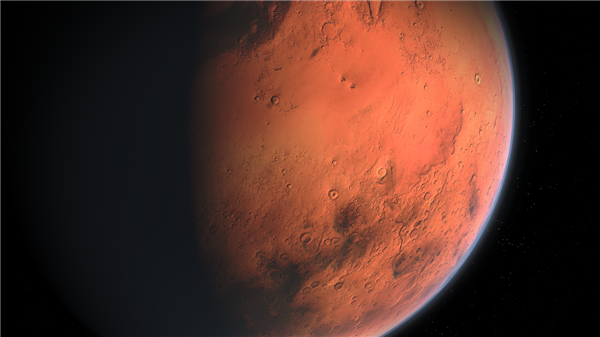
The Tianwen-3 mission of the planetary exploration project is planned to be launched around 2028 and will return to Earth with Mars samples around 2031.It is understood that the National Space Administration also released the selection results of the Tianwen-3 mission cooperation project today. The orbiter will carry three cooperative payloads.
The Mars PEX spectrometer, led by the Exploration Working Group of the International Committee for Space Research, is used to explore traces of life on Mars and detect mineral composition on the surface;
The Mars Molecular Ion Composition Analyzer, led by Macau University of Science and Technology, is used to detect the escape process of the Martian atmosphere;
The laser heterodyne spectrometer, led by the Chinese University of Hong Kong, is used to carry out the distribution of water isotope profiles in the Martian atmosphere and the detection of the Martian wind field.
According to Liu Jizhong, chief designer of the Tianwen-3 mission, the Tianwen-3 Mars sampling return mission has achieved breakthrough results in relevant key technologies through early technical research and in-depth demonstration.
He also revealed:"The Tianwen-3 mission is a very challenging, innovative and leading major aerospace project, and is expected to realize the first return of human samples to Mars.It will greatly promote the high-quality integrated development of space science, space technology and space applications, and fully demonstrate the creativity and international influence of the Chinese nation. "
The Tianwen-3 probe consists of a landing assembly (lander, ascender, server) and an orbit-return assembly (orbiter, returner).
Its scientific goal is to explore potential traces of life on Mars.Exploring the geological and internal structural characteristics of Mars, exploring the circulation and escape processes of the Martian atmosphere, and making major discoveries in the study of the habitability evolution of terrestrial planets.