NVIDIA is no longer content to dominate the global GPU data center market. The company said it now aims to become the world's leading CPU supplier. Chief Financial Officer Colette Kress announced the news during Nvidia's Q1 earnings call on Thursday. She said that the CPU market represents a total addressable market of $200 billion, and Nvidia has never been involved in this area before.
According to Kress, the company now expects standalone CPU revenue to be close to $20 billion this year, with all major hyperscalers and system makers working with Nvidia to deploy these chips.
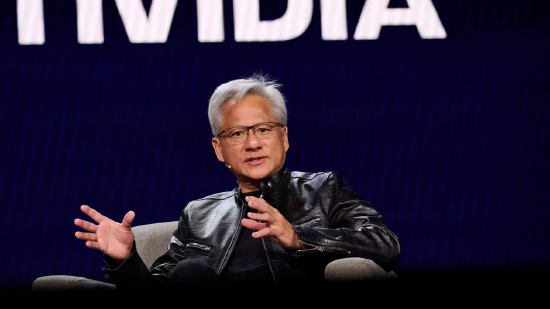
NVIDIA CEO Jensen Huang said on the earnings call: "The world is rebuilding computing architecture for agent-based AI and robotic physical AI. NVIDIA is at the center of these changes."
Graphics processing units (GPUs) make NVIDIA what it is today with its ability to train and run AI models. But as AI agents continue to explode in popularity, central processing units (CPUs) are quickly becoming an indispensable component of AI data centers.
Think of AI agents as semi- and fully autonomous digital assistants that can perform tasks such as sorting emails, browsing the web, and managing files. The GPU is responsible for running the actual AI model, and the AI agent relies on the CPU to perform these operations on your behalf.
Nvidia has been offering its own CPUs for years, mainly pairing them with GPUs for AI servers. The company's GB300 chip consists of a Grace CPU and two Blackwell Ultra GPUs. Likewise, its next-generation Vera Rubin superchip is made up of Vera CPU and Rubin GPU.
In March of this year, Nvidia announced that it would ship the first batch of CPU-only Grace servers to Meta, with plans to deploy Vera-only servers in 2027.
Huang Renxun said: "We will need more CPUs. Vera is designed to be an agent AI CPU."
Enthusiasm for CPUs has particularly benefited Intel, sending its stock soaring 222% year-to-date. But the company still faces resource constraints, with demand far outpacing supply.
Nvidia rival AMD also pointed to increased CPU demand in its latest financial report. The company said its EPYC CPUs and Instinct GPUs helped achieve $5.8 billion in revenue, a 57% increase year-over-year.