On May 25, at the International Circuit System Symposium ISCAS 2026 organized by the Institute of Electrical and Electronics Engineers (IEEE), Huawei's He Tingbo delivered a keynote speech titled "Exploration and Practice of New Paths for Semiconductors" and published the Tao (τ) law, a new principle for the development of the semiconductor industry.
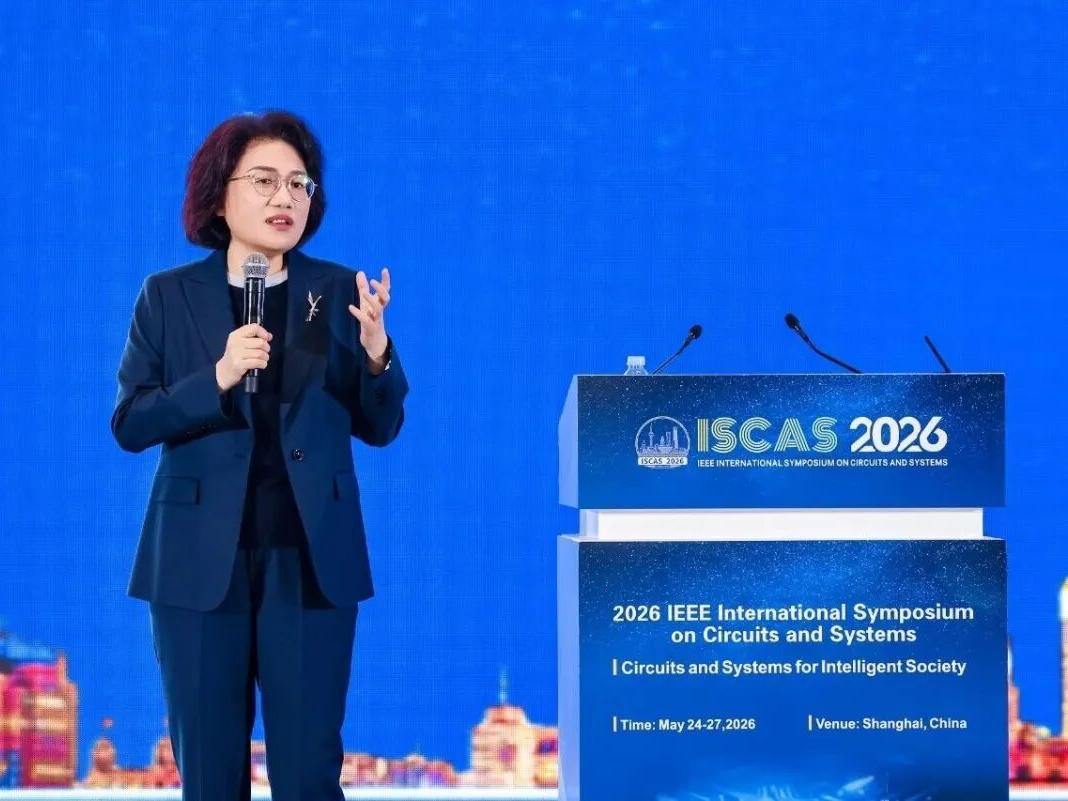
According to the content of the speech, Tao's (τ) law proposes to replace "geometric shrinkage" with "time (τ) shrinkage" as a new guiding principle for the evolution of semiconductor and electronic systems. Through innovative technologies such as logic folding, signal propagation delays will continue to be compressed and transistor density will continue to increase, thereby achieving the continued evolution of semiconductor and electronic systems.
In recent years, Moore's Law, which has dominated the semiconductor industry for more than half a century, is facing severe physical limits and economic benefits. Faced with development difficulties such as the slowdown in transistor geometry shrinkage and the fading of transistor cost dividends, how to overcome the limitations of traditional process paths and explore a new sustainable evolution route to meet the current exponentially rising computing performance needs has become a common problem that the global semiconductor industry needs to overcome.
Core technologies such as "Logic Folding" proposed by Huawei have built a multi-level collaborative optimization system that runs through devices, circuits, chips and system levels. This system aims to systematically reduce the time constant τ and aims to drive continuous improvements in performance, energy efficiency, and transistor density at all levels.
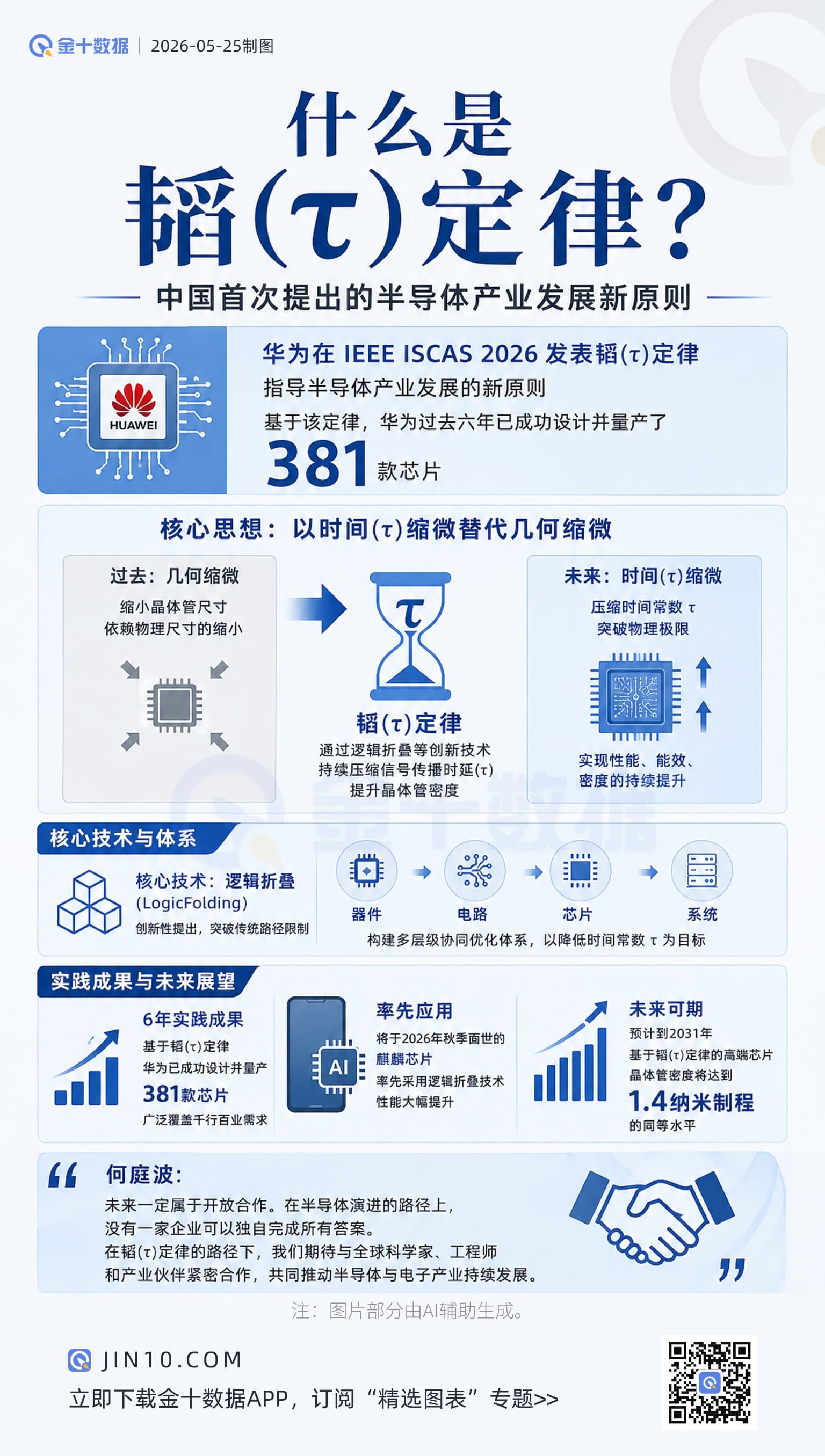
In this keynote speech, He Tingbo explained in detail how Huawei applies Tao (τ) law to the practice of smartphones and AI computing. In the past six years of practice, based on Tao's (τ) law, Huawei has successfully designed and mass-produced 381 chips, widely covering the needs of thousands of industries. Among them, the Kirin chip, which will be launched in the autumn of 2026, is the first to adopt logic folding technology. It is expected that by 2031, the transistor density of high-end chips based on Tao (τ) law will reach the same level as the 1.4nm process.
Facing the future, He Tingbo said: "The future must belong to open cooperation. On the path of semiconductor evolution, no one company can complete all the answers alone. Under the path of Tao (τ) Law, we look forward to working closely with global scientists, engineers and industry partners to jointly promote the sustainable development of the semiconductor and electronics industry."
In early trading that day, Huawei Pangu Concept opened higher, Mei Ansen opened higher at 20CM, Yunding Technology opened higher, HKUST Automated opened higher by more than 23%, Yidian Tianxia, Jiulian Technology, and Nanwei Software opened higher.