The 19.9 yuan "MIMI" card comes with the letter "UU", which can be pasted on to "transform" into a high-imitation "MIUMIU" big-name accessory worth more than 3,000 yuan. Recently, this short video went viral on the platform. The hot sales of this counterfeit product has also torn open the veil of secrecy surrounding the proliferation of high imitations of luxury goods.
On the eve of "6·18", the "Quick Test" studio unboxed a variety of counterfeit big-name products from Taobao, Douyin, Weidian, Pinduoduo and other platforms, and tested various routines in the gray industry chain. We found that on the above-mentioned platforms, after searching for keywords related to counterfeit goods, the platform will continue to push similar high-imitation products; sometimes when searching for genuine products, the first thing that pops up is also fake.
On the other hand, merchants are taking advantage of loopholes and relying on superficial titles such as "same model", "niche replacement" and "mixed back" and real photos with big-name logos hidden to accurately attract traffic. The counterfeiting routines have also been updated. In addition to forging counter shopping receipts and homemade fake anti-counterfeiting chips, there are also merchants selling high imitation products that are different from the big-name logos and providing DIY rebranding tutorials, all in layers of disguise.
Intellectual property lawyers reminded that merchants using fancy disguises to sell high-imitation products and clinging to the goodwill of famous brands have constituted trademark infringement and unfair competition. If the amount involved reaches the standard, they may be subject to criminal liability. Platforms allow fake products to be arbitrarily diverted by algorithms and neglect risk control and interception. They must be jointly and severally liable according to law.
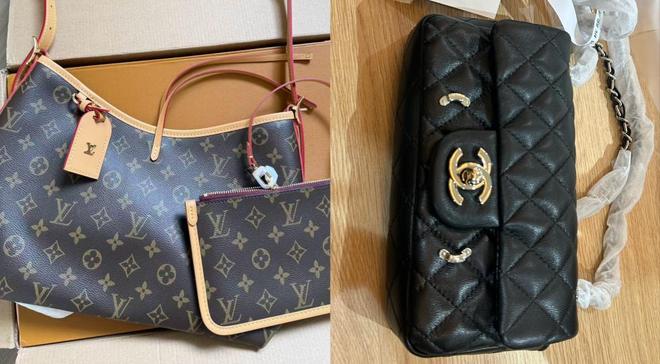
Some high-imitation bags are equipped with anti-counterfeiting cards, while others guide consumers to DIY their bags, turning the bags into "high-imitation" brands.
Is the platform algorithm pushing mixed fakes? Merchant labels are also playing tricks
The "Test Now" studio purchased "high imitation" big-brand bags, shoes, scarves, necklaces, hats and other products on Taobao, Douyin, Weidian, and Pinduoduo, and tested the routines from ordering to unboxing.
We found that on the Taobao platform, a Chanel imitation wallet priced at 239 yuan is very representative. The product recommendation label deliberately avoids the brand name and only labels "small fragrance". However, the image on the product homepage uses the original image of a Chanel replica bag, with only the double C logo lightly coded. Consumers can still clearly identify the imitation brand. When the reporter opened the box and tested it, he found that this wallet has simple packaging and rough interior workmanship, making it a typical "fake at first glance" product.
Many imitations of luxury goods on the Douyin platform also use the label-edged sales method. A contrasting color peaked cap priced at 65 yuan, the product label is marked as "MIU's same contrasting color peaked cap". The name of the big brand is not directly marked, but the product body is printed with a clear "MIUMIU" logo, and only the name of other studios is marked on the inner label, confusing consumers' judgment.
There is another necklace priced at 128 yuan. The platform label only states "copper alloy necklace, single flower red four-leaf clover necklace" without any brand name. It is actually an imitation of Van Cleef & Arpels' classic style. The unboxing product comes with a complete gift bag, packaging box and supporting card. The card also advertises that the merchant sells "top" versions of watches, jewelry, glasses, and bracelets from major luxury brands. However, the necklace itself has a rough texture and is obviously different from the original product.
The counterfeit selling routines on the Weidian platform are exactly the same. A counterfeit Gucci sneaker priced at 188 yuan. On the product homepage, relevant words such as "Gucci dirty shoes Gucci/Gucci small dirty shoes Gucci Screener series dirty shoes g family small dirty shoes couple shoes" are directly linked to the IP of a big brand.
There is also a Chanel imitation scarf. The product label only plainly states "Double-sided wool diamond scarf black/navy blue/black apricot/grey" without any brand information, but the image displayed on the homepage directly uses the imitation image with the Chanel logo.
When the reporter searched for the above-mentioned "high imitation" big brands, he found that on the above-mentioned platforms, sometimes when searching for authentic products, the first thing that pops up is also fake; after searching for fake-related keywords once, the platform will continue to push similar high-imitation products; there are also platforms that allow fake products to be diverted by algorithms.
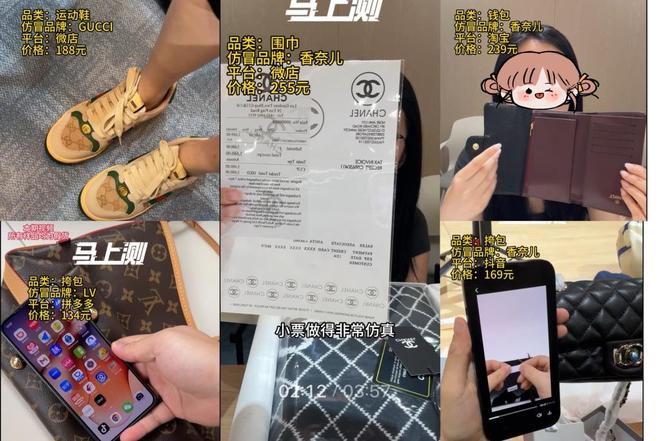
After receiving the goods, I found that many of the imitations were fully packaged and even came with shopping receipts.
High imitation routines are renovated layer by layer, and the multiple disguises are extremely confusing.
In addition to labeling to attract traffic, counterfeit sellers on major platforms have created a variety of new counterfeiting routines such as full camouflage, DIY rebranding, and false traceability. The degree of simulation of high-imitation products continues to increase, which is extremely confusing.
For example, during the actual unboxing test, we found that the fake Gucci dirty shoes purchased from Weidian for 188 yuan had complete fake and disguised details. The product arrived with a complete packaging bag, service card and product label. Scan the QR code to jump to the official Gucci website. However, the color of the outer packaging box of the shoes is obviously different from the original ones, and it is accompanied by a strong smell. The merchant bluntly stated that this product is a high-end version of a one-to-one counter replica, with stable sales and a large number of customers.
The imitation Chanel scarves in the Weidian store are even more "fine", replicating the full set of supporting materials of the genuine product, including boxes, tags, and consumer receipts. The attached shopping receipt contains detailed information, with a price tag of HK$3,680. The fictitious purchase store is Ngee Ann City in the Nathan Road business district in Tsim Sha Tsui, Hong Kong. Details such as the name of the shopping guide and the last four digits of the credit card number are also filled in.
Our actual measurement found that the texture and pattern of this scarf are highly authentic, and it would be difficult for ordinary consumers to distinguish them without professional identification. After verification by reporters, Ngee Ann City is actually located in Singapore, not the Hong Kong area marked on the receipt, and the shopping information is completely forged.
DIY manual rebranding is another hidden counterfeiting routine. Similar to the "MIMI" card that came with the letters "UU" changed to "MIUMIU", we purchased a product labeled "Mid-century Mini CF Crossbody Bag" on the Douyin platform. The Chanel logo was hidden in the main image of the merchant's homepage, and only in the comment area did a user post a bag with the Chanel logo.
After purchasing and opening the box, the reporter found that the original locks of the product were two nested "O" shapes without any big-name logos, but the inner packaging came with an exclusive DIY tutorial card.
After the reporter consulted the customer service, the other party sent a detailed DIY transformation video and text tutorial to guide consumers to "deduct" the "double C" logo. The reporter followed the tutorial and verified that the double "O" edge can be disassembled with only slight force, and the original lock can be easily transformed into an imitation of Chanel's "double C" logo.
On the Pinduoduo platform, high imitation bags with fake chip traceability appeared. The reporter actually purchased an imitation LV bag. The product packaging is complete, the workmanship is lifelike, and the overall simulation is extremely high. The merchant claims that the bag comes with its own anti-counterfeiting chip and supports mobile phone sensor traceability. In the actual test, when the mobile phone was placed close to the bottom of the bag, the traceability page and detailed traceability information could indeed pop up successfully. However, the reporter further checked and found that the traceability website has not been registered with the Ministry of Industry and Information Technology.
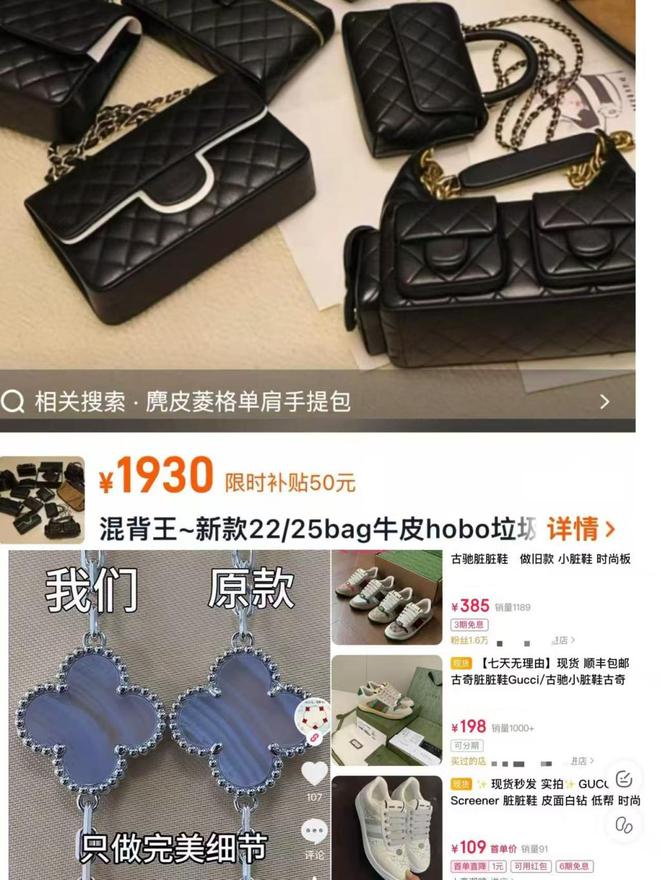
Actual testing on multiple e-commerce platforms found that fake products appeared when retrieving genuine products from big brands; after retrieving fake products once, the platform continued to push streams. Merchants use labels such as "mixed back", "reproduction" and "1:1" to attract traffic.
Expert: It is illegal for merchants to sell high imitations and "edge products", and platforms should also bear joint and several liability
In response to the above situation, Yang Yong, a researcher at the Institute of Intellectual Property Law and Policy at East China University of Political Science and Law, believes that merchants avoid platform review through borderline labels and obscure copywriting such as "Xiaoxiang model" and "Same model", and sell big-name imitations with high-imitation main images, or do not directly label the full name of the brand, but use borderline text and separation of pictures and texts to deliberately mislead consumers. The behavior of consumers is false propaganda and constitutes trademark infringement and unfair competition; on the other hand, merchants who implement trademark infringement and unfair competition need to bear corresponding civil, administrative and even criminal responsibilities: Finally, if merchants sell big-name imitations, and the circumstances meet legal standards, they will violate the criminal law and need to bear corresponding criminal liability.
Is it an infringement if a merchant sells basic products without big-name logos, and the accompanying tutorials guide consumers to manually DIY modifications and change the logos into high-quality imitations of big-name products?
Yang Yong said that this still constitutes trademark infringement and unfair competition. According to Article 48 of the Trademark Law, the use of a trademark is not limited to the product itself or a specific link, but must be analyzed from the overall process of commercial activities.
"Whether the merchant is directly selling OEM products or assisting in OEM after sales, they are essentially using the trademark in commercial activities, and the sales behavior ends after the OEM assistance is completed." Yang Yong mentioned that, therefore, the merchant's after-sales OEM behavior is trademark use within the meaning of the "Trademark Law" and constitutes trademark infringement. Article 57 of the Trademark Law stipulates that anyone who intentionally provides facilities for infringement of the exclusive rights of others to use a trademark and helps others to infringe the exclusive rights of a trademark constitutes trademark infringement. After-sales OEM is essentially a business that provides convenience to consumers and uses the behavior of consumers to complete trademark infringement. According to the aforementioned second relevant provisions of the Anti-Unfair Competition Law, the after-sales OEM behavior of merchants clings to business reputation and constitutes unfair competition.
Regarding the behavior of merchants to create the illusion of authenticity through false registration and traceability URLs, forged counter receipts, fictitious store information, etc., in addition to constituting trademark infringement and unfair competition, it may also involve a variety of criminal liabilities: If the sales amount and illegal profits of the merchant involved reach the legal standards, it may constitute the crime of counterfeiting a registered trademark or the crime of selling goods with counterfeit registered trademarks; If a merchant forges counter receipts and traceability certificates and also forges company or corporate seals, it may constitute the crime of forging the seals of companies, enterprises, institutions, and people's organizations; merchants who forge and imitate official traceability websites and registration qualifications, if the circumstances are serious, may also constitute the crime of illegal use of information networks.
Yang Yong mentioned that if ordinary consumers buy such fake goods, they can rely on the provisions of Article 55 of the "Consumer Rights Protection Law": "If an operator commits fraud in providing goods or services, he shall increase the compensation for the losses suffered by the consumer according to the consumer's request. The amount of the increased compensation shall be three times the price of the consumer's purchase of the goods or the fee for receiving the service; if the amount of the increased compensation is less than 500 yuan, it shall be 500 yuan" and claim a refund of 30% from the merchant. If major e-commerce platforms fail to fulfill their audit and interception obligations, they shall bear joint and several liability with the seller or service provider in accordance with the law.