Apple's next-generation flagship mobile chip A20 Pro has undergone significant adjustments in packaging structure and heat dissipation path. Its design concept is highly similar to the "Side-by-Side (SbS) architecture of Samsung's Exynos 2700. It is regarded as an important signal for the significant improvement in the overall heat dissipation capabilities of the iPhone 18 Pro series.Apple has always been a leader in the field of self-developed chips, but the packaging and heat dissipation solutions of the A20 Pro clearly draw on Samsung’s recent innovative practices in mobile processor packaging.
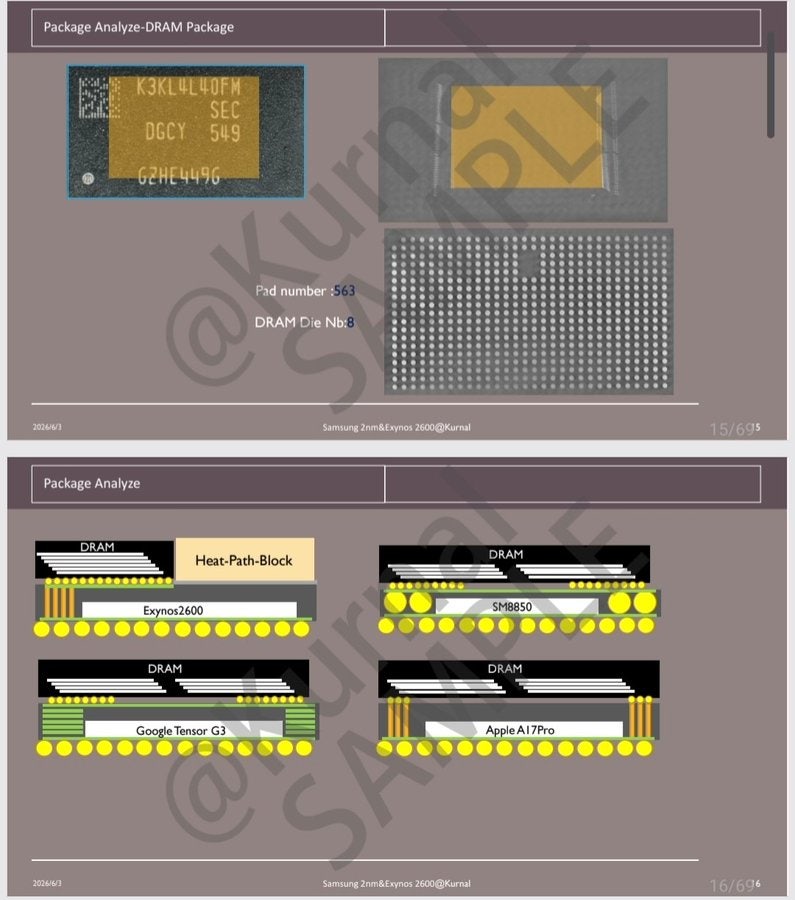
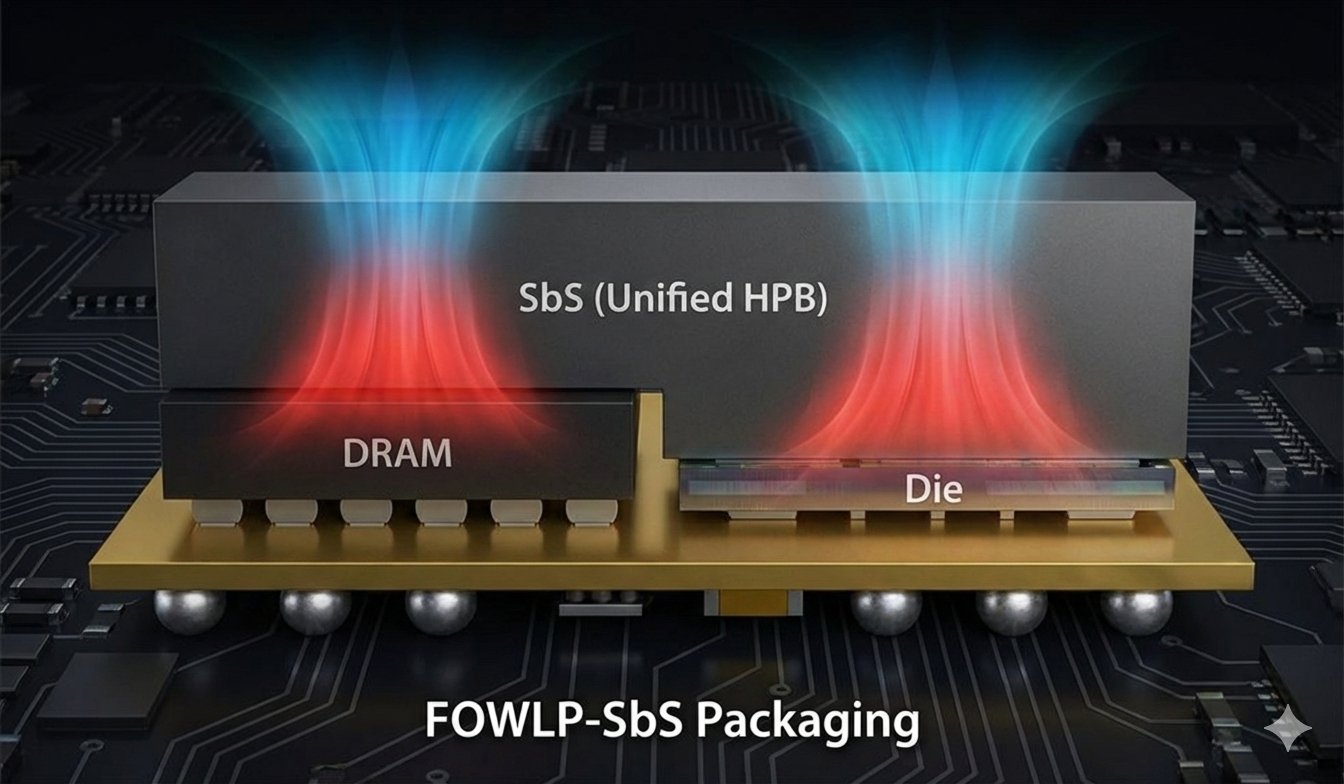
Samsung previously broke the traditional mobile chip packaging model on the Exynos 2600, stacking DRAM directly on some application processors (APs), and equipped it with a copper-based heat dissipation structure "Heat Path Block (HPB)" (HPB) next to it to improve heat conduction and heat dissipation efficiency. With the Exynos 2700, Samsung has further evolved into the FOWLP-SbS (fan-out wafer-level package side-by-side architecture) design, which places DRAM and AP in a "side-by-side" manner, and uses a larger area of HPB to cover the core chip and memory at the same time, thereby significantly improving heat dissipation capabilities.
Apple's upcoming A20 Pro has many similarities with the Exynos 2700 in terms of packaging ideas: it uses a Wafer-Level Multi-Chip Module (WMCM) package, placing the DRAM next to the chip core instead of the traditional "stacked on top" layout. External analysts believe that such a side-mounted DRAM layout frees up more vertical space for the A20 Pro chip body, allowing it to directly contact the vapor chamber or heat dissipation cavity on the top, thus significantly improving the thermal conductivity efficiency in the heat-concentrated area.
Well-known whistleblower Vadim Yuryev said on social platforms that the A20 Pro's WMCM package allows the RAM to be located next to the chip, while the A20 Pro core is in direct contact with the top vapor chamber, which means that the iPhone 18 Pro will usher in a "huge increase in heat dissipation capacity." He also said that Apple finally adopted an "outward-facing SoC layout" and a new packaging solution on the iPhone 18 Pro, providing a more favorable hardware foundation for high-performance release.
However, unlike the HPB of Samsung Exynos 2700, which covers DRAM and the core chip at the same time, the report pointed out that the A20 Pro's vapor chamber is currently only in direct contact with the core of the chip, and the DRAM is not covered by the same heat dissipation structure. This means that Apple prioritizes thermal management in the core area of the processor in its cooling strategy, rather than co-processing it with memory, forming a slightly different path choice from Samsung.
Another major advantage that WMCM packaging brings to the A20 Pro is the ability to integrate multiple functional modules, such as CPU, GPU and neural network engine, in a single package in a "chiplet" manner. This multi-chip combination model provides higher configuration flexibility, allowing Apple to use unit chips of different sizes and different processes in the same package to optimize performance, power consumption and cost balance. It is generally believed that the A20 Pro will use this packaging strategy to provide the iPhone 18 Pro series with greater expansion space in terms of graphics performance and AI reasoning capabilities, while supplementing it with a stronger heat dissipation design to reduce the pressure of frequency reduction under sustained high loads.
Overall, with Samsung taking the lead in implementing the FOWLP‑SbS architecture on the Exynos 2700 and using a larger HPB to cover both DRAM and core chips, Apple’s A20 Pro’s design of side-mounted DRAM and vapor chambers directly connected to the core reflects the convergence and competition between the two manufacturers in high-end mobile SoC cooling solutions. As leaked information related to the iPhone 18 Pro continues to increase, the industry generally expects that the temperature control performance and overall user experience of the phone will undergo significant upgrades in high-performance long-term output scenarios, and the new packaging and heat dissipation path of the A20 Pro are regarded as the key technical basis for this change.