AMD has provided new technical support for rumors about the next-generation PlayStation 6 portable handheld console: a latest Linux kernel patch from AMD engineer Vishal Badole shows that the kernel has now added support for the "Zen 6 LP" low-power core, which is highly consistent with previous reports that the PS6 portable handheld console will use a Zen 6c processor and be equipped with a Zen 6 LP core.
Previously leaked information stated that the Canis APU inside this handheld machine will use a Zen 6c CPU, including four Zen 6c cores and two Zen 6 LP cores. Now that relevant support has appeared in the Linux kernel code, the credibility of this configuration has been further enhanced.
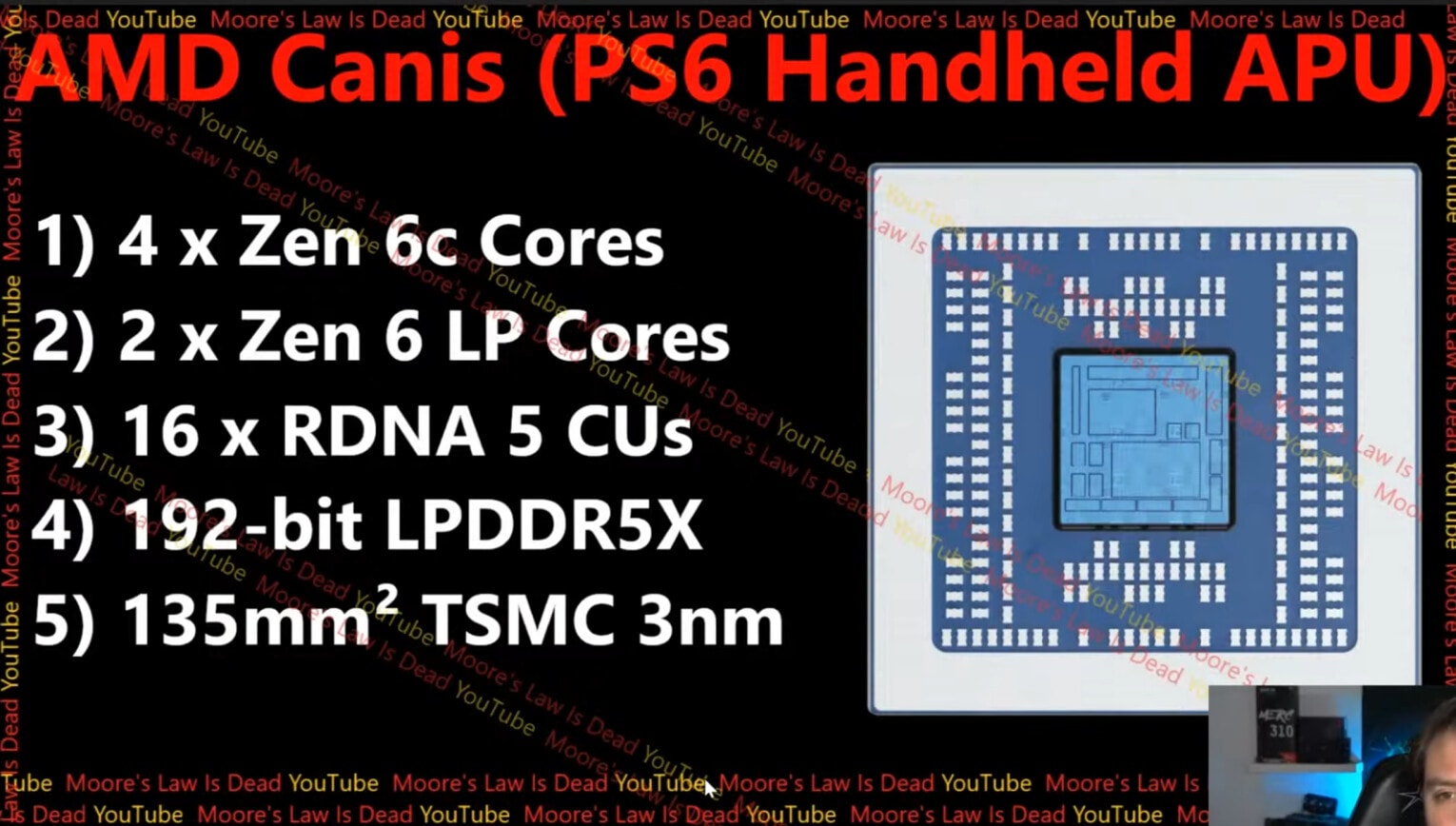
According to this patch note submitted to the Linux kernel mailing list, AMD has expanded the cpu_type classification in the x86 topology, adding a new "Low Power core" type in addition to the original performance core (Performance) and efficiency core (Efficiency). AMD pointed out in the description that its heterogeneous processors will report the core type through CPUID Fn0x80000026 EBX bits 31:28 (the core type field in the extended CPU topology), where the value 2 is defined as the "low-power core", which is designed to achieve extremely low energy consumption under background tasks or idle loads. This has also become an important basis for the industry to link it with the Zen 6 LP core.
The article points out that the description of "minimal power consumption" in this patch clearly points to Zen 6 LP, a new core category, which means that AMD is moving from the existing dual-core type heterogeneous architecture to a more complex multi-type design. Previously, AMD's heterogeneous solutions on desktop and mobile platforms mainly used two cores, Zen 5 and Zen 5c. In multiple rounds of rumors surrounding the future Medusa Point APU, information about Zen 6 and Zen 6c cores has appeared. Now, Zen 6 LP, as the third core type, has also been named in public Linux kernel support for the first time, making AMD's overall roadmap for the Zen 6 generation gradually clear.
Among the revelations about the PlayStation 6 portable handheld console, Canis APU is currently the only product codename that clearly mentions that it contains the Zen 6 LP core. Until the release of this Linux kernel patch, Zen 6 LP only existed in various unofficial news. pointed out that the addition of kernel support this time undoubtedly adds "technical evidence" to the previously leaked information about the internal architecture of the PS6 handheld console, giving the outside world more reason to believe that Sony is creating a truly independent portable gaming hardware for the PS6 generation, rather than a simple remote streaming terminal. At the same time, Sony has repeatedly hinted in public that it is promoting an independent handheld project for the PS6 generation. The two echo each other, making the industry's expectations for this device continue to heat up.
However, the report also emphasized that although support for the Zen 6 LP core type appears in the Linux kernel, it cannot be regarded as a formal confirmation of Sony’s hardware planning. In the highly volatile gaming hardware market environment in recent years, there is great uncertainty in chip supply, cost structure and product positioning. Even if corresponding architectural support emerges, actual commercial products may still undergo major adjustments before finalization. Therefore, all current statements about the PlayStation 6 portable handheld console still remain at the level of "rumors and signs", and are still some way away from the full official specification release and hardware debut.
Combined with previous leaks about the PS6 console platform, it is reported that the new generation of PlayStation will achieve 4K 120 frame output in most games and improve performance by 6–12 times compared to PS5 in terms of ray tracing. These revelations, together with the emergence of Canis APU and Zen 6 family core, constitute the technical imagination space of the future PS6 ecosystem. With the official support of Zen 6 LP in the Linux kernel, the industry's expectations for AMD to promote the Zen 6 series and multi-core heterogeneous layout on 2 nm and 3 nm process nodes have further increased. The possibility of cooperation between Sony and AMD on next-generation game consoles and handheld consoles continues to attract attention.