Antares (Antares Nuclear), a micro-nuclear reactor start-up, officially announced on Monday the completion of a US$470 million Series C financing. The funds raised will be used exclusively to develop small nuclear reactors for US military bases. This round of financing was led by Paradigm and Caffeinated Capital, with participation from Institutions such as Industrial Ventures, Point72 Ventures and Shine Capital.
The financing amount includes US$370 million in equity financing and US$100 million in debt financing. Driven by the boom in the construction of artificial intelligence data centers and the demand for power grid expansion across society, the capital market's enthusiasm for investment in advanced nuclear energy start-ups continues to rise.
Currently, Antares is developing a modular microreactor (SMR) with a power range of 100 kilowatts to 1 megawatt, with an output power sufficient to meet the daily power needs of up to 750 households.
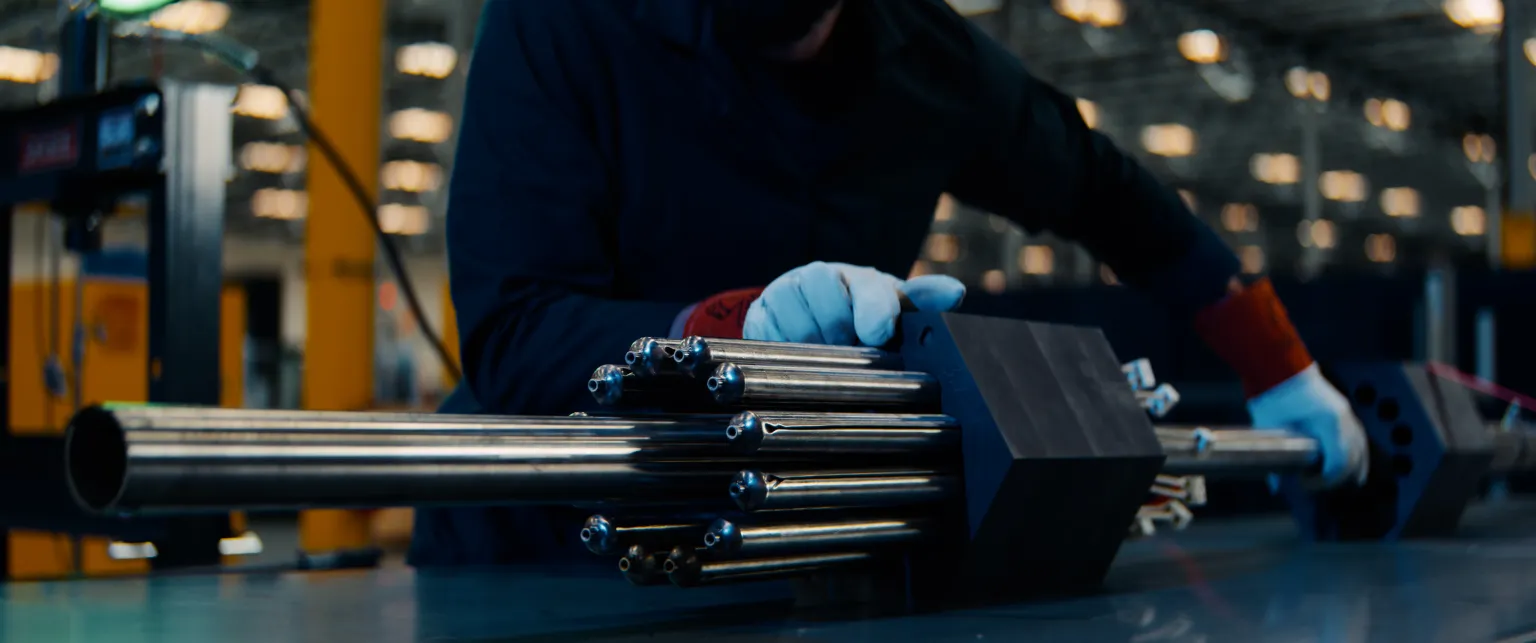
Like many advanced nuclear energy startups, Antares' reactor uses TRISO coated pellet fuel. This technology wraps uranium material in a protective layer of carbon and ceramics. It is about the size of a billiard ball and can be cooled with helium or molten salt. It can effectively prevent fuel meltdown at extremely high temperatures and has long been regarded as a safer option than traditional nuclear fuel. On June 4 this year, Antares’ technology verification reactor Mark-0 successfully achieved criticality at the Idaho National Laboratory in the United States.
With this technology, Antares has been successfully shortlisted as one of the three final candidates for the U.S. Department of Defense's "Base Advanced Nuclear Power" project, which plans to carry out testing of small modular reactors at U.S. Air Force bases in Colorado and Montana. According to the plan, Antares plans to put its first power generation reactor online next year and officially deploy it to a US military base in 2028.
Faced with the explosive power shortage in data centers and the electrification transformation of the entire society, venture capital institutions are accelerating their influx into the field of nuclear fission. In addition to Antares, X-energy has raised US$1 billion through an initial public offering (IPO) in April this year, and companies such as Radiant Energy, Standard Nuclear and Last Energy have also received hundreds of millions of US dollars in financing since December last year. Including the US$96 million Series B financing completed in December last year, Antares’ cumulative financing has reached US$604 million.
However, advanced nuclear energy startups still face multiple challenges on the road to commercialization, including immature local supply chains and difficulty in large-scale production. Although many SMR companies emphasize that batch manufacturing can significantly reduce costs, this scale effect usually takes at least ten years to appear, and no company has yet entered this stage.
Industry analysts predict that the first batch of SMRs is expected to be put into use in the early 2030s, but it will be difficult to compete with mainstream new power plants in terms of cost in the short term. According to energy consultancy Lazard, the cost of generating electricity from new SMRs is about $214 per megawatt hour, which is higher than that of most gas turbines. Although Antares has not disclosed its pricing strategy, it is generally believed in the industry that choosing to promote its products to US military customers who are relatively price-insensitive is an important commercial consideration in response to the high-cost reality of the market.