
Abstract:
New research shows that as more consumers use buy now, pay later (BNPL) services, retailers are raising list prices to expand profit margins and offset handling fee costs. Approximately one out of every three people in the grocery store checkout line has used apps such as Klarna and Affirm to purchase daily necessities such as fruits and vegetables, milk, and eggs in installments. Economist research has found that this kind of buy-now-pay-later behavior could drive up grocery prices for everyone.
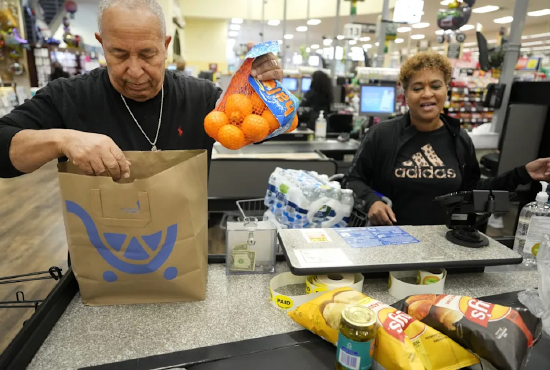
A paper from Washington University in St. Louis (to be published in the next issue of the Journal of Administrative Science) shows that as more and more consumers resort to buy now, pay later to buy daily necessities, retailers may choose to increase the price of goods and reduce inventory at the same time.
Instalments are increasingly being used for this type of small-amount consumption. A July LendingTree survey of more than 6,000 U.S. consumers found that 29% of Americans reported using buy now, pay later loans to buy groceries, nearly double the 14% two years ago.
Behind this is a major social trend: medical and childcare expenses are rising, coupled with high inflation. Buy now, pay later, is becoming more and more attractive to consumers. 91.5 million Americans have used apps such as Klarna, Affirm, and Afterpay to make installment purchases. Buy now, pay later transactions continue to grow but currently account for only about 1% of total credit card transactions, according to data from the Federal Reserve Bank of Richmond.
Panos Cuvelis, professor of supply chain, operations and technology at Washington University’s Olin Business School, led the research. Retailers need to pay merchant fees every time they complete a buy now, pay later order. The research team hopes to clarify what factors make this model still attractive to retailers. The research team built an economic model that not only incorporated consumers' willingness and ability to pay using buy now, pay later, but also measured the expected profits of retailers. Research has found that retailers will increase product prices to offset merchant fees charged by the platform. This means that some consumers who pay in full are actually subsidizing users who buy in installments, and ultimately
all consumers will have to face higher product prices
.Cuvelis said in an interview with Fortune: "Retailers who accept this type of installment payment method will raise the price. To put it bluntly, all of us have to pay for this type of business practice."
Why buy now, pay later hurts both consumers and retailers
Consumers are increasingly relying on loans to pay for basic necessities such as groceries, and retailers are under intense pressure to raise prices. Buy now, pay later was originally positioned for large non-essential purchases such as furniture and game consoles. This type of product has a higher profit margin, and even if the retailer pays the installment fee, it is still profitable. However, for commodities such as groceries, which are in urgent need, their profit margins are very slim.
Changes in consumer consumption patterns not only reflect economic pressure, but are also not a good thing for retailers. In order to maintain the already slim profits of essential categories, retailers are forced to increase prices. If some products become unprofitable, retailers may simply remove them from the shelves, further reducing consumers’ purchasing space.
Cuvelis said: "Why would retailers still do this business? Unless they expect consumers to buy a bunch of other products along the way and make money on other products."
The hidden risks of buy now, pay later
Consumers using installment services to purchase daily necessities also bring more hidden worries. There has been a long-standing lack of supervision on this financial technology product, and platforms generally did not report related debts to credit reporting agencies in the past. Kuvelis explained that this has resulted in some consumers carrying a large amount of “hidden debt” and may hold 5-10 buy now, pay later loans at the same time. LendingTree data shows that 47% of buy now, pay later users have been late on repayments in the past year.
Admittedly, the overall size of this type of debt is not huge, and consumers often prioritize repaying short-term installments. But Kuvelis pointed out that even if there is no widespread economic impact, the potential risks to consumers and retailers of buy now, pay later are real.
“The risk exists objectively,” he said. “Some people living on the edge of their income and expenditure have over-borrowed, and the outside world knows nothing about it. This is very dangerous for them, and debt problems will explode sooner or later... For retailers, such customers will compress corporate profits and directly affect profitability.”
Comments