
Abstract:
A tree unique to Brazil's Atlantic Forest has been discovered by scientific researchers to contain a natural "weapon" against the new coronavirus. A joint research team from the Ribeirão Preto School of Pharmaceutical Sciences of the University of São Paulo and the Delta University of Science and Technology in Egypt confirmed that galloylquinic acids extracted from the leaves of Copaifera lucens Dwyer can simultaneously block the life cycle of the new coronavirus from multiple links and have the comprehensive effect of mitigating dangerous immune reactions. The results were published in the international academic journal Scientific Reports.
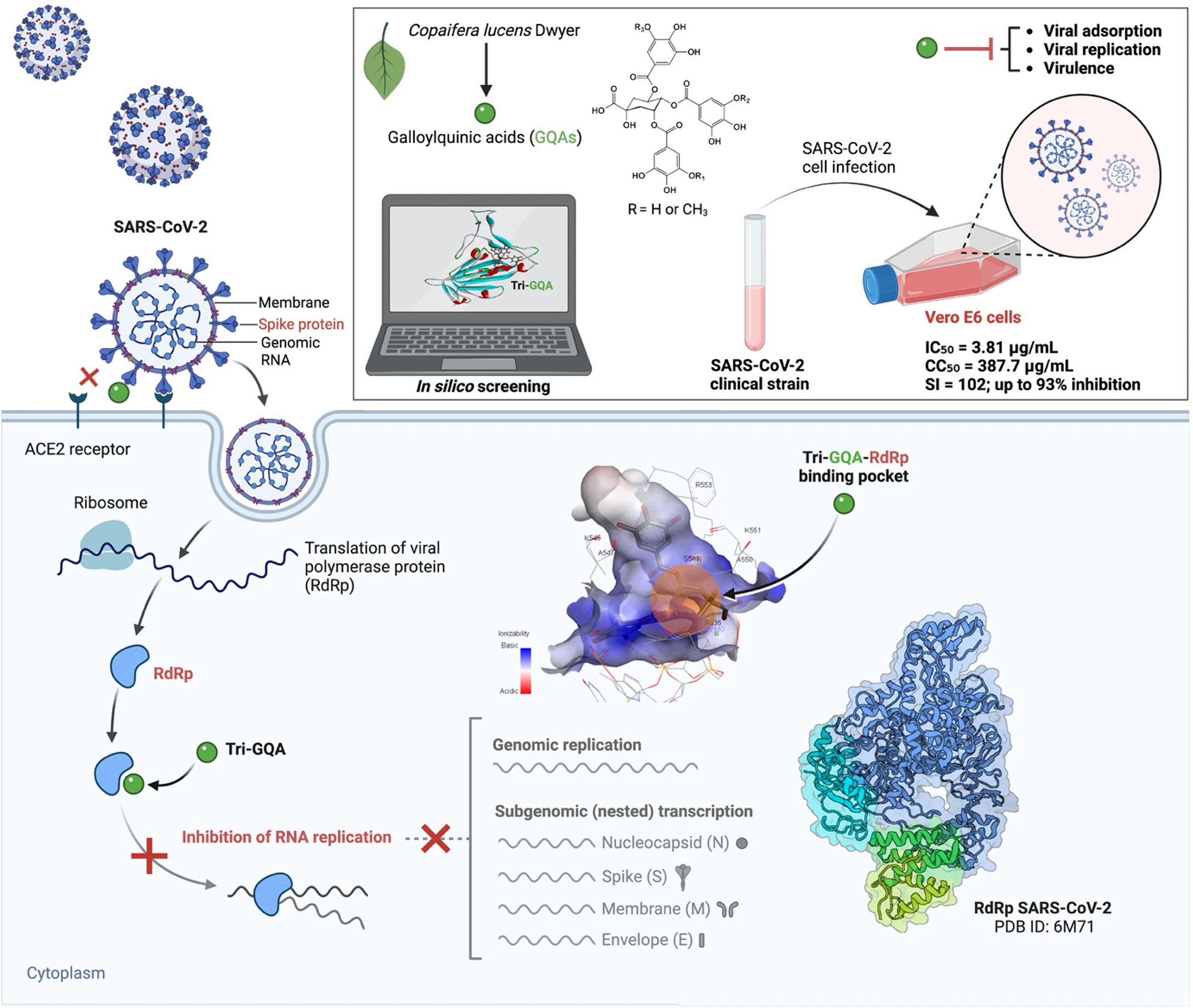
This study focused on naturally occurring Copaiba species in the Atlantic Forest of Brazil. With the support of the São Paulo Research Foundation (FAPESP), researchers first isolated and characterized the galloylquinic acid natural polyphenolic compounds rich in the dry leaves of Copaiba lucidum, and subdivided them into multiple subtypes using techniques such as ultraviolet spectroscopy. After confirming its safe dose range through cytotoxicity testing, the research team used industry benchmark testing methods such as plaque reduction neutralization test (PRNT) to conduct in-depth testing of the antiviral potency and molecular mechanism of the extract.
Experimental results show that this type of natural compound exhibits a rare "multi-target mode of action" and can implement multiple blocks at different stages of COVID-19 infection. During the virus invasion process, a specific configuration of galloylquinic acid (such as 3,4,5-trigalloylquinic acid) shows extremely strong binding affinity with the receptor binding domain of the virus spike protein (Spike), thus blocking the binding of the virus to human host cells; during the intracellular proliferation process, The compound can effectively target and inhibit the key RNA polymerase (RdRp), disrupt the gene replication process of the virus, and significantly reduce viral protein expression; at the same time, this type of substance can also bind and neutralize the papain-like protease (PLpro) that helps the virus evade immune system surveillance.
In addition to directly inhibiting viruses, research has also found that this type of extract has anti-inflammatory and immunomodulatory properties. This dual effect may help regulate the body's excessive immune response during the stage of severe infection, inhibit life-threatening cytokine storms, and provide auxiliary value for clinical alleviation of severe diseases.
Jairo Kenupp Bastos, the leader of the study and a professor of pharmacy at the University of São Paulo, pointed out that many current antiviral drugs only work against a single viral protein, which often promotes the rapid emergence of drug-resistant mutations in the virus during evolution; the multi-target linkage blocking mechanism exhibited by galloylquinic acid makes it extremely difficult for the virus to escape through single-site mutations, thus greatly reducing the possibility of drug resistance. The research team also emphasized that the current results are still in the in vitro experimental stage, and that future clinical drug development still requires systematic animal testing and rigorous human clinical trials. However, this discovery once again highlights the strategic value of Brazilian forest biodiversity in discovering new broad-spectrum antiviral drugs.
Comments