
Abstract:
Neither an engineer nor a professional cyclist, Brit Sean Ryan just wanted to figure out how far an electric-assisted bicycle could go when the sun was its only fuel tank. Facts have proven that this self-built solar-powered electric bicycle can travel more than 1,000 kilometers on French roads and cross multiple Alpine passes.
Ruian rebuilds vehicles from scratch. He installed solar panels on a cargo bike, paired it with a mid-mounted motor, and designed his own battery management system. After weeks of testing in Nottingham, England, he took the bike to this year's Sun Trip international solar cycling event.
Journey to the Sun was founded in 2013 by French explorer Florian Bailly. In 2010, Bailly rode a solar-powered electric bicycle from France to Japan alone. This personal expedition has since evolved into an organization dedicated to promoting renewable energy, sustainable transportation and civil engineering technology, and achieving its goals through long-distance bicycle expeditions.
This event is different from traditional professional cycling events in that participants are not guaranteed vehicles and there is no logistical safety net. Riders are left to plan their own routes, camp, maintain their vehicles, and manage a limited energy budget. They can choose their own route between mandatory checkpoints or follow designated areas for the event. Since its inception, events have taken place throughout Europe, Central Asia, China and North Africa, as well as short-distance races limited to France or the Alps.
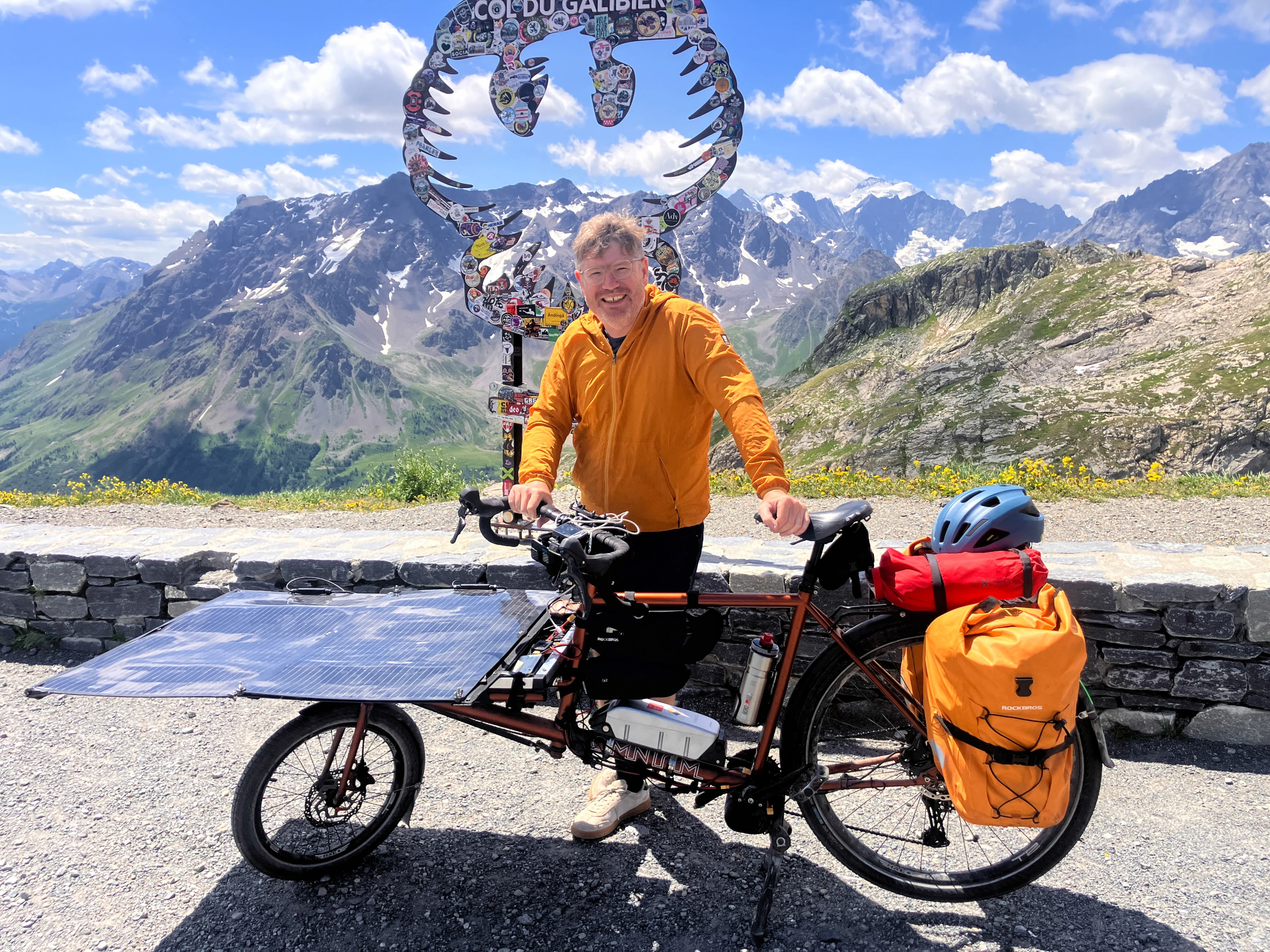
This year’s Alpine stage is located in the Auvergne-Rhone-Alpes region of France. Participants need to climb many mountains including the Galibier Pass. The Galibier Pass is 2,642 meters above sea level, while the Iseran Pass, which is about 2,770 meters above sea level, is the highest paved road pass in the Alps. The final race ends in Albertville.
The competition calculates points based on distance traveled and checkpoints passed, but there is one rule throughout: anyone using grid power will be disqualified from the solar team. Ruian said that after connecting to the mains power, you can still continue to participate in the entire event, but you are no longer eligible to compete for solar group points.
Ruian chose the Omnium cargo bike produced by Paradise Cycles as the base model. The rack at the front of the vehicle provides a stable mounting platform for the solar panels, and after removing the panels, the bike can still be used as a daily cargo vehicle.
The power system uses a 250-watt Tongsheng TSDZ2B mid-mounted motor provided by Varstrom and is equipped with two 36-volt batteries, one from EM3-EV and one from Infinit. The solar system connects the panels directly to a Genasun GVB-8 boost maximum power point tracking charge controller, which then supplies power to the battery. This device can convert the changing output voltage of the solar panel into a stable voltage suitable for battery charging. The energy path of the entire system is "solar panel - charge controller - battery", and only a small amount of loss will be generated in the process.
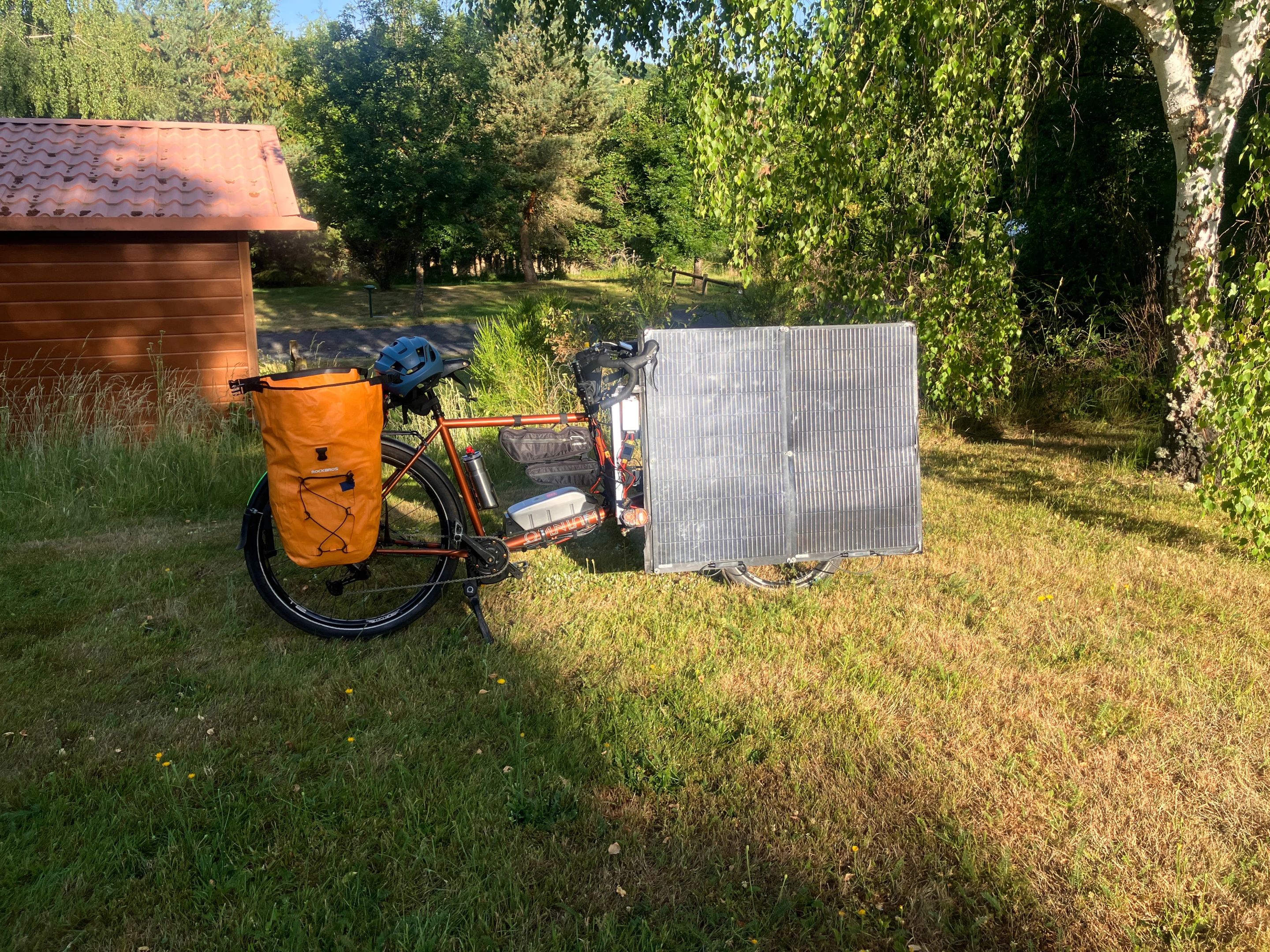
Ryan originally planned to install three 100-watt panels to cover the entire front cargo platform. While this resulted in higher power, tests found that the vehicle would become too long, too wide, and inflexible in traffic and in tight spaces. So he ultimately scaled the solar array down to 200 watts, deciding that this was probably close to the minimum needed to handle long distances and mountain climbs.
This decision became key to the entire design. After loading all luggage such as camping equipment and photography equipment, the total weight of the bicycle reaches 61 kilograms. During testing in the UK, Ryan found that the vehicle consumed 10 to 12 watt hours per mile, equivalent to about 6 to 7.5 watt hours per kilometer. Although solar panels are rated at 200 watts, actual output is usually only 70 to 100 watts, depending on weather and sun angle.
On the most difficult day of the Sun Tour, he rode 130 kilometers through a large number of mountainous areas. The charge controller recorded 985 watt-hours of available solar energy input into the vehicle's electrical system that day, equivalent to about 7.58 watt-hours per kilometer, or about 12.2 watt-hours per mile, at an average speed of 21 to 22 kilometers per hour.
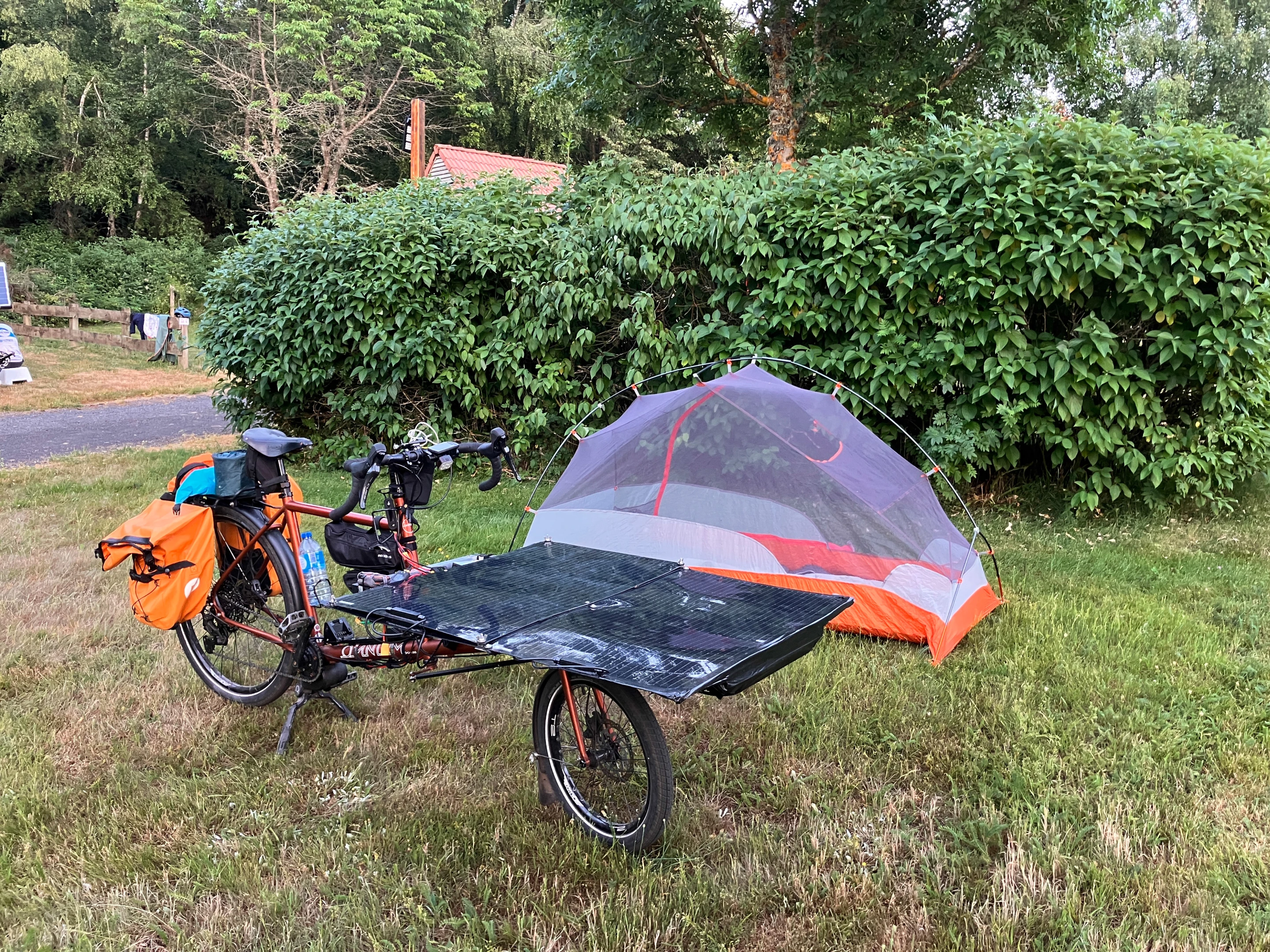
The biggest crisis during the trip came during the heat wave. At that time, the temperature in France rose to 41 degrees Celsius, and wildfires broke out near Lyon. High temperatures caused problems with one of Ruian's Infinit modular batteries, with the battery management system refusing to accept solar charging due to overheating.
Ryan explained that the battery management system was actually performing a protective function, but that meant that for a period of the day, he was unable to store all the power generated by the solar panels. In hindsight, he believes that the most direct way to improve it is to install the battery in a location that is completely shaded and isolated from high temperatures.
He also suspects that the structure of Infinit's batteries may be exacerbating the problem. Unlike traditional battery packs where the cells are permanently fixed by spot welding, this rebuildable battery uses mechanical means to secure the cells. Ryan said that when discharging and receiving solar charging at the same time, the contact resistance at the cell connection may generate additional heat. However, he emphasized that it is currently impossible to determine whether this is the source of the failure, but can only say that it may have contributed to the situation.
The solar panels generally withstood the test of the competition, but the thermal problems of the batteries combined with the already tight energy budget eventually forced Ruian to connect to the mains power twice during the trip, replenishing a total of about 1 kilowatt hour of electricity, and therefore lost the qualification to compete for the solar panel.
Ryan admitted that he cut the solar array from 300 watts to 200 watts in order to improve the vehicle's maneuverability. In hindsight, this power was probably just at the limit of handling the distance and terrain of the event. The efficiency of the bike itself is pretty good, with the 200-watt solar panel providing almost all the power needed on a good day, but the system doesn't leave much headroom for emergencies.
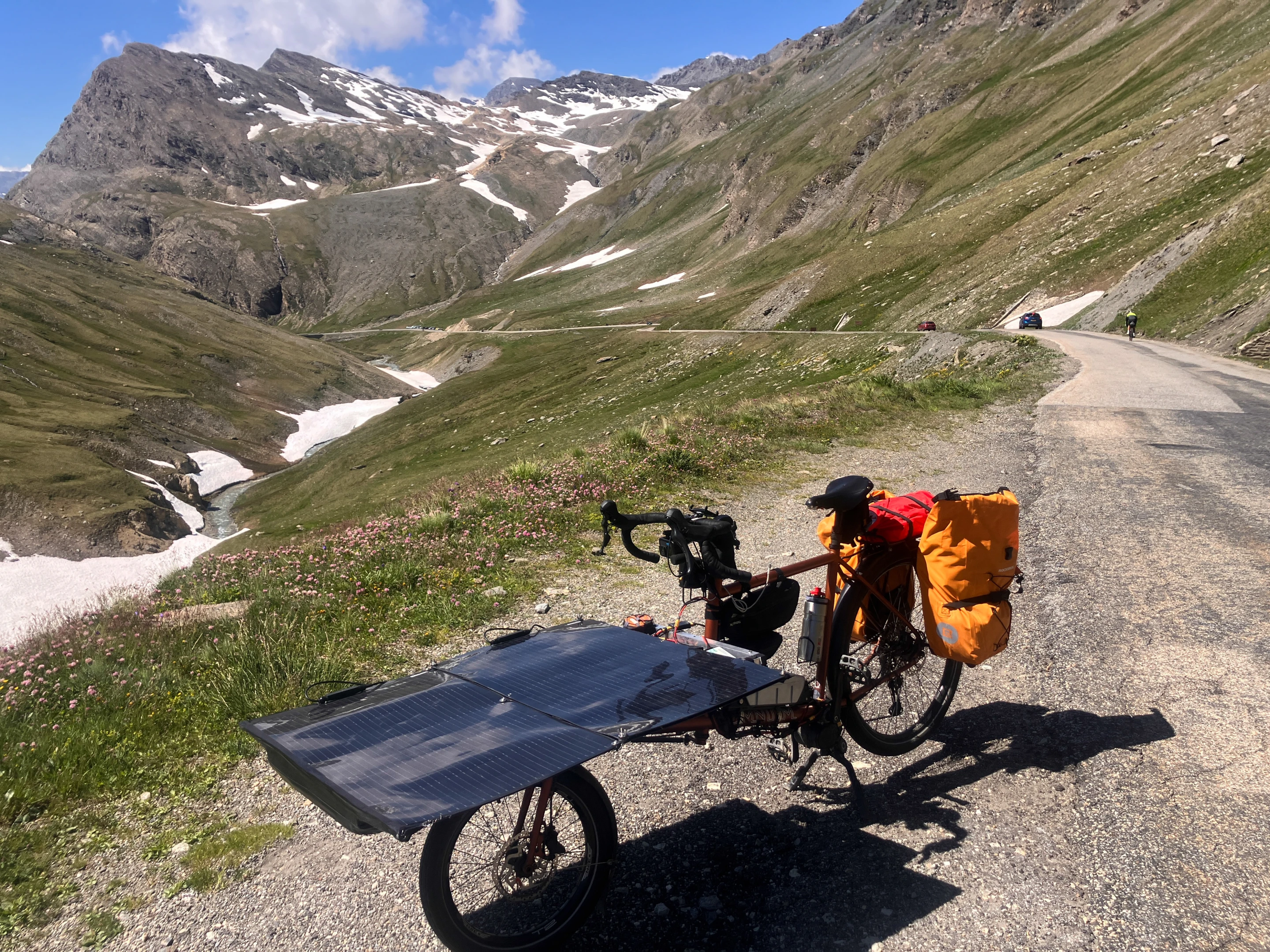
As for whether the vehicle can complete the race on solar energy if the battery is always running normally, Ryan cannot give a definite answer. He thinks the result will be very close: 200 watts is enough on some days, but in the face of Alpine routes with frequent weather changes and intense climbs, the energy reserve is really limited.
The motor has also been put to the test. Before the race, Ryan was worried that the 250-watt Tongsheng mid-mounted motor would become a weak link in long-distance high-temperature climbs, and the facts partially confirmed his worries. Facing the long and steep climbs in the Alps, this smallest 250-watt version needs to tow a cargo bike carrying heavy cargo, and the thermal load does appear to be excessive.
When the motor overheats, Ruian's approach is simple: stop and wait for it to cool down. On several occasions, he even poured water directly onto the motor housing. He found that keeping the motor rotating at high speed was more effective than running the motor at low speed under heavy load. When climbing a hill, he would select a very low gear and let the motor slowly push the vehicle up the hill at a higher speed. Although not fast, this method can significantly reduce the heat load.
This is also an advantage of the mid-mounted motor compared to the hub motor: it can use the bicycle's own transmission system to keep the motor in a more efficient speed range on steep slopes. Ryan said that considering this is only a motor with a nominal power of 250 watts, its performance is already quite good.
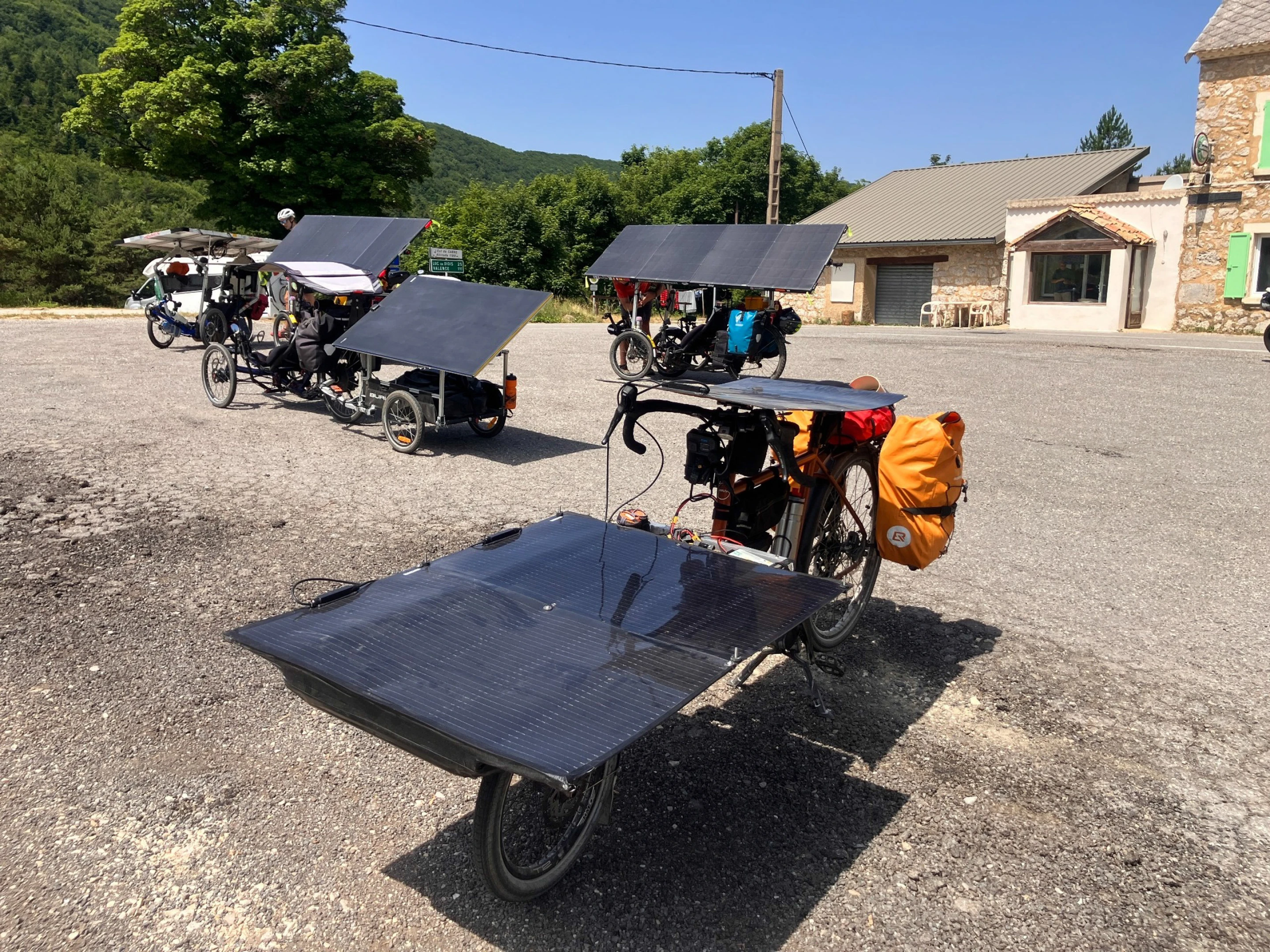
Ryan doesn't think solar bikes are for everyone. For someone who only rides a few miles to and from get off work each day and can recharge when they get home, installing a solar system on their car may not make much sense. But in the world of bicycle touring, the concept shows even greater potential. He believes that although this route has many mountains, if it is used for a relatively flat long-distance trip, the advantages of solar power will be more obvious.
For Ryan, the Alpine stage car is just a prototype. He has already started redesigning the system for a more challenging goal: participating in the French to Chinese Sun Tour planned for 2028.
The currently announced temporary route is about 15,000 kilometers long and will pass through the Balkans, Turkey, Caucasus, Central Asia and western China, bypassing Russia and crossing the Caspian Sea. About 40 riders are expected to participate. However, routes and race rules are still subject to change.
To complete such a long journey, the vehicle must have a larger solar energy collection area. But Ryan has ruled out simply widening the existing upright bike and covering it with more panels. He believes aerodynamics and rider comfort will become increasingly important as the distances traveled each day increases.
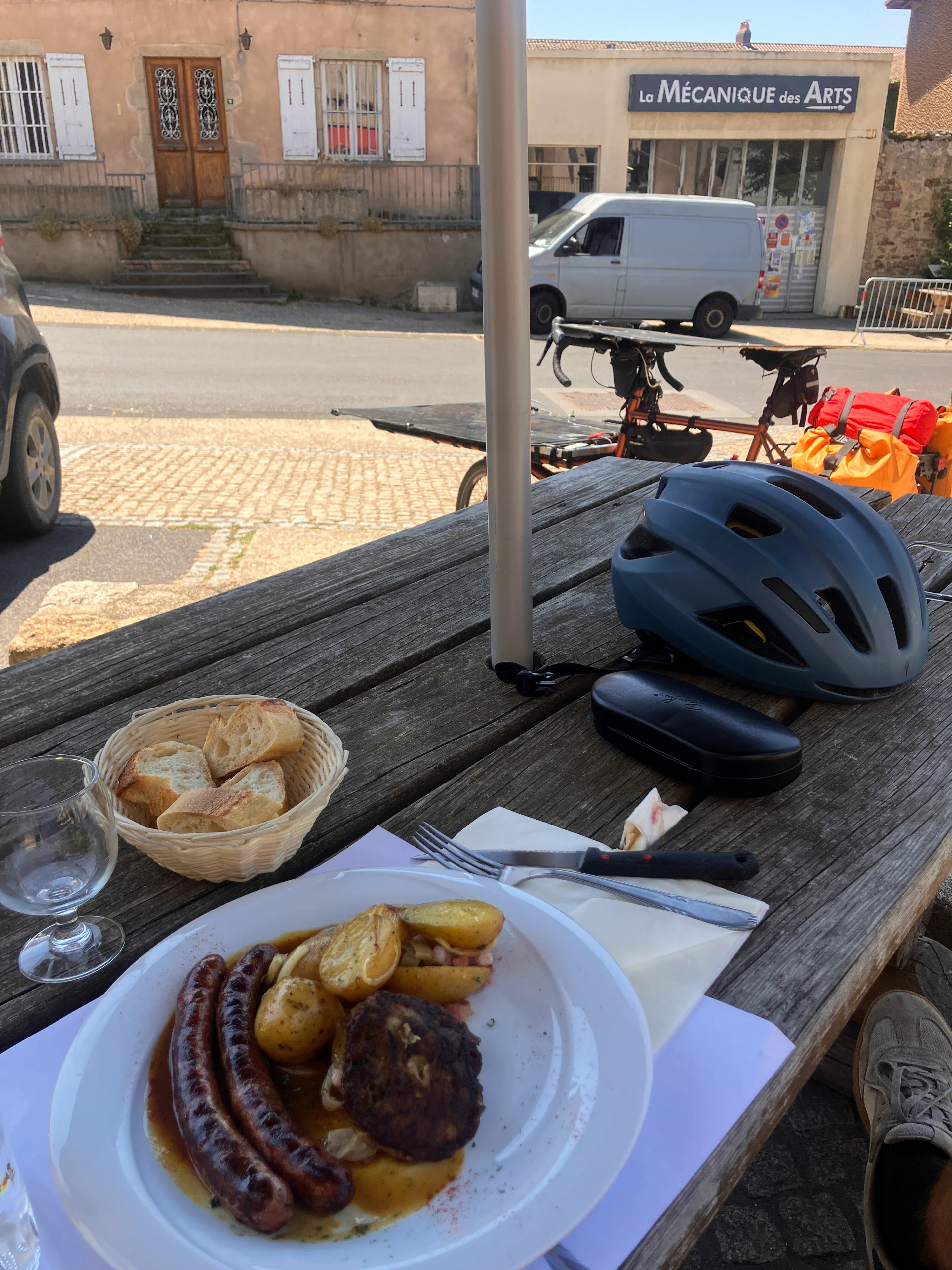
Currently, he is considering converting the cargo bike into a semi-recumbent, long-wheelbase structure that would allow the rider to sit in front of the original cargo platform and under a wider solar canopy. This design is expected to improve aerodynamics, increase solar panel area, and more importantly, make the riding position more comfortable for long-distance riding over multiple days.
This would be a significant departure from the simplicity of the first car. Ryan said what attracted him most to the Alpine version was that it was still essentially a regular cargo bike, equipped only with a 250-watt mid-mounted motor, a solar charge controller and 200-watt solar panels. It proves that to achieve basic functions of a solar bicycle, it is not necessary to build a special vehicle with complex structure and strange appearance.
However, the models shipped from France to China will inevitably be more specialized. The experience Ryan gained from that first simple prototype will also serve as the basis for the design of the next long-range solar bike.
Comments