
Abstract:
After Opus 5.5 was released, netizens rushed to try it out. With one swipe, there are several works, ranging from web pages, animations to games, etc. These are more intuitive than the benchmark values, and some can be tried by yourself. A creator named MiaAI Lab directly asked Opus 5.5 to "make 100 HTML files" with three requirements: good looking, no repetitive design, and full use of creativity. The finished product is amazing.

https://x.com/MiaAI_lab/status/2102490829306634560
Not to mention, every click looks decent. The same model has a very diversified processing of different interaction forms and visual styles.
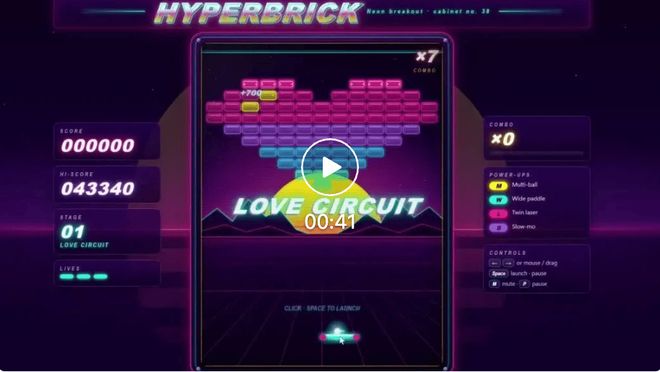
Video link: https://mp.weixin.qq.com/s/dVLbNHkM32K5g1cJWJs1hw
In this case, Opus 5.5 started from the open requirements, decided which works to make, and wrote the page structure, CSS and interactive code. From creative conception, task breakdown to finished product production, Opus 5.5 demonstrates strong autonomy.
Give the model an open overall goal, let it plan its own steps, and hand over the task completely.
This is exactly what Anthropic strongly recommends this time.
Can we really finish the whole thing in one go?
Anthropic gives advice at the beginning of the Opus 5.5 user guide: explain the complete task at once, make it clear what is considered "done", and when encountering situations where you need to stop and ask the user, and then let the model work on its own.
Guide link: https://claude.dev/blog/getting-the-most-out-of-opus-5-5/
The example given in the guide is migrating the payment interface.
In addition to explaining the tasks, the most important thing is to state the completion standards: all interfaces use new clients, old clients are deleted, and the test passes. Only when it encounters unexplained test failures does the model need to stop and ask. Such requirements give the model room to advance on its own and leave verifiable standards for final delivery.
In fact, this suggestion was mentioned when Opus5 was released. This time Anthropic specifically emphasized that Opus 5.5 is more capable of continuous advancement in long-term, multi-step tasks.
Official release materials mention that an early tester asked it to review and fix about 200,000 lines of code, which was completed in less than three hours; Opus 5 took more than 20 hours on the same task. Another internal test required the model to rewrite HAProxy from C to Rust. Opus 5.5 took 9.5 hours, and the rewriting result passed almost all the regression tests of the original project.
However, it took a long time to work, but it may not be what users are most anxious to achieve.
In actual testing, technology media Every gave Opus 5.5 ten minutes to write a minute-by-minute schedule for a customer training. After reading the requirements, it spent nearly five minutes thinking about it, then produced training data, checked tables, and compiled student materials. But when the time came, the most needed schedule was not handed over.
Actual test report: https://every.to/vibe-check/vibe-check-opus-5-5-is-pulling-our-codex-converts-back-to-claude/
Another app development test from Every is also telling. The task page looks beautiful, and the automatic check also shows that it has passed, but when the tester actually operates it, the core page still reports an error.
It seems that it is still unrealistic to think about it in one step.
Kill the dash and play music and animation
In terms of text expression, Opus 5.5 has made significant progress, changing the typical "Claude accent" before.
Some netizens commented that the biggest feeling after testing Opus 5.5 is that the writing style has finally been "fixed".
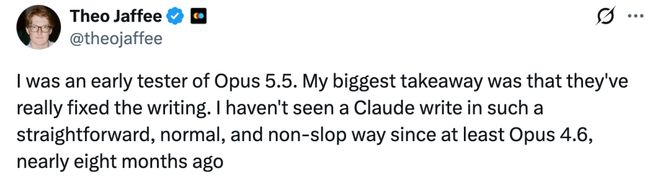
https://x.com/theojaffee/status/2102454423041818786
"It has become more direct, more normal, and less AI-like (non-slop). The last time I saw Claude write so cleanly and naturally was in Opus 4.6 about eight months ago."
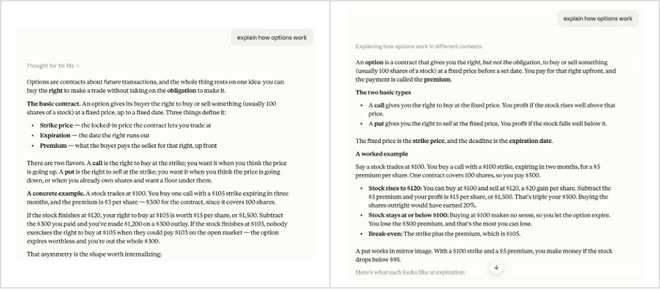
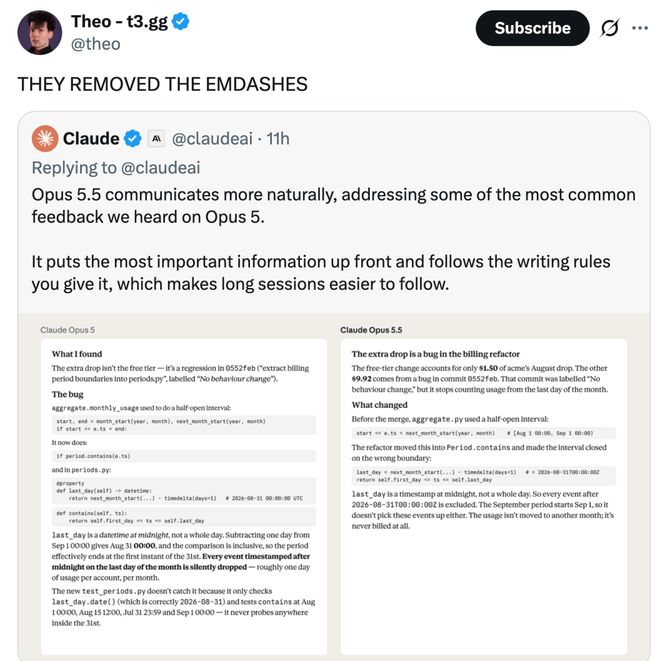
The picture on the left is the output of Opus 5, which is slightly verbose and has obvious traces of AI writing; the picture on the right is the output of the same content by Opus 5.5, which is more concise and natural.
According to the Opus 5.5 update instructions released by Claude’s official account, the new version communicates more naturally, puts important information first, and better follows the writing rules given by users.
Some netizens discovered that Opus 5.5 has eliminated the dash this time! In the above official comparison chart, the output of Opus 5 on the left uses dashes in many places, while the Opus 5.5 on the right writes the same content without dashes at all.
https://x.com/theo/status/2102474289949868254?s=20
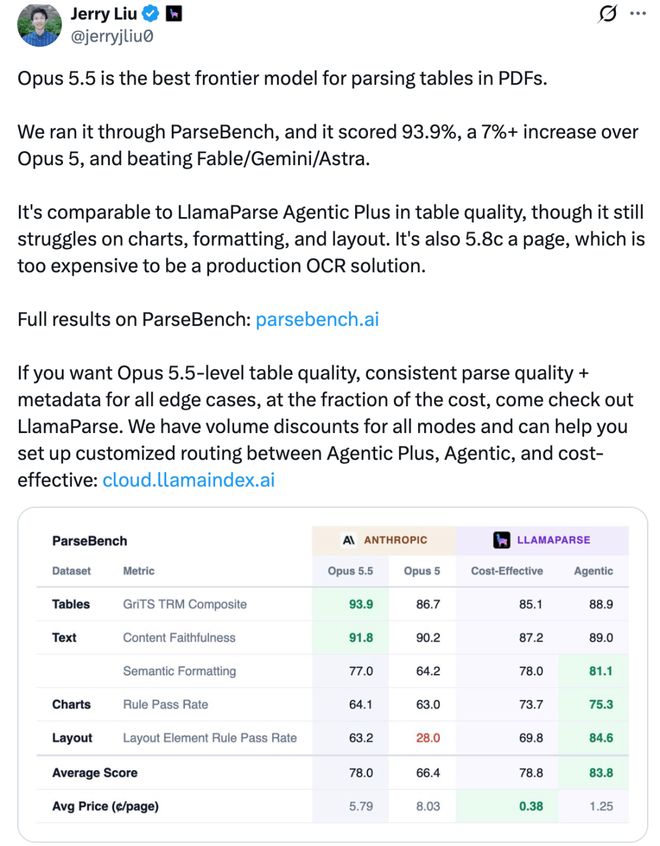
In terms of PDF table parsing, LlamaIndex CEO Jerry Liu used his own ParseBench for testing. Opus 5.5 scored 93.9%, which was more than 7 percentage points higher than Opus 5 and surpassed models such as Fable, Gemini, and Astra. However, it still has shortcomings in understanding charts, formats, and layouts.
https://x.com/jerryjliu0/status/2102529024841154977
Claude Opus 5.5 can not only "write code", but can also use code to directly create animations that are both artistic and smooth.
X blogger Kevin Ngo let Opus 5.5 use JavaScript to draw the following animation frame by frame:

Video link: https://mp.weixin.qq.com/s/dVLbNHkM32K5g1cJWJs1hw
Some netizens also used Opus 5.5 to create similar animations:
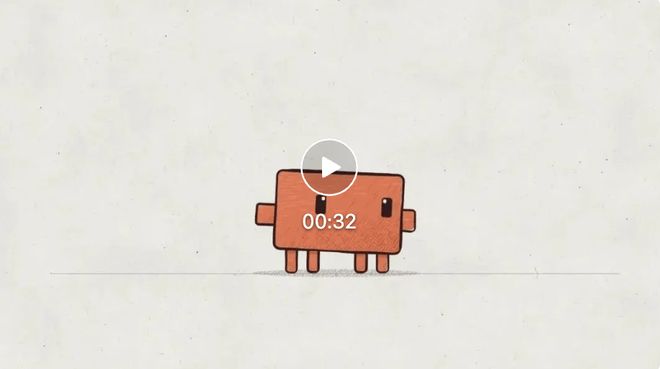
Video link: https://mp.weixin.qq.com/s/dVLbNHkM32K5g1cJWJs1hw
https://x.com/devteamdrew/status/2102436464323661880
Claude can now write truly listenable electronic music using pure JavaScript.
Some netizens only gave Opus 5.5 the prompt word "make some bass music with javascript" (use JavaScript to make some bass music). As a result, Claude wrote the complete JS code in one go and generated a piece of bass music that sounded quite good.
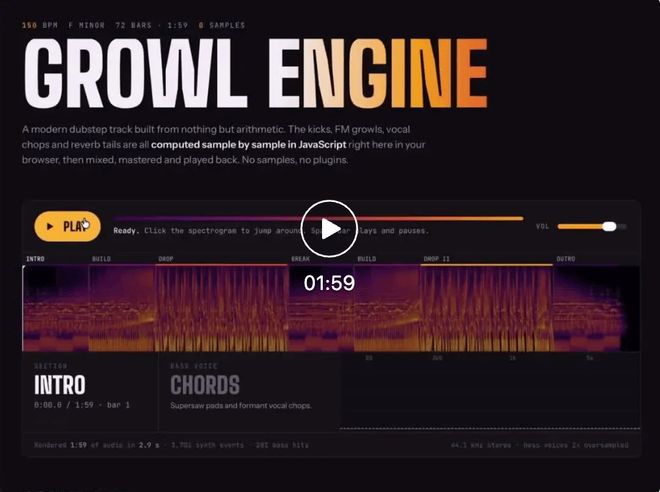
Video link: https://mp.weixin.qq.com/s/dVLbNHkM32K5g1cJWJs1hw
https://x.com/aj_dev_smith/status/2102504509637587339?s=20
Comments