
Abstract:
On September 7, according to the Financial Times, Apple's new CEO John Ternus will announce his first new products after taking office on Wednesday, and hopes to get consumers to accept two things that have never happened in the iPhone's 20-year history: a folding screen and a price of more than $2,000.

iPhone 17 Advertisement
The new design has been in development for at least eight years within Apple's hardware division, which was previously led by Ternus. Tim Cook handed this high-stakes product launch to his successor. At this time, Ternus has just entered his second week at the helm of the world's second-largest company by market value.
However, this launch also faces huge challenges, because Apple needs to get consumers to accept price increases to offset the cost pressure faced by the entire supply chain, otherwise it may have to bear the cost of declining profit margins. At the same time, despite their attractive appearance, foldable phones have had a limited response among consumers since other major phone manufacturers brought foldable phones to the market seven years ago.
Waiting for the market to mature
“There are many reasons why Apple wanted to wait on this particular product category.” Radu Reit, a former Apple display engineer, said. Technological advances in recent years have improved the durability of foldable screens while reducing screen creases and lowering manufacturing costs.
Leiter added that the device structure that Apple may launch has actually been achievable more than ten years ago. However, a decade ago, manufacturing such a screen would have cost thousands of dollars. On the other hand there are commercial factors: Is the market really big enough? This was not the case at the time.
Analysts said that Apple’s foldable screen phone is expected to be priced at or above US$2,000, and the entire iPhone product line will also increase in price. This price level may become a major test of consumer affordability. Apple is expected to delay the release of the base iPhone 18 until next spring.
Samsung, in particular, suffered from early technical issues, with its folding screens starting to develop bubbling and ripples, leading to high return rates.
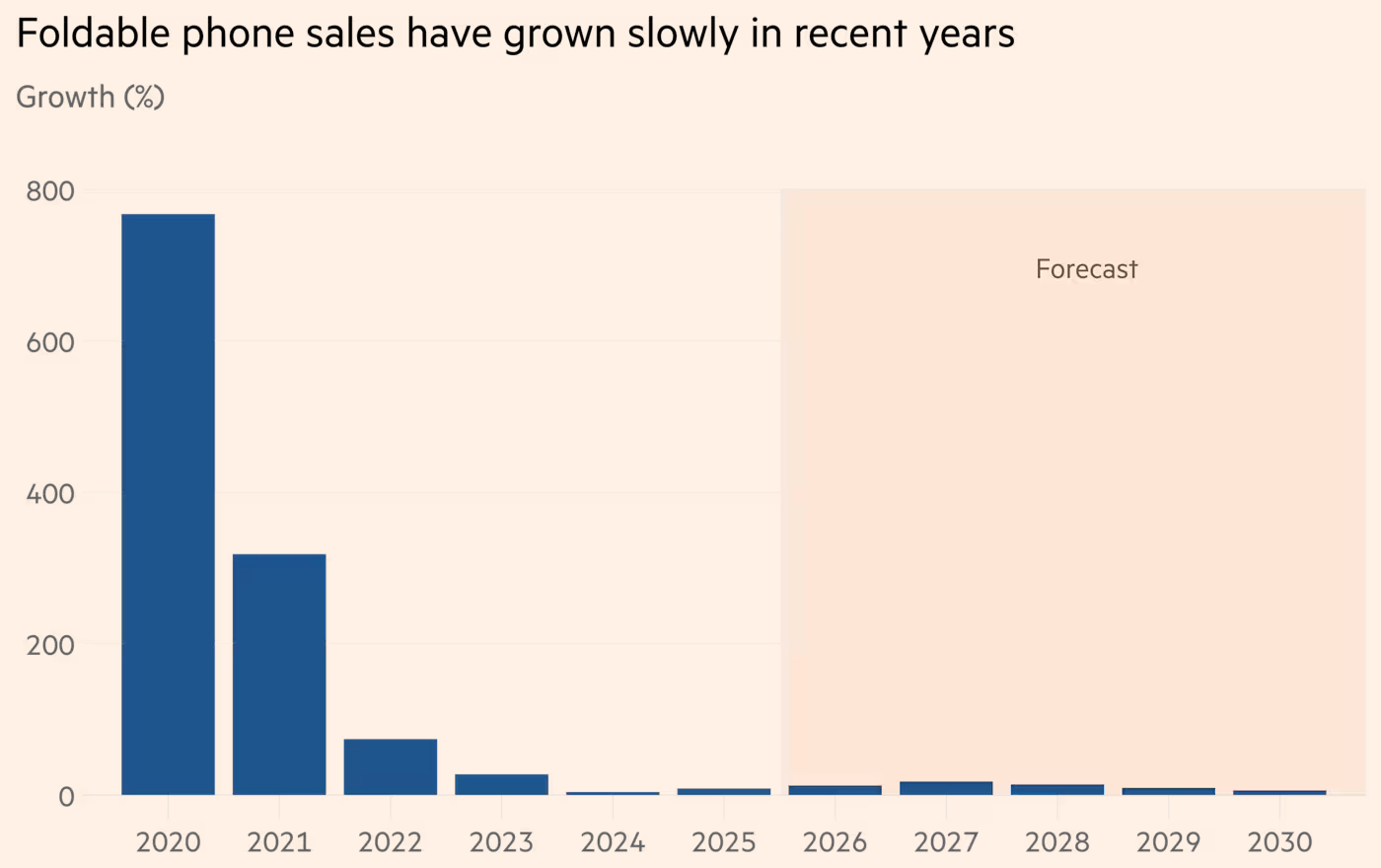
The foldable screen mobile phone market is growing slowly
Apple is betting that its foldable phone can reignite consumer interest in the relatively niche design and help the company capture market share. That suggests Apple is adopting a familiar strategy: wait and see rivals launch risky new devices and suffer the consequences of early failures before launching an improved version of the same product.
Apple’s research and development of foldable screen devices began long before Cook became CEO. A 2011 patent shows that Apple was developing a hinge structure at the time. According to people familiar with the matter, Apple's engineering team and display team had begun experimenting with folding screen technology as early as 2018.
New product release cycle begins
Jeffrey analyst Edison Lee said Ternus' debut on Wednesday would mark the start of a three- to five-year cycle of new product launches. The products, which had been planned long before Ternus took over, were designed to revive consumer interest.
"Demand for the iPhone has been saturated, and they need to focus on new product forms to drive consumers to replace smartphones... They can't just maintain the current product form and then expect consumers to be willing to pay higher prices over time." Edison Lee said.
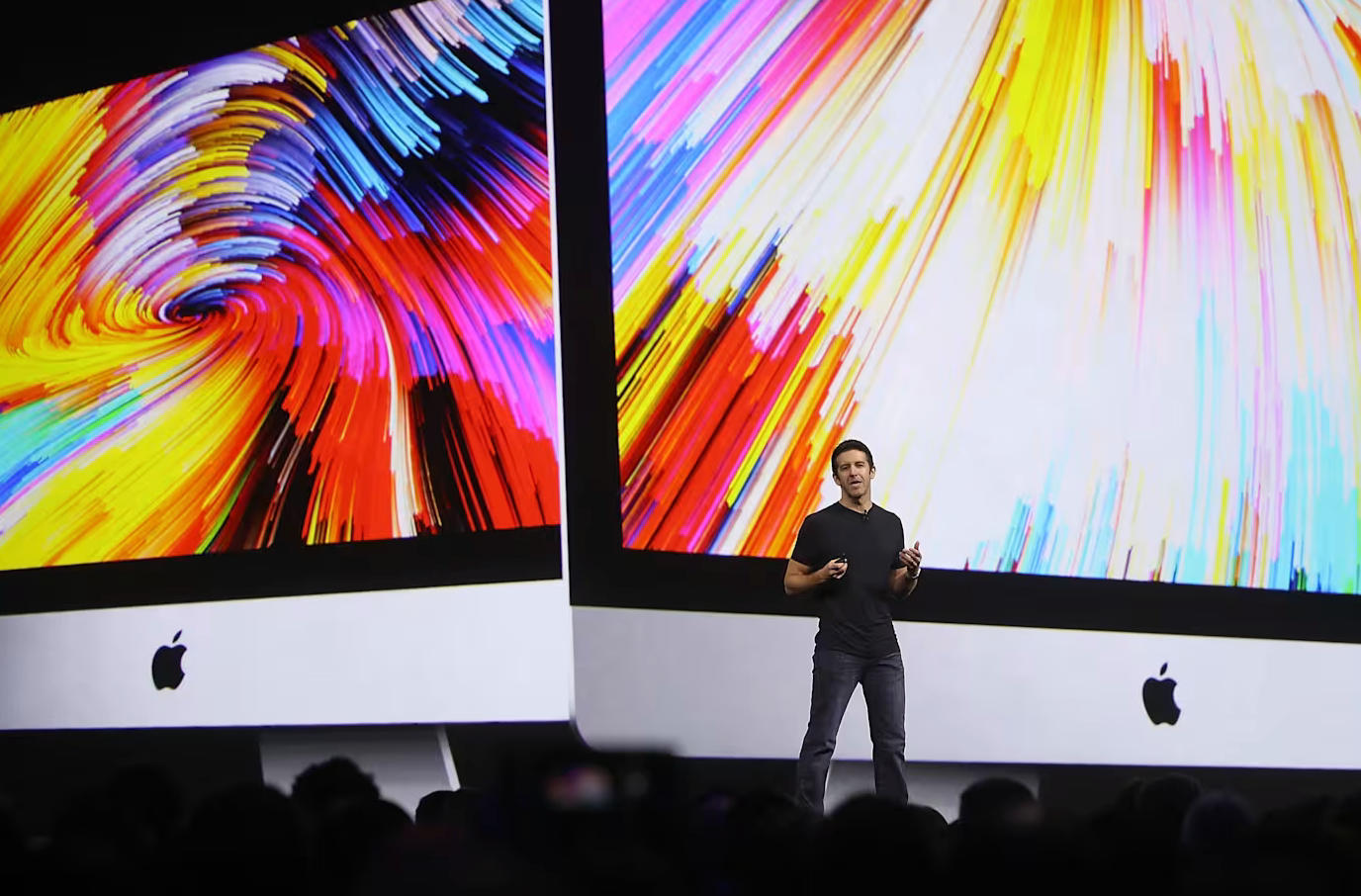
Tunus
Apple, like other companies in the consumer electronics industry, has been hit by parts shortages this year as data centers procure parts in large quantities, especially memory chips. Apple has since raised the prices of Macs and iPads.
Research firm IDC predicts that global smartphone sales are shrinking as prices rise, and Apple's entry will make foldable screen phones the only segment to achieve growth in the market in 2026.
IDC analysts predict that global sales of foldable screen mobile phones will increase by about 12% year-on-year, and that Apple will occupy 40% of the market by 2027.
UBS analyst David Vogt said he expects Apple to sell at least 10 million foldable phones in the first year, a figure roughly equivalent to Samsung's sales in the past 12 months.
Although these sales account for only a small part of Apple's annual global shipments of approximately 250 million iPhones, they are enough to help it increase the average selling price of its devices. "If you're going to have supply chain challenges, you're going to make more expensive equipment and less cheap equipment," Vogt said.
Like many analysts, Vogt expects Apple to raise iPhone prices across the board this week. This price increase is likely to be watched as closely as any shiny new device.
“I’m concerned about this,” he said. “The last time Apple raised iPhone prices significantly was in Europe after the COVID-19 epidemic, and sales fell almost immediately.”
This foldable iPhone seems poised to perform best in the Chinese market. Huawei has previously achieved some success in the field of foldable screen mobile phones in the Chinese market. Apple has also been regaining smartphone market share in the Chinese market in recent years.
Comments