
Abstract:
The latest exposed photos show that a number of artificial intelligence companies are purchasing NVIDIA GeForce RTX 5090 graphics cards on a large scale to build AI servers, triggering a new round of concern in the industry about the supply of high-end consumer graphics cards. According to on-site photos shared by Hong Kong hardware media HKEPC, batches of brand new boxed RTX 5090 are being unpacked at the AI server assembly site.
These graphics cards are not NVIDIA's RTX PRO 6000 workstation products for professional users, nor are they specialized data center accelerator cards, but the standard retail GeForce RTX 5090 sold to ordinary consumers. Today, they are being installed directly into multi-GPU AI computing systems.
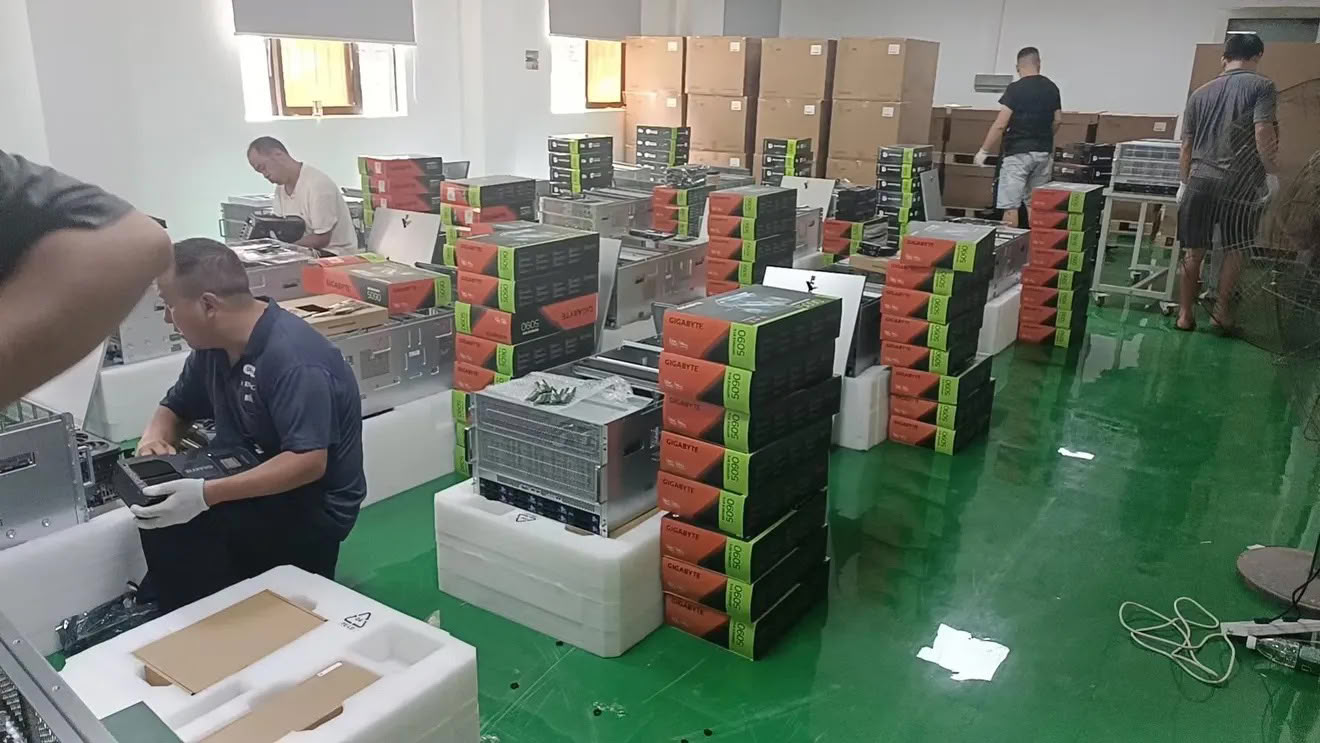
It is worth noting that the RTX 5090 is one of the most difficult consumer-grade graphics cards to buy on the market. Many gamers have long struggled to obtain products at official suggested retail prices, and now large-scale purchases by AI companies are further exacerbating supply pressure. As demand continues to grow, the price of the RTX 5090 in some retail channels is said to have exceeded $5,000, more than double the official launch price of $1,999.
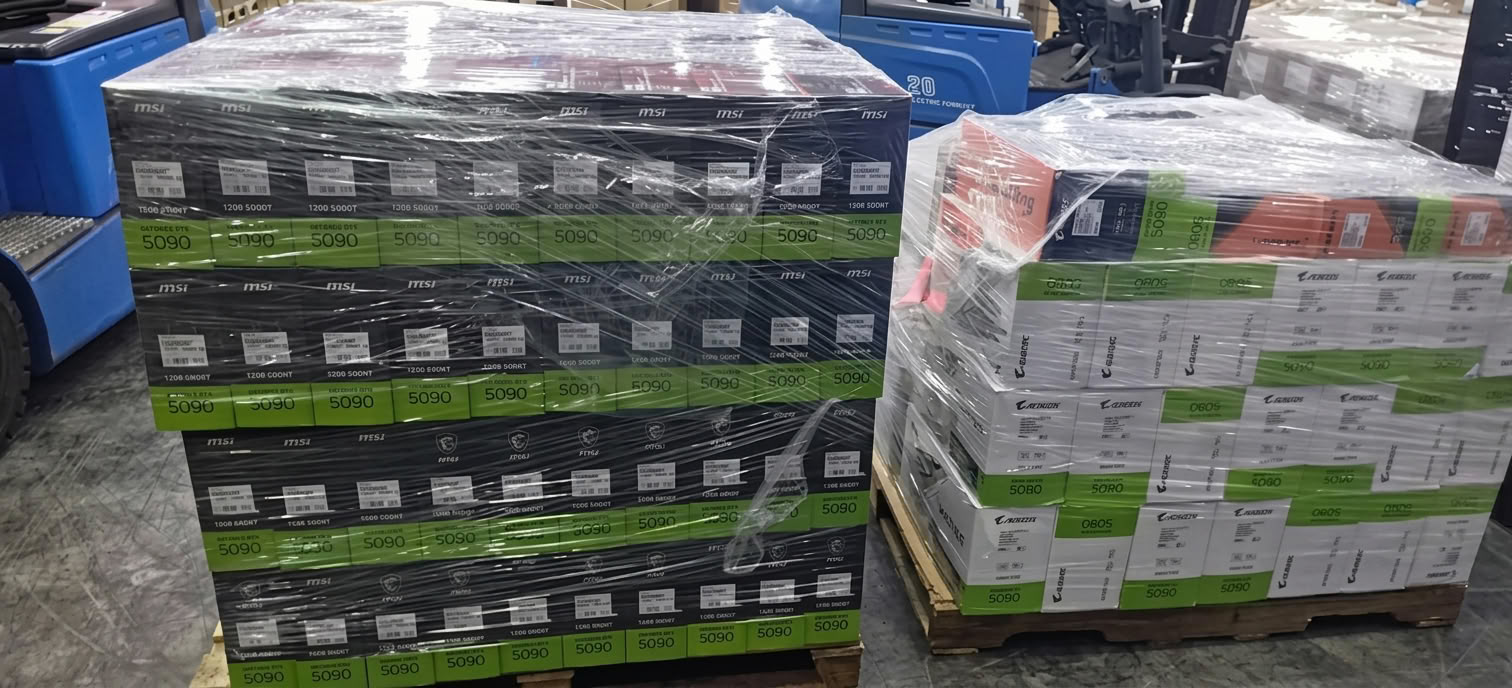
This is not the first time this has happened. Industry insiders generally compare it to the cryptocurrency mining boom of that year. At that time, a large number of mining farm operators concentrated on purchasing GeForce graphics cards, causing gamers to face severe shortages. In order to alleviate market pressure, NVIDIA later launched the Lite Hash Rate (LHR) low-hash rate version, which reduced the appeal of graphics cards to miners by limiting mining performance while keeping game performance unaffected. However, this restriction was completely bypassed about a year later.
Today, the factors driving demand have shifted from cryptocurrency mining to artificial intelligence training and inferential computing, but the market is showing a very similar phenomenon. A large number of consumer-grade graphics cards have been transferred to non-gaming areas for use, while ordinary players are once again faced with high prices and low inventory. Industry analysts had actually warned of this trend months ago, and the procurement revelations now provide a new explanation for the continued high price of the RTX 5090.
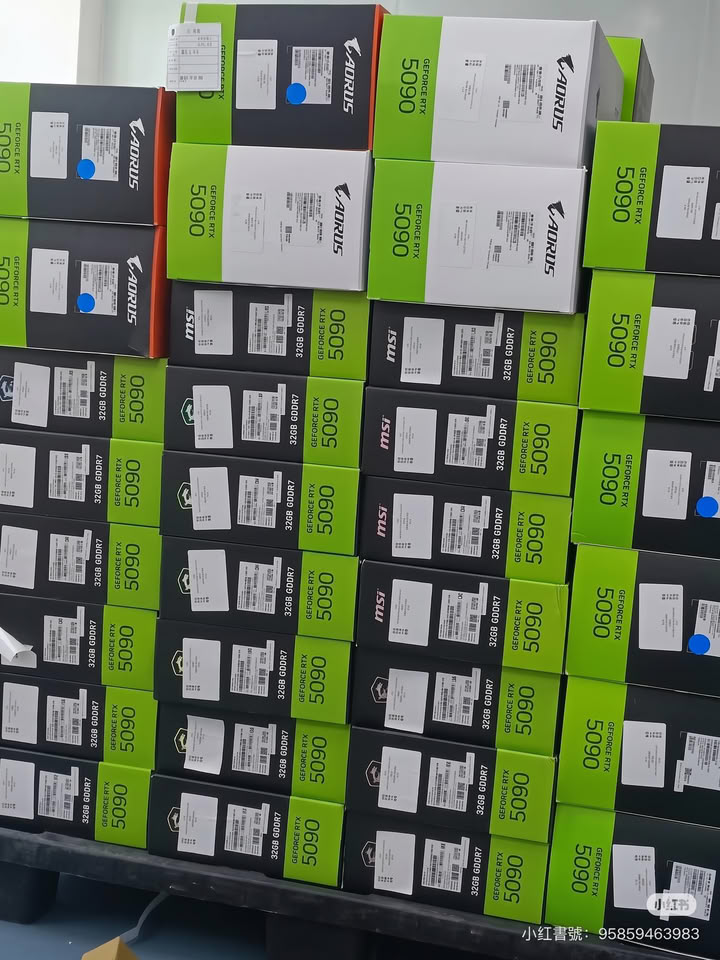
The report also pointed out that the product appearing in the photo is not the RTX 5090D or the subsequent V2 version adjusted for specific markets, but the standard version of the RTX 5090. Previously, in order to meet some export restrictions, NVIDIA has reduced the artificial intelligence computing power of the RTX 5090D while basically maintaining its gaming performance. This means that NVIDIA has actually proven that it is possible to limit the AI computing power of GeForce graphics cards without affecting the gaming experience.
However, similar restrictions have not yet been applied to standard RTX 5090 products sold globally. Given that the artificial intelligence business has become one of NVIDIA's most important growth engines, it is generally believed that the company is unlikely to proactively limit the AI use of consumer graphics cards as it did in response to the mining boom.
As more and more AI companies use high-end consumer graphics cards as part of their server hardware, the market positioning of the RTX 5090 is undergoing subtle changes. Flagship graphics cards originally aimed at enthusiast gamers and content creators are now increasingly taking on the role of artificial intelligence infrastructure. For gamers who are looking forward to purchasing flagship graphics cards at reasonable prices, this new round of "battle for computing power" driven by AI seems to have just begun.
Comments