
Abstract:
Although Valve's Steam Deck is a handheld PC mainly used for gaming, its actual application scope is obviously wider than playing games. Recently, the Airbus UK team used the Steam Deck as a portable control terminal when testing the ExoMars Mars rover prototype, allowing this game console to appear at the research and development site of Mars exploration equipment.
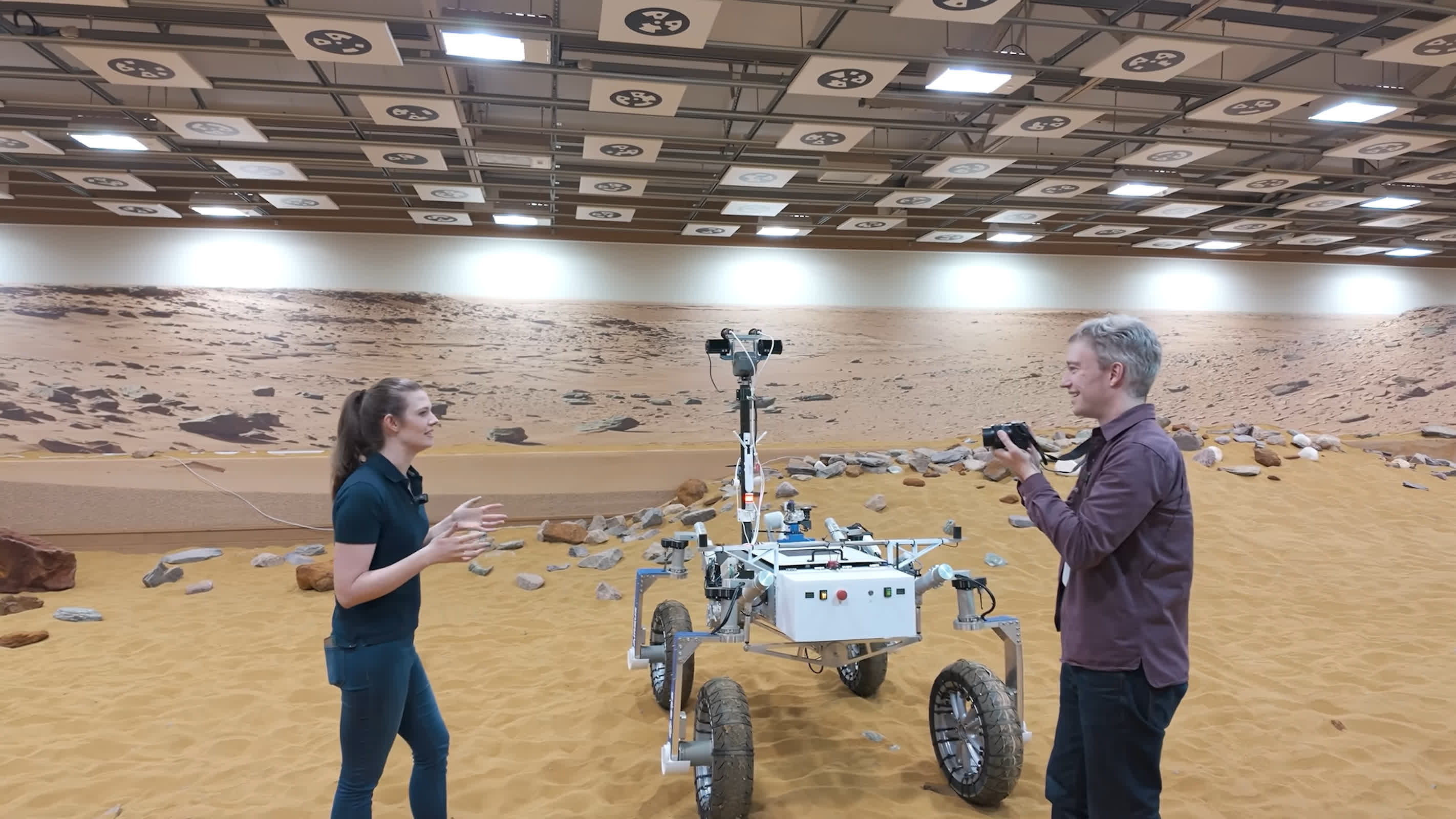
This application scenario was exposed by a video taken by YouTuber Tom Scott while visiting Airbus’s UK R&D facility. The video shows Airbus' ongoing Mars rover testing work, which includes testing the prototype's mobility and autonomous navigation capabilities in a simulated Martian environment. Due to the huge communication delay between the Earth and Mars, the rover that actually performs a Mars mission in the future cannot rely on operators on Earth to drive in real time, but must rely on its own sensors and computing systems to independently determine the driving route.
However, during the ground development phase, engineers still need to be able to directly control the rover. In the video, a senior Airbus engineer first sends instructions to the prototype vehicle through a laptop to make the vehicle move forward. Later, Tom Scott obtained a Steam Deck running custom software, and used the console's own joysticks, buttons, and triggers to control another Mars rover prototype in real time.
The currently released video does not disclose the specific software that the Steam Deck is running, nor does it detail the communication method through which the handheld device is connected to the Mars rover. Therefore, it does not use the Steam Deck as the core computer of the Mars rover, but is closer to using it as a portable manual control terminal.
The reason why Steam Deck is capable of such a job is related to its own hardware and software attributes. Although it looks like a game console, it is actually a complete PC running a Linux system. It has a display, dual joysticks, trackpad, buttons, triggers and a touch screen. It also allows users to install third-party programs and even change the operating system.
For engineers who need to move robots around the test site, observe device feedback in real time, and quickly adjust control instructions, a handheld device that integrates a computer, display screen, and physical controller is obviously very convenient. Compared with the traditional keyboard and mouse or laptop control method, physical joysticks and buttons are also more suitable for directly controlling mobile robots.
This application once again reflects the relatively open hardware and software ecosystem of Steam Deck. Valve does not strictly limit users to running games on the Steam platform. Developers and users can use this device as an ordinary Linux computer. Therefore, in addition to running games, it can also be transformed into a portable development platform, robot controller, or operating terminal for other professional equipment.
In fact, this is not the first time that Steam Deck has been used for robot control outside of games. Previously, staff members used Steam Deck to control BDX series robots in the Galaxy's Edge area of Disneyland. Although the specific application scenarios are different, what they have in common is that the Steam Deck is used as a flexible control interface, rather than the main computing platform of the robot itself.
For Airbus, the Steam Deck obviously will not become the driving equipment for the future ExoMars rover when it actually performs its mission. Future Mars rovers must navigate autonomously without real-time control from Earth. Since the distance between the Earth and Mars will cause significant communication delays, ground operators cannot control the rover in real time like a remote-controlled car or drone. Therefore, the rover must rely on its own cameras and software systems to identify the terrain, determine obstacles, and choose a driving route.
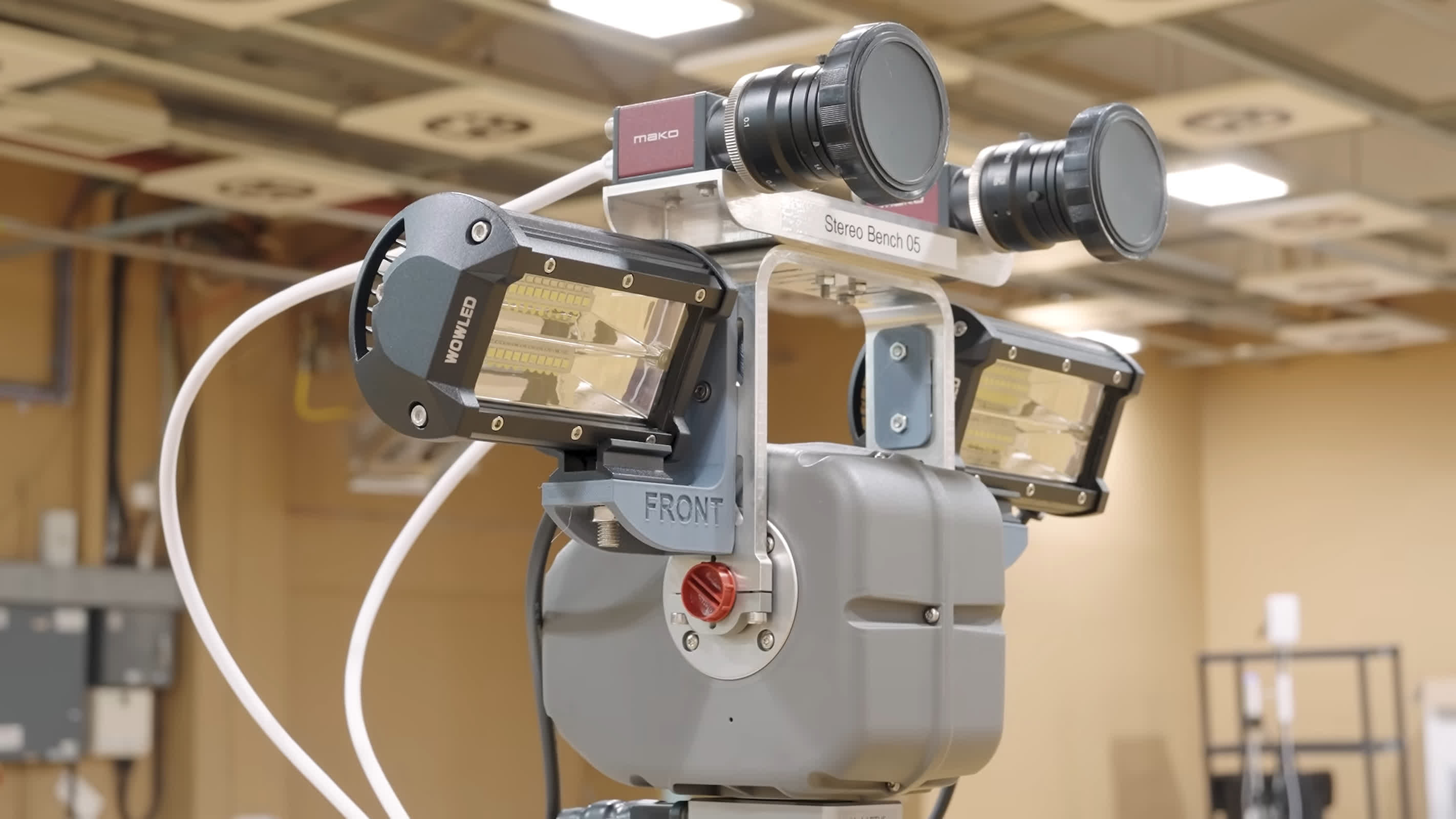
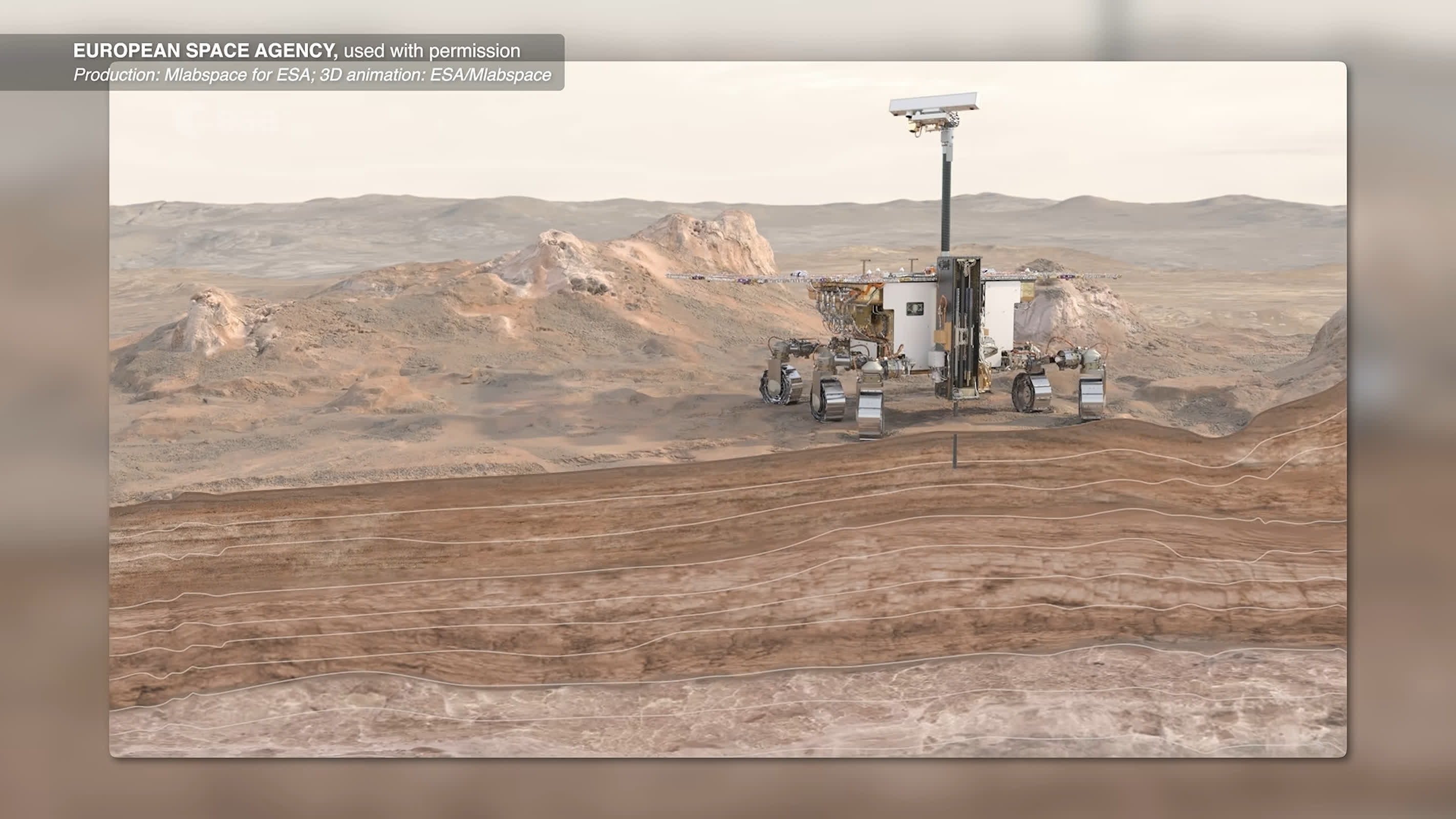
The ExoMars Rosalind Franklin Mars rover currently developed by Airbus is precisely to achieve this highly autonomous Mars exploration capability. The rover is equipped with a 3D panoramic camera system and can use an autonomous navigation system to move on the surface of Mars. It also carries drilling equipment that can collect samples about 2 meters underground to search for evidence of past or present life on Mars.
Therefore, Steam Deck plays a supporting role in the research and development phase here. When engineers need to move the test vehicle, check the control system, and observe the rover's response to different commands, physical controllers that can be held directly in the hand will be more convenient than keyboard operation.
Airbus has previously completed the manufacturing of the Rosalind Franklin Mars rover and is continuing to participate in the development and upgrade of related missions. Since the ExoMars mission originally planned to be launched in 2022 has been postponed due to factors such as the Russia-Ukraine conflict, the current mission plan has been adjusted. The Mars rover is expected to be launched in the future and arrive at Mars around 2030. Airbus is also responsible for developing mechanical, thermal control and propulsion systems for the landing platform, and upgrading the Mars rover so that it can quickly enter autonomous operation after landing.
From game consoles to Mars rover controllers, the scene on Steam Deck seems to be full of contrasts, but it is actually quite reasonable from an engineering perspective. A device with a complete PC architecture, open operating system, display screen and mature physical controller has the conditions to be reused for robot testing. For R&D personnel, as long as they can write suitable control software, it can become a low-cost, portable and easy-to-operate human-computer interaction terminal.
Of course, this does not mean that Steam Deck will actually "drive" the future ExoMars rover on Mars. After the rover actually arrives on the Red Planet, what ground engineers can do will mainly be to send high-level mission instructions, while the specific route selection and obstacle avoidance will be completed by the rover itself. The mission of Steam Deck is to help engineers test and improve this autonomous system more conveniently before it is officially put into the Martian environment.
Comments