
Abstract:
AMD is further expanding the scope of FSR 4. Jack Huynh, senior vice president of AMD's Computing and Graphics Division, recently revealed to Korean media that the company plans to officially support more APUs, gaming laptops and handheld gaming PCs with FSR 4 before the end of 2026. This means that machine learning super-resolution technology, which is currently mainly targeted at independent graphics cards, will further enter the field of integrated graphics cards and low-power gaming devices.
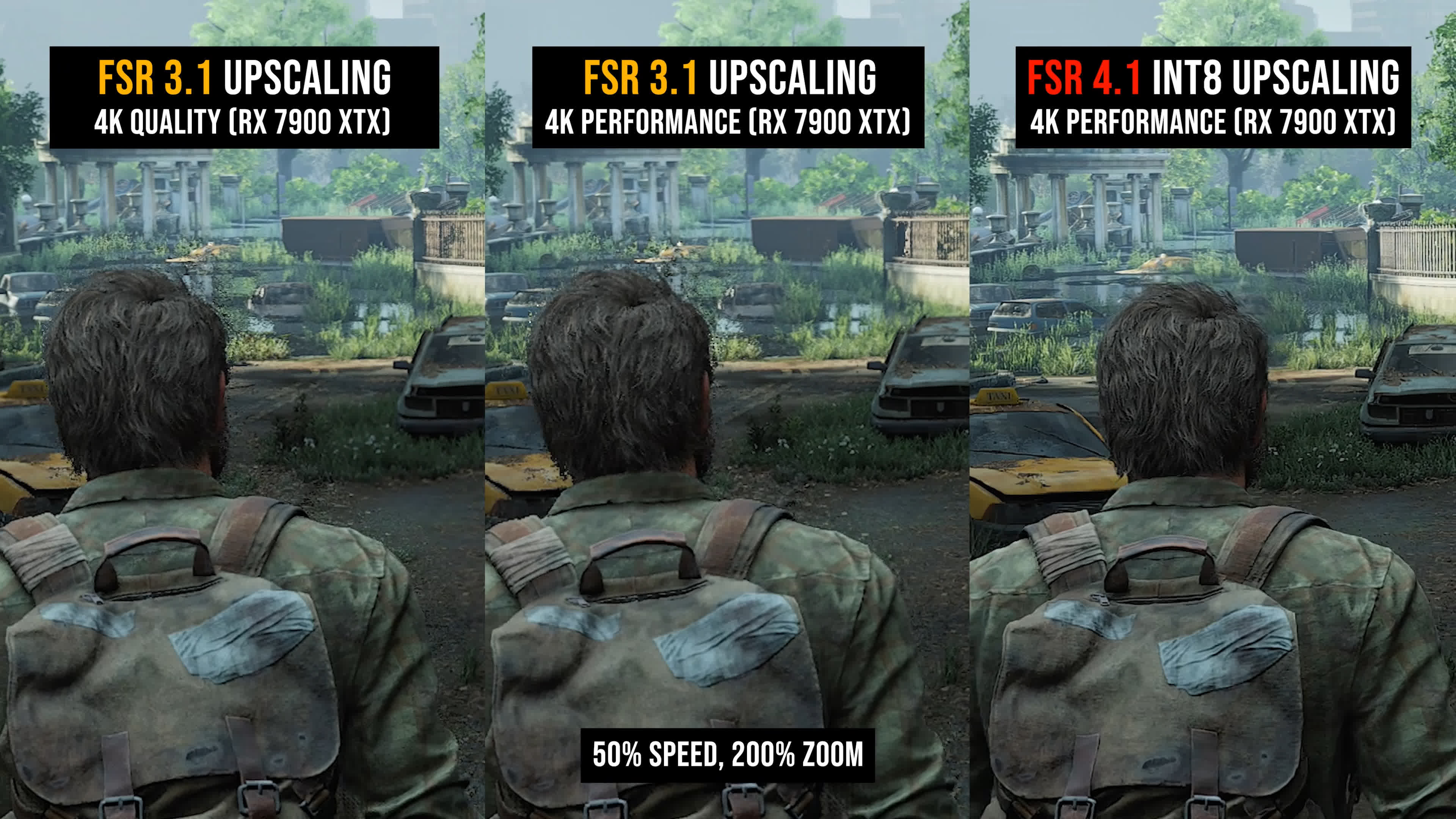
FSR 4 is AMD's new generation of image super-resolution technology based on machine learning. Its basic principle is similar to NVIDIA's DLSS: the game does not always need to completely render the image at the target resolution. Instead, it first renders at a lower resolution, and then uses the algorithm to reconstruct a higher-resolution image, thereby reducing the actual rendering burden on the GPU while maintaining image quality as much as possible.
FSR 4 was initially targeted at the AMD RDNA 4 architecture, which is the Radeon RX 9000 series of independent graphics cards. Compared with previous FSR that relied on traditional algorithms, FSR 4 introduces machine learning inference, so it can better handle issues such as dynamic objects, details, and temporal stability.
In June this year, AMD has brought a lightweight version of FSR 4 to the Radeon RX 7000 series graphics cards based on the RDNA 3 architecture. Since RDNA 3 does not have exactly the same machine learning hardware capabilities as RDNA 4, AMD has adjusted the model and changed the original FP8 calculation to the more widely available INT8 calculation to reduce operating requirements.
This time the version for APU and handheld consoles will be further lightweight. AMD is developing an FSR 4 model specifically optimized for the performance limitations of integrated graphics so that APUs with limited computing resources can run machine learning super-resolution.
This is especially important for handheld gaming PCs. Many Windows handheld machines currently on the market use AMD Ryzen series APUs, including devices such as ASUS ROG Ally X, Lenovo Legion Go, and GPD Win. The GPU part of these products has limited performance compared with desktop independent graphics cards, so they rely heavily on super-resolution technology to improve game frame rates.
If FSR 4 can officially run on these devices, players can use lower internal rendering resolution to obtain visual effects close to higher resolution, thereby obtaining higher game performance within the power consumption range of around 15W to 30W.
AMD also plans to expand support to APU products such as Ryzen AI Max. This is also relevant for thin and light notebooks with powerful integrated GPUs, as these devices often do not have discrete graphics cards but have enough integrated graphics processing power to run modern 3D games.
AMD also revealed this time that the company will launch a new generation of APU supporting FSR 4 in 2026. This news has further intensified speculation about the new generation of Ryzen handheld processors.
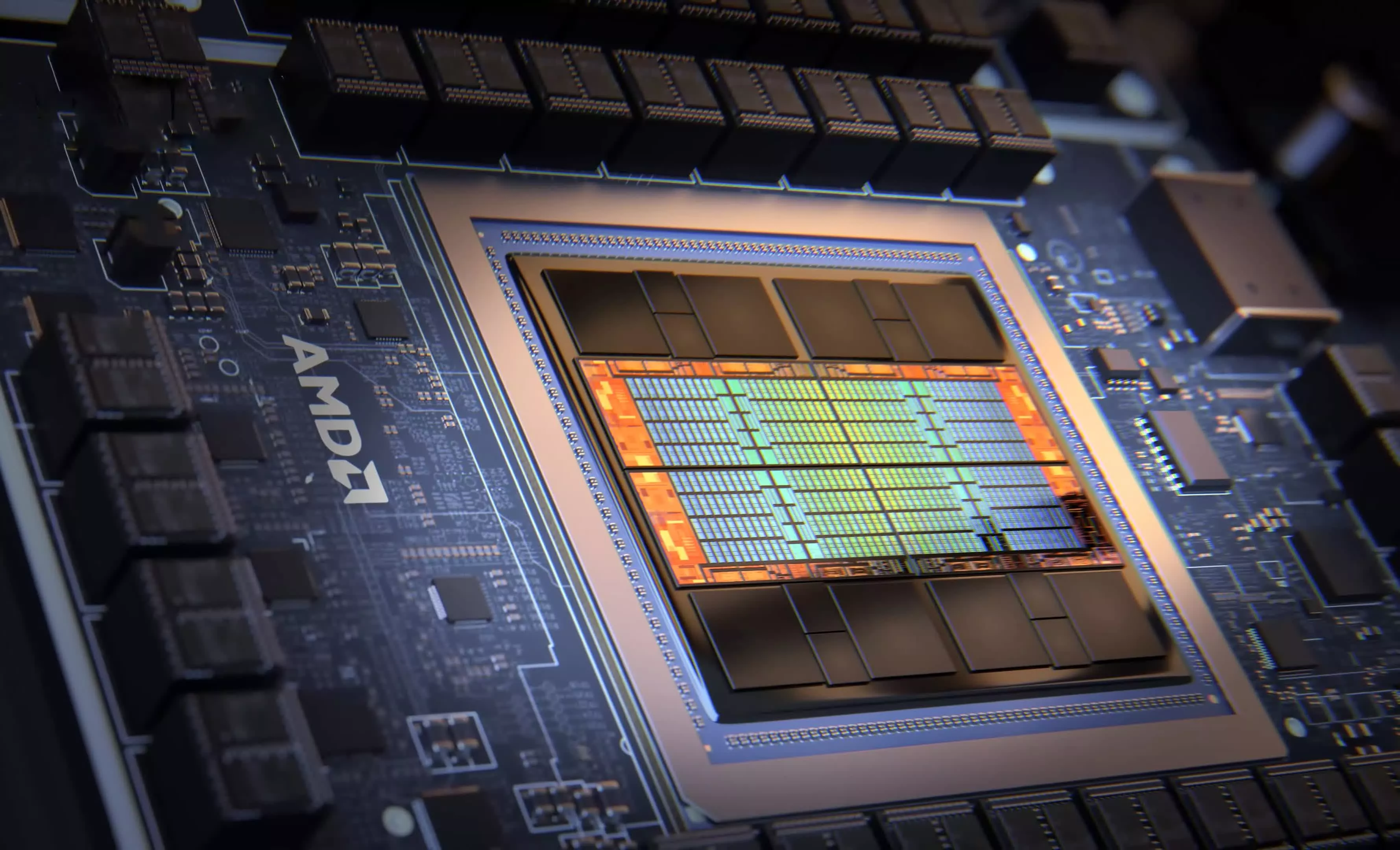
Related revelations about the so-called Ryzen Z3 and Ryzen Z3 Extreme have appeared recently. According to reports, the two chips may use a graphics architecture between RDNA 3.5 and RDNA 4, and combine the machine learning capabilities of RDNA 4 with the basic design of RDNA 3.5.
According to relevant reports, the Ryzen Z3 series may have 12 GPU computing units, paired with 4 Zen 6 CPU cores and 2 low-power Zen 5 cores. The regular version of Z3 is said to be optimized for power consumption of about 15W, while the Z3 Extreme may increase power consumption to about 25W.
However, these specifications are still leaks that have not been officially confirmed by AMD and cannot be regarded as final product parameters. The so-called "RDNA 4m" architecture also mainly comes from relevant information in previous Linux drivers. AMD has not yet disclosed the complete mobile RDNA 4 product architecture.
At the same time, a chip codename named "Gainsborough" also appeared in recent supply chain information. Some tipsters believe that it may use the same architecture as the above-mentioned new generation APU, and speculate that it may be used in Steam Deck 2 in the future. However, there is currently no reliable evidence that Gainsborough is the core chip of the next generation Steam Deck.
The AMD APU used in Steam Deck has always used special internal code names. For example, the first generation Steam Deck used "Aerith" and the Steam Deck OLED used "Sephiroth". These codenames actually come from AMD, not Valve. Therefore, the mere presence of similar codenames does not prove that a certain chip is the processor of Steam Deck 2.
In addition, there is currently an important compatibility issue. Steam Deck uses the RDNA 2 architecture, so even if AMD expands FSR 4 to more APUs and handheld consoles at the end of this year, it does not mean that existing Steam Deck will be supported immediately.
According to the current route, devices with RDNA 3 and newer architectures are expected to be the first to receive FSR 4, while support for RDNA 2 may have to wait until 2027. If this timeline remains unchanged, the Steam Deck, regular ROG Ally, and some other devices using RDNA 2 may have to wait.
AMD has made it clear that it will further expand the hardware coverage of machine learning super-resolution in the future. According to AMD's latest product route, FSR Upscaling 4.1 already supports the RX 7000 and RX 9000 series, while RDNA 2's machine learning super-resolution support is planned to be launched in 2027.
It should be noted that AMD has begun to gradually change the product name of FSR 4. As FSR technology expands from simple super-resolution to multiple machine learning functions such as frame generation, light reconstruction, and radiation caching, AMD currently calls the entire technology system FSR "Redstone", while the original FSR 4 is gradually renamed FSR Upscaling.
For the handheld market, this change may be very important. The core contradiction of handheld consoles has always been the balance between performance, image quality and power consumption. Compared with directly increasing the GPU scale, reducing the actual rendering burden through machine learning can improve the final picture quality and frame rate without significantly increasing power consumption.
Especially after high-resolution screens gradually become the standard for high-end handheld consoles, the value of technologies such as FSR will further increase. For example, a handheld console may only need to render at an internal resolution of around 720p or 800p, and then reconstruct it to 1080p or higher through FSR, thus avoiding the GPU having to bear the burden of rendering at the full native resolution.
However, whether FSR 4 can achieve the same effect as a discrete graphics card on a handheld console still depends on AMD's models designed for different GPU performance and actual game support. Machine learning super-resolution itself also requires computing resources and video memory. Therefore, for handheld consoles with very limited power consumption, a balance needs to be struck between the performance gains brought by the algorithm and the additional overhead incurred by running the model.
If AMD can successfully complete this expansion before the end of 2026, FSR 4 will no longer be just a high-end feature of the RX 9000 series of independent graphics cards, but will gradually become a common technology in AMD's entire gaming hardware ecosystem. For gaming handhelds and notebooks without independent graphics cards, this may be more important than simply improving the raw GPU performance of the APU.
Judging from the current development route, AMD is trying to gradually decentralize machine learning capabilities from high-end independent GPUs to APUs, notebooks and handheld computers. With the emergence of new generations of low-power chips, competition among handheld consoles in the future may no longer just compare the number of GPU computing units and peak performance, but will increasingly rely on the efficiency of machine learning super-resolution, frame generation and other AI graphics technologies.
Comments