
Abstract:
Apple’s new generation AirPods 5 has recently attracted attention due to its internal structure design. While wireless earbuds have long been considered one of the most difficult consumer electronics products to repair, AirPods 5 represents a clear change in repairability, especially when it comes to battery replacement, which represents significant progress over previous generations.
Due to the very small size of wireless earphones and the highly compact internal space, manufacturers usually use a large amount of glue to fix batteries, speakers and other components. This design enables higher structural strength and better waterproof capabilities in a limited space, but it also makes it difficult for repairmen to disassemble the earphones without damaging the casing and internal components once the battery ages. Therefore, even if the battery capacity of AirPods in the past was reduced, it often meant that the entire pair of headphones needed to be replaced.
AirPods 5 has been redesigned in this aspect. According to the disassembly results, the battery fixation method inside the new headphones has changed, giving maintenance personnel the opportunity to finally remove the battery during the disassembly process and further install replacement parts. This does not mean that AirPods 5 has become an easy-to-repair product, but at least it has taken an important step compared to the past design where the battery was almost impossible to replace.
There are still considerable difficulties to be faced during the disassembly process. The shell of AirPods 5 still uses a tightly assembled structure, and accessing the interior requires the use of special tools and the handling of a large amount of adhesive material. Since the internal space of the earphones is very limited, any disassembly operation carries the risk of damaging the cables, speakers or other precision components, so it is still not suitable for ordinary users to attempt repairs on their own.
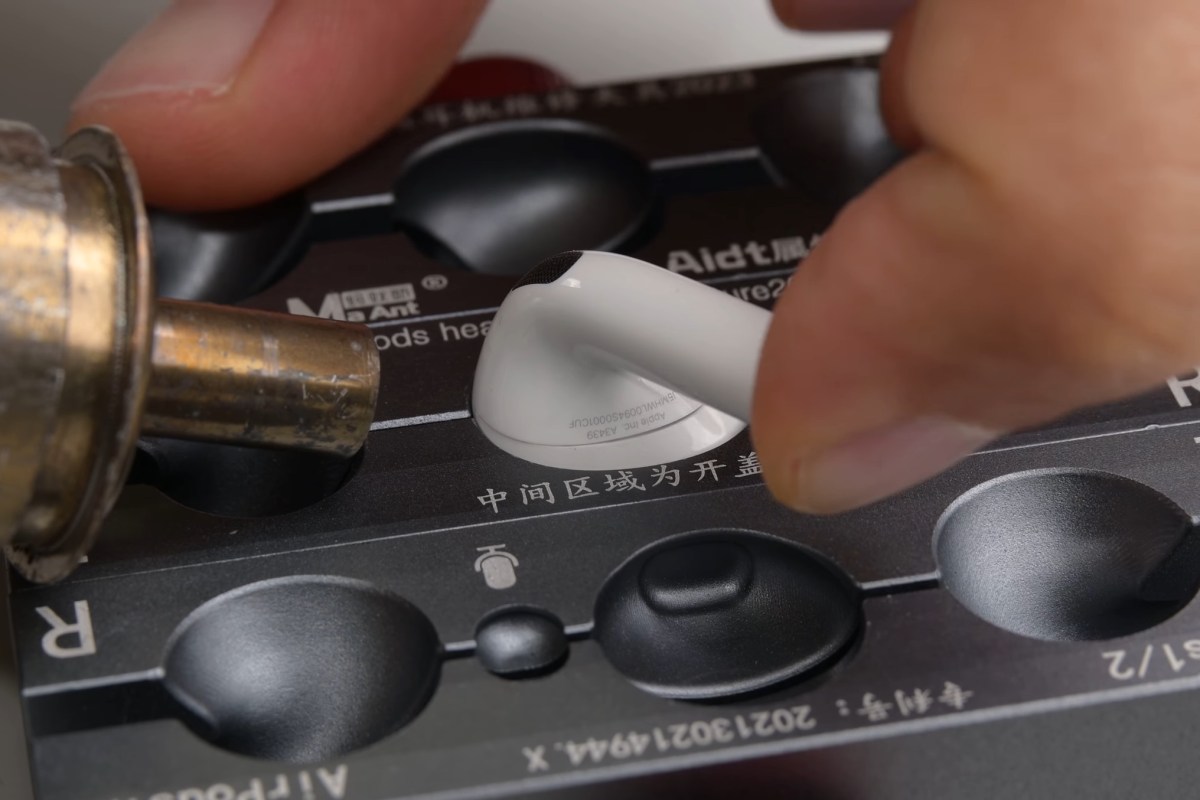
The real change is in the battery. One of the most criticized problems of the previous AirPods series is that the built-in battery is a typical consumable component, but the product structure hardly allows users to replace it. As lithium-ion batteries undergo hundreds of charge and discharge cycles, their capacity will gradually decrease. Due to the high frequency of daily use, wireless earphones often experience significant decline in battery life earlier than mobile phones.
If the AirPods 5 battery can indeed be replaced through professional repair, then users will not have to directly eliminate the entire product due to battery aging after using the earphones for many years. In theory, replacing the battery can extend the life of the headset as long as other major components are still functioning properly.
This also makes AirPods 5 the generation with the most outstanding repairability in Apple’s headphone product line. Previously, AirPods, AirPods Pro and other true wireless headphones generally used highly integrated and glued internal structures. The disassembly process often caused irreversible damage to the casing, making repairs very costly and difficult.
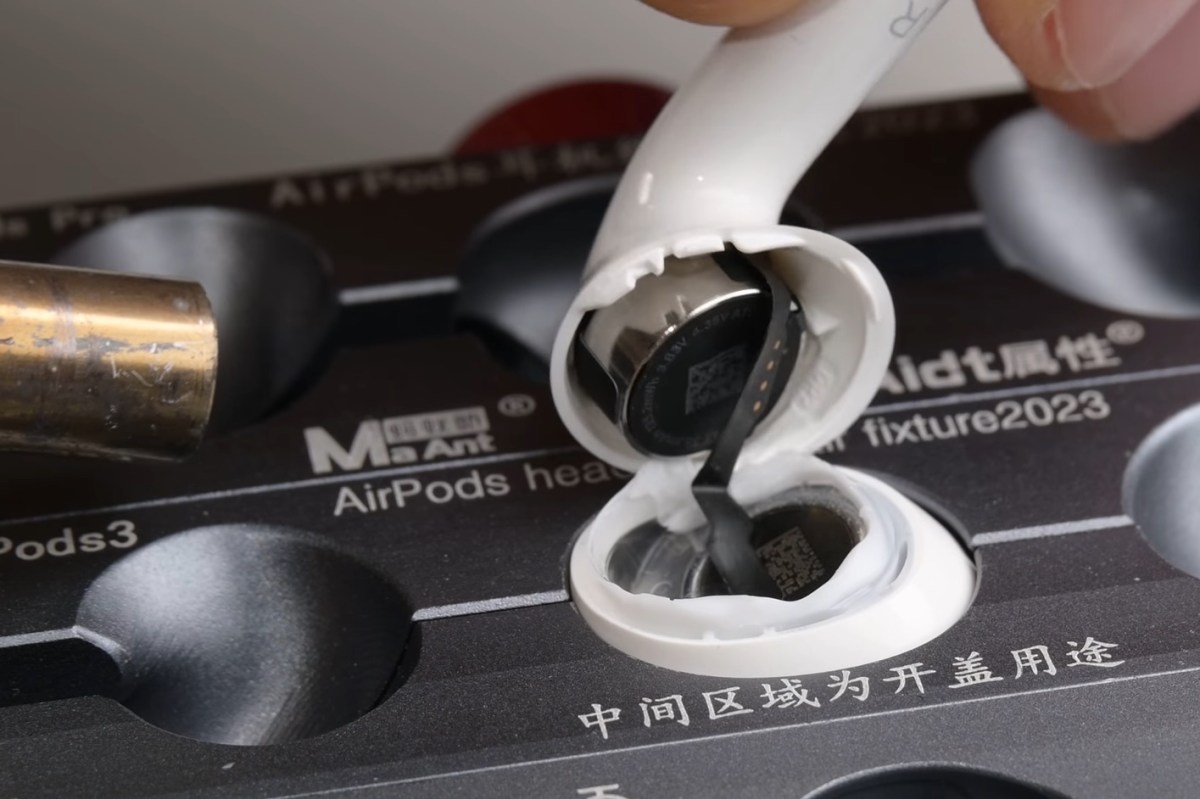
However, "easier to repair" does not mean that AirPods 5 has completely solved the repair problem of wireless headphones. The speakers, microphones, charging coils and other components of the earphones are still tightly packed in a small space, and many parts still cannot be easily disassembled and replaced. Therefore, the current more accurate positioning of AirPods 5 should be "improved maintainability based on traditional true wireless headphones" rather than becoming a modular product like a laptop or mobile phone.
This change also has certain environmental significance. Wireless headphones are small and relatively expensive, but their battery life is usually significantly shorter than other electronic components of the product. Therefore, a large number of devices may enter the scrapping stage early simply because of battery degradation. If the battery can be replaced through maintenance, it can theoretically reduce electronic waste and reduce long-term use costs for consumers.
Apple has begun to improve repair designs on some products in recent years, including expanding official repair projects and providing more original parts and repair tools. The structural changes in AirPods 5 also show that repairability is gradually becoming a factor that needs to be considered in the design of small consumer electronics products.
However, for consumers, whether AirPods 5 can truly achieve affordable battery replacement in a real-life repair environment depends on what repair solutions Apple’s official and third-party repair agencies can provide in the future. Even if the battery is technically removable, the practical implications are still limited if the repair price is too high.
Overall, the biggest change of AirPods 5 is not necessarily reflected in the sound quality or functions, but may be that Apple has finally begun to solve the long-standing problem of true wireless earphones of "a bad battery, the whole machine is scrapped". Although it is still a small electronic device that is difficult to disassemble, as long as battery replacement can eventually become a reliable and affordable repair item, it is expected to significantly extend the actual lifespan of AirPods 5.
Comments