
Abstract:
AMD may increase the supply price of Radeon graphics core and GDDR6 video memory packages again in November 2026. This means that after adjusting supply prices in October, AMD's cooperative graphics card manufacturers may face cost increases again in just one month. As the global supply of memory chips continues to be tight, price pressure on the graphics card market is further expanding.
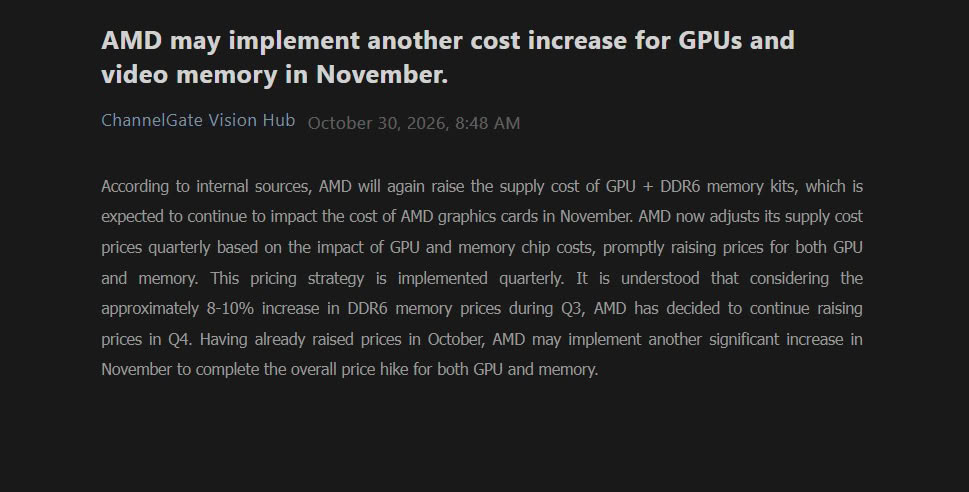
According to news from China Hardware Supply Chain Forum Bopantang, AMD is considering adjusting the price of GPU and GDDR6 video memory packages to graphics card partners again in November. Relevant news subsequently attracted the attention of technology media such as VideoCardz. However, this adjustment has not yet been officially confirmed by AMD, and the specific increase has not been announced.
This price adjustment involves the GPU and video memory combination packages provided by AMD to graphics card manufacturers such as ASUS, Sapphire, and XFX. It should be noted that this is not a direct increase in the price of assembled retail graphics cards by AMD, but an increase in the supply price of upstream core chips and supporting graphics memory. Only when the purchasing costs of cooperative manufacturers increase will it be gradually passed on to the final consumers.
According to supply chain news, GDDR6 graphics prices have increased by approximately 8% to 10% in the third quarter of 2026. AMD previously adjusted related supply prices on October 1, and now plans to make a new round of adjustments in November, reflecting that graphics memory costs continue to rise.
The main reason for this situation is the continued squeeze on memory chip production capacity by global artificial intelligence infrastructure construction. As demand for AI servers and data centers grows rapidly, major memory chip manufacturers such as Samsung, SK Hynix and Micron are investing more production resources in HBM and server DRAM products with higher profit margins. Although GDDR6 and HBM are different types of storage products, they share some DRAM manufacturing resources, and changes in production capacity allocation will still have an impact on graphics memory supply.
Previously, the price of GDDR6 video memory has experienced a significant increase. Relevant supply chain news said that its spot price has risen to several times its original value since the end of 2025, causing graphics card manufacturers to face increasing purchasing pressure. AMD had previously maintained relatively stable supply prices for a period of time, but as the original purchasing arrangements gradually expired, cost increases began to be more directly reflected in partners' purchasing prices.
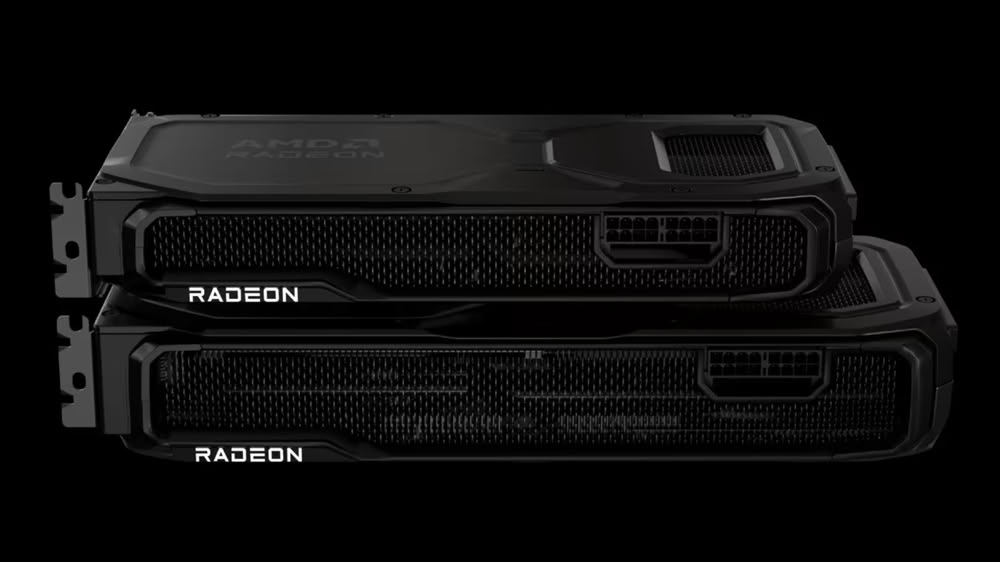
This change is particularly noteworthy for the Radeon RX 9000 series. This series uses RDNA 4 architecture and all uses GDDR6 video memory. Some models are equipped with 16GB of video memory. The cost of video memory accounts for a very important proportion of the total cost of the entire graphics card.
According to current market feedback, AMD graphics cards have seen a significant increase in retail prices. Hardware Unboxed previously conducted a survey on the retail prices of graphics cards in 10 countries. Data showed that the average selling price of global graphics cards increased by approximately 10% month-on-month in October 2026. Among them, Radeon RX 9060 XT 16GB increased by 17%, and Radeon RX 9070 and RX 9070 XT also increased by about 12% respectively.
These figures reflect actual consumer purchase prices, not the chip prices AMD provides to partners. There are many links between the two, such as graphics card manufacturers, distributors and retailers, so the increase in upstream supply prices does not mean that the final graphics card selling price will increase by the same proportion.
However, if AMD raises the price of GPU and video memory packages again in November, partner manufacturers will likely need to re-evaluate product pricing. Especially for 16GB video memory models, due to the need to purchase more GDDR6 particles, the impact of rising video memory prices may be more obvious.
Previously, AMD had already made relevant price adjustments in August and October 2026. The increase in supply prices in August is said to have reached at least 10%, and supply prices for GPUs and related products were adjusted again in October. If price increases are implemented again in November, it will mean that the Radeon graphics card supply chain will undergo multiple rounds of cost adjustments in a short period of time.
It should be pointed out that the price increase measures that AMD may take this time are still supply chain news. The specific models involved, the increase in different capacities of video memory, and the execution time of partners in various regions have not yet been officially confirmed.
For consumers, supply chain price increases are usually not immediately reflected in the retail market. Graphics card manufacturers and dealers still have inventory that they previously purchased at the old price, so the new costs need to go through production, distribution, and inventory replacement before they are gradually transmitted to the retail end. If a new round of adjustments is implemented in November, consumers may feel more obvious price pressure during the December shopping season.
Currently, the global graphics card market is being affected by increases in GPU chips, video memory, advanced packaging and manufacturing costs. The huge demand for storage resources in AI data centers is changing the supply chain pattern of the traditional PC hardware industry. For AMD, passing on the rising graphics memory purchase costs to its partners is a way to maintain its own profit margins, but whether consumers can ultimately accept higher graphics card prices will still depend on market demand and competitors' pricing strategies.
Taken together, the Radeon RX 9000 series may not yet have a price stabilization period. As GDDR6 supply costs continue to rise, if AMD implements a new round of supply price adjustments in November, the possibility of further price increases in the graphics card market before the end of the year will increase.
Comments