
Abstract:
The latest leaked roadmap information shows that AMD's next-generation Zen 7 processor platform for the consumer market may not be officially unveiled until 2029, and will also be equipped with an upgraded version of the RDNA 5+ integrated graphics architecture. This news further outlines AMD's mobile processor development plan in the next few years, and also implies that it will still take a long time for the RDNA 5 architecture to fully enter the mainstream mobile market.
According to information disclosed by well-known hardware whistleblower Kepler_L2, the Zen 7 APU code-named "Grimlock" is expected to debut in early 2029 and be equipped with a new generation integrated graphics architecture called "RDNA 5+". This is one of the more specific early pieces of information about Zen 7 consumer products currently available to the outside world.
Previously, Kepler_L2 and Digital Foundry disclosed that a handheld chip code-named "Canis" being developed by Sony may be the only mobile product currently using AMD RDNA 5 graphics architecture. Rumor has it that AMD will not open the RDNA 5 platform to PC manufacturers such as Valve, Asus, and MSI for the time being because it is difficult for relevant manufacturers to meet the large-scale shipment threshold required by AMD. This has also triggered extensive discussions about when RDNA 5 will enter the mainstream handheld and mobile device markets.
In response to this issue, Kepler_L2 said that RDNA 5+ is expected to appear together with the Zen 7 "Grimlock" platform in 2029. Judging from the naming method, the "+" version usually means further optimization and enhancement based on the original architecture, rather than a completely redesigned new architecture. Industry insiders believe that its positioning may be similar to AMD's previous upgrade model from RDNA 3 to RDNA 3.5.
在此之前推出的各类掌机产品,包括市场传闻中的微软游戏掌机,预计将继续采用AMD未来的Ryzen Z3系列平台。该系列产品据称将融合Zen 6、Zen 5以及RDNA 4m等技术方案,以填补未来数年的市场需求。
At the same time, AMD is expected to launch the only independent desktop graphics card based on the RDNA 5 architecture next year. According to existing rumors, this product will target the high-end or sub-flagship market and compete with Nvidia's future 24GB version RTX 5080.
The Sony Canis handheld chip that has attracted much attention is expected to be released around the end of 2027. According to sources, the chip uses a Zen 6c processor core with a frequency of up to 2.2GHz and a thermal design power consumption of approximately 15 watts. The handheld console is expected to be launched as an important supplementary device to the PlayStation 6 ecosystem, and future PlayStation 6 consoles are also expected to use RDNA 5 graphics architecture and Zen 6 processor technology. However, Sony has not yet announced the official release schedule of related products.
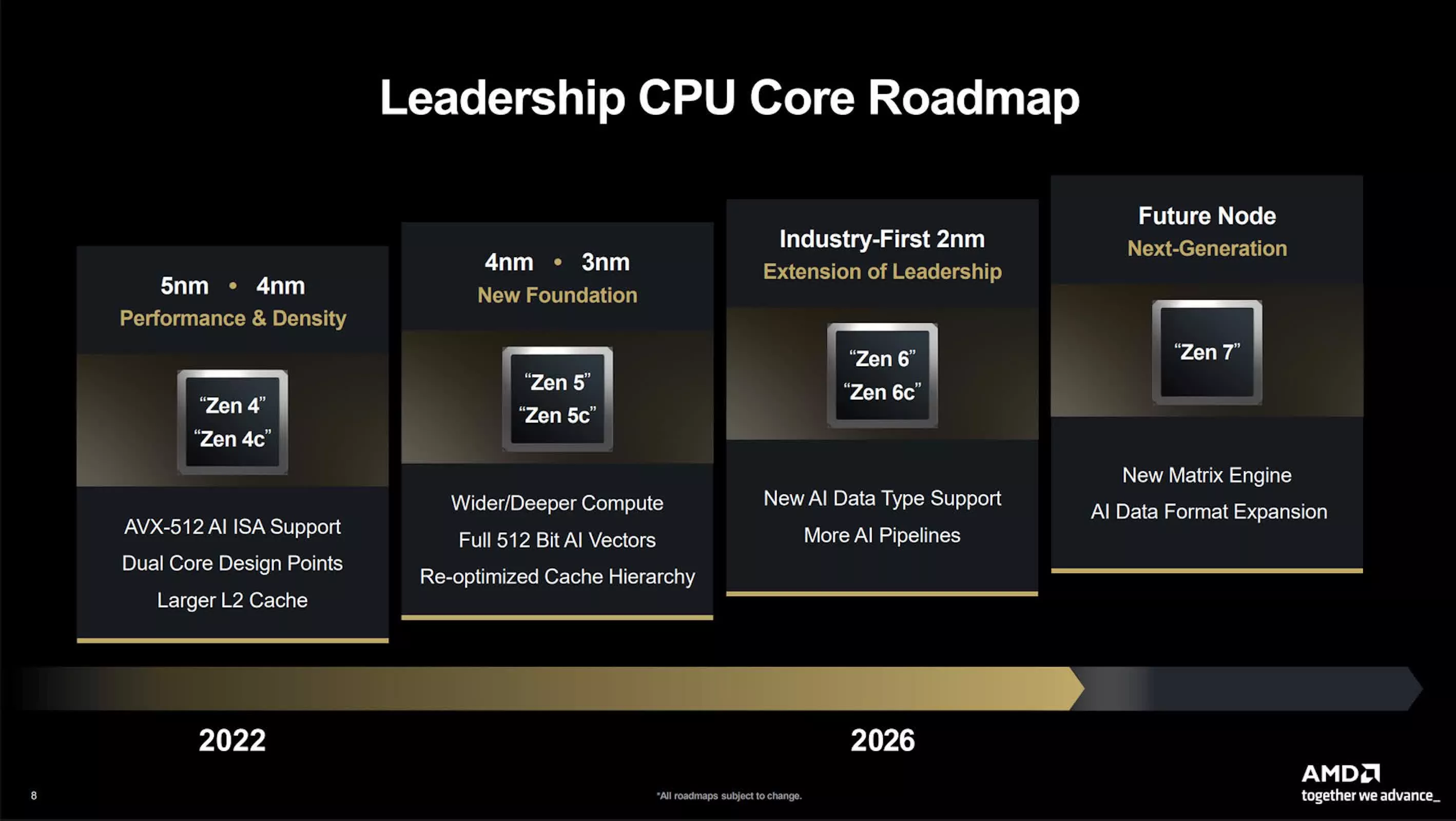
The clearest information about Zen 7 architecture currently comes mainly from the server field. AMD has confirmed that its next-generation EPYC server processor, codenamed "Florence", will be released in 2028 and will switch to TSMC's A16 and A17 advanced process technologies. This also means that the future Ryzen product line will officially enter the era of angstrom-level manufacturing.
According to AMD's previously announced development direction, the focus of the Zen 7 architecture will be on improving artificial intelligence computing capabilities, reducing system overhead, and further enhancing security. In addition, the Zen 8 EPYC server processor code-named "Ravenna" is currently scheduled to debut in 2030.
It should be pointed out that most of the above information about "Grimlock" and "RDNA 5+" still comes from leakage channels. AMD officials have not yet confirmed the product name, specifications and release time, so the relevant content is still subject to change. However, if the news is ultimately true, the development route of AMD's mobile platform in the next few years will gradually become clear. It may have to wait until after 2029 for high-performance RDNA 5 series core displays to truly enter the mainstream consumer APU market.
Comments