
Abstract:
Apple recently revealed an important design detail of the iPhone Duo folding screen phone: the nano-texture protective layer covering the inner screen to reduce the visibility of the crease can actually be removed and replaced separately, without replacing the entire folding screen. This means that when this layer of material wears out with long-term use, or the crease in the center of the screen becomes more obvious, users can restore the display effect by replacing the protective layer.
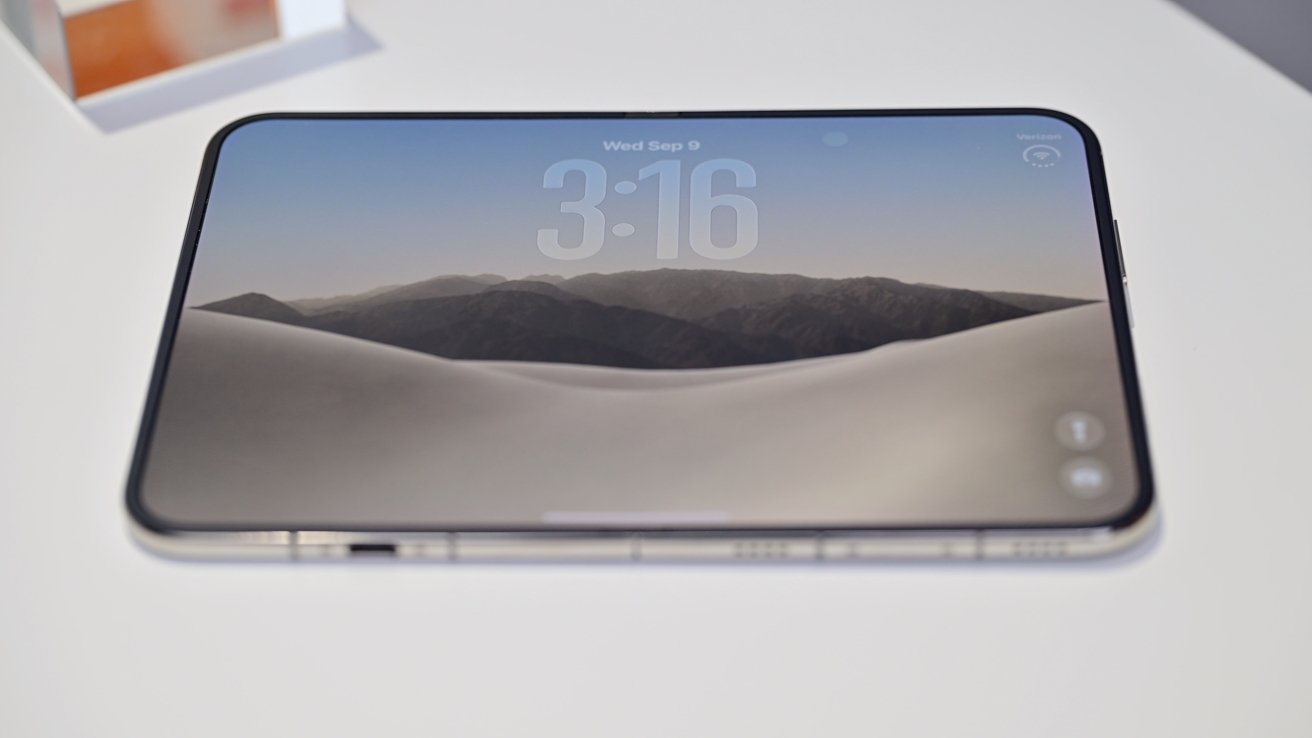
This information comes from an interview by Apple Vice President of Hardware Engineering Kate Bergeron in an interview with content creator Angelica Siciliani Fendi. Bergeron said the protective material itself is replaceable, allowing users to remove the old covering and install a new one. Apple had not previously focused on promoting this design when the iPhone Duo was released, so the public information this time also attracted attention from the outside world.
iPhone Duo uses Apple's first foldable inner screen, which forms a continuous large-size display area when fully unfolded. Since one of the most obvious problems with folding screens is the crease in the center of the screen, Apple added a special nano-textured covering layer to the outermost layer to reduce reflections through special surface treatment while making the folding area in the center of the screen less obvious.
This covering material is not an ordinary plastic protective film. Apple's previously announced internal screen structure shows that the iPhone Duo's folding screen is composed of up to 10 layers of ultra-thin materials. The nano-textured cover layer is made of Apple's customized polymer material, which is up to about 40% more rigid than common materials in other industries. An anti-scratch coating is also added to the surface of the cover to deal with friction and minor scratches during daily use.
Under the cover layer, Apple also added a high-strength glass structure and a titanium metal plate at the bottom to increase the strength of the entire flexible display component. Apple also uses special adhesive materials that allow different layers to slide against each other like book pages, thereby releasing stress during repeated bending and reducing the mechanical stress on the display.
However, even with these designs, the outermost nano-texture overlay is still a component that faces user operation and the environment directly for a long time. It may develop scratches, wear, or surface finish degradation over time, and these problems do not necessarily mean that the OLED display panel itself is damaged.
Therefore, Apple designed this layer to be independently replaceable, which has obvious practical significance for folding screen mobile phones. If the inner screen protective layer of traditional folding screen devices is severely worn, repairs may often involve the entire display assembly. However, iPhone Duo can theoretically replace only the outermost covering material, thereby avoiding the expensive replacement of the entire folding screen due to protective layer problems.
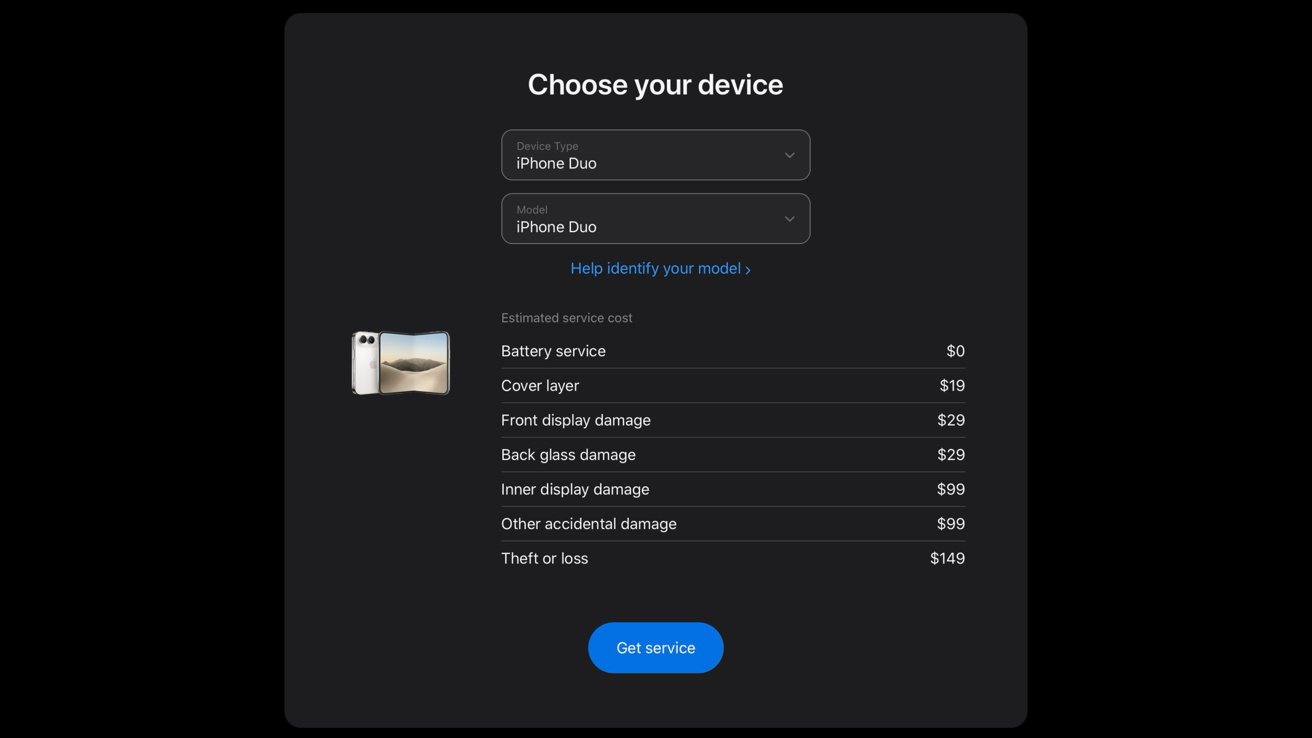
Apple has announced related repair prices in the US market. For iPhone Duo users who purchase AppleCare+, if they need to replace this layer of covering material, the cost will be $19. Apple has not yet announced the official replacement price without AppleCare+.
There is currently no indication that Apple will allow ordinary users to purchase overlays and replace them at home. Although Apple executives used the "strip and replace" description, the actual repair process is still likely to be completed by an Apple Store or an Apple Authorized Service Provider. For iPhone Duo, which starts at $2,999, trying to remove the inner screen cover yourself is not a repair solution worth risking.
From a maintenance perspective, this design is significantly different from ordinary smartphone screen protectors. Ordinary protective films are mainly responsible for anti-scratch, and users can tear them off and replace them by themselves; while the nano-textured covering layer of iPhone Duo is also part of the overall structure of the folding screen. Its material, surface texture, and relationship with the display components below are all specially designed, so the replacement process needs to maintain the integrity of the internal structure of the screen.
This design is also related to Apple’s previous emphasis on the durability of the iPhone Duo folding screen. Apple said that in order to keep the inner screen in good condition after repeated folding for a long time, the company conducted a lot of engineering design and specifically optimized for creases, bending stress and surface durability.
The internal screen of iPhone Duo does not use Ceramic Shield 2 used in the iPhone 18 Pro series, but uses a custom polymer cover. The external screen continues to use Ceramic Shield 2, and the back also uses Ceramic Shield. In other words, iPhone Duo actually uses completely different protective materials based on the different tasks performed by the two screens.
Both the inner and outer screens support ProMotion adaptive refresh rate, all-weather display and true color display, with a maximum outdoor peak brightness of 3,000 nits. The unfolded inner screen is the core user experience of the iPhone Duo, so Apple needs to balance flexibility, strength, scratch resistance, and crease control.
It is worth noting that being able to replace the outer covering material does not mean that the iPhone Duo’s creases can disappear permanently. The main function of the nano-texture layer is to reduce the visual presence of creases. If the OLED panel and its internal structure undergo permanent deformation after repeated bending for a long time, replacing the outermost covering material cannot fundamentally repair the display panel itself.
But for daily use, this is still a practical repair design. One of the biggest long-term risks of folding screen mobile phones is that the inner screen surface and folding area are prone to wear and tear, and iPhone Duo can reduce part of the repair from "replacing the entire screen" to "replacing the surface covering" by designing the outer covering material that is most susceptible to wear and tear into independent replaceable parts.
Currently, iPhone Duo will be available for pre-order on October 16th and will be officially launched on October 23rd. As the first users begin long-term use, how long the nano-textured overlay lasts, how long it actually takes to replace it, and whether the $19 AppleCare+ repair price can cover most relevant situations will become important factors in evaluating the actual value of this design.
Judging from the information currently released by Apple, the repairability of the iPhone Duo is not reflected in the substantial modularization of the entire structure, but by isolating the outer components of the folding screen that are most susceptible to long-term wear and tear to achieve more targeted repairs. For the first foldable iPhone, priced at $2,999, this design also helps reduce the risk of users facing high screen repair costs during long-term use.
Comments