
Abstract:
Although Apple has just officially launched the new generation iPhone 18 Pro series, the focus of the company's top management has partly turned to the upcoming folding screen product iPhone Duo. Recently, Apple CEO John Ternus and several core design leaders shared in detail for the first time the design thinking behind this foldable screen device, describing it as a typical representative of the "intersection of technology and humanities and arts" long advocated by Steve Jobs.
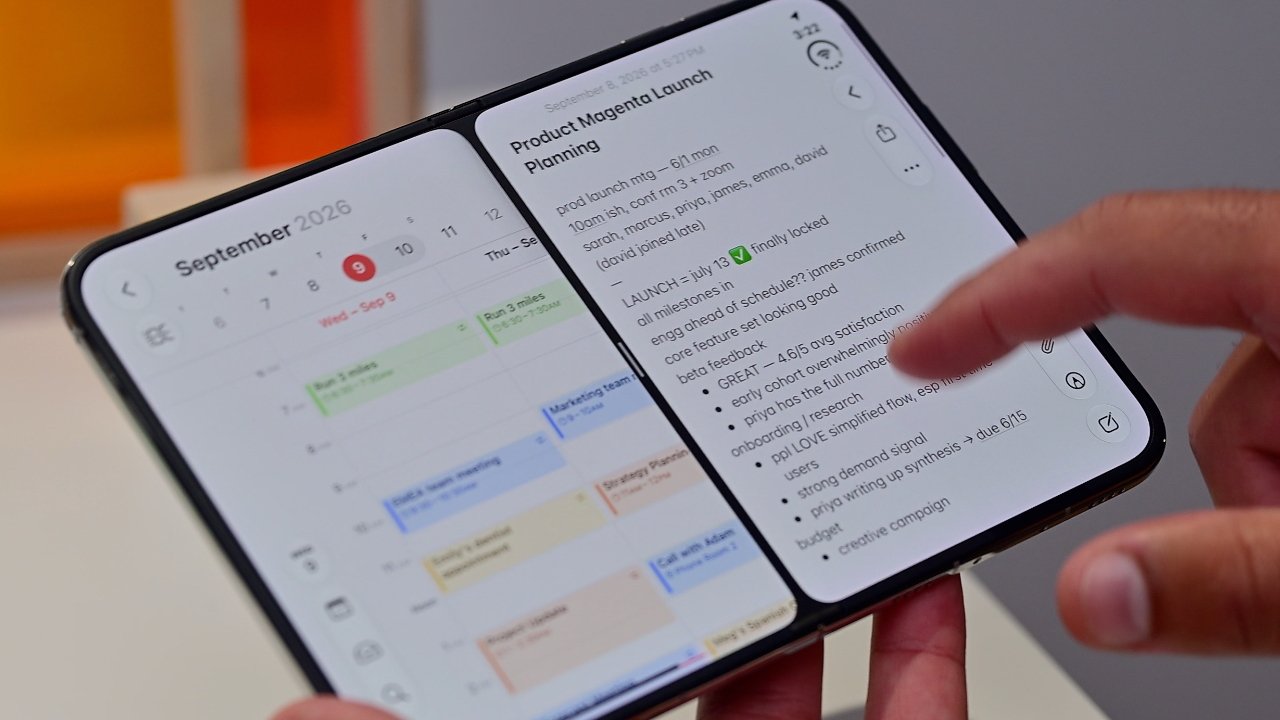
Ternus said in an interview with the media that Jobs had repeatedly emphasized the importance of the integration of technology and humanities and art, and iPhone Duo is the concrete embodiment of this concept. From Apple's perspective, this product is not a new piece of hardware simply launched to enter the folding screen market, but a new attempt to redefine the way mobile devices are used.
Molly Anderson, Apple's vice president of industrial design who participated in the development of the project, revealed that the team did not initially conceive the product based on technical parameters, but looked for inspiration from one of the most familiar items in daily life - paper notebooks.
She said that people know the feeling of having a notebook in their pocket and how convenient it is to carry a paper notebook with them. Therefore, the core issue that the design team thought about was how to create a device form that can provide more space while still maintaining portability.
According to relevant reports, the overall proportions of iPhone Duo even refer to the internationally accepted A series paper specification system. If measured according to this standard, its unfolded proportion is closer to that of A5 paper. Although not strictly consistent in design, there are obvious similarities in the overall visual and user experience between the two.
However, Apple internals and most people who have experienced the real machine prefer to describe iPhone Duo as a "passport-sized" device. In the folded state, it has a relatively compact appearance, making it easy to carry around, but when unfolded, it provides a display space that is much larger than that of an ordinary mobile phone.

In addition to size and shape, Apple has also put a lot of effort into the folding experience itself. Anderson said that the team has repeatedly optimized the feel of the device when it is unfolded, hoping that the entire action process will be natural and smooth enough.
She said that iPhone Duo uses a specially designed hinge system that includes a customized variable torque solution. Users can feel low resistance when opening the device, and when the screen is fully unfolded, the hinge will actively help the body maintain a flat state, thereby achieving a usage experience close to that of a traditional tablet device.
From a hardware design perspective, the opening, reading, and recording experience provided by paper notebooks has always been an important reference for the development team. Apple hopes to create a familiar yet new product form through the folding structure, rather than simply splicing two screens together.
At the same time, the software team is also advancing system design work simultaneously. Steve LeMay, Apple's vice president of human-computer interface design, said that the software experience of iPhone Duo actually inherits the achievements accumulated by Apple's multiple product lines over the years.
He believes that users can see a lot of design experience from iPad, Mac and traditional iPhone on new devices. In a sense, iPhone Duo is more like a concentrated fusion of Apple’s multiple mature product concepts.
LeMay specifically emphasized that Apple does not want users to feel like they are entering another operating system after unfolding the device. Regardless of whether it is in the folded or expanded state, the system should remain familiar and continuous, so that users do not need to relearn new interaction logic or have the trouble of finding function entrances.
In Apple's view, the value of folding screen devices is not just to increase the screen area, but to establish a natural connection between the larger display space and the original mobile experience. Therefore, iPhone Duo has emphasized the collaborative development of software and hardware from the beginning of its design, rather than dealing with hardware form and software interface issues separately.
As competition in the folding screen market becomes increasingly fierce, Apple is trying to enter this field through distinctive product concepts. Rather than simply pursuing a larger display area or a more complex folding structure, the company hopes to shape iPhone Duo into a new personal device that combines productivity and portability.
According to Apple’s announced plan, iPhone Duo will be available for pre-order on October 16, 2026. For Apple, this is not only the company's first foldable screen phone, it is also seen as another important product that attempts to redefine the form of mobile terminals after the birth of the iPhone.
Comments