
Abstract:
Apple has just launched HomeView, a smart home hub device, and has already begun developing larger and more advanced follow-up models. According to Bloomberg reporter Mark Gurman, Apple is developing a higher-end smart home display device, which is temporarily called HomeView Max. The new product is expected to have a screen of about 9 inches and be equipped with an electric robotic arm that can rotate 360 degrees and can automatically adjust the screen orientation based on the user's position and voice.
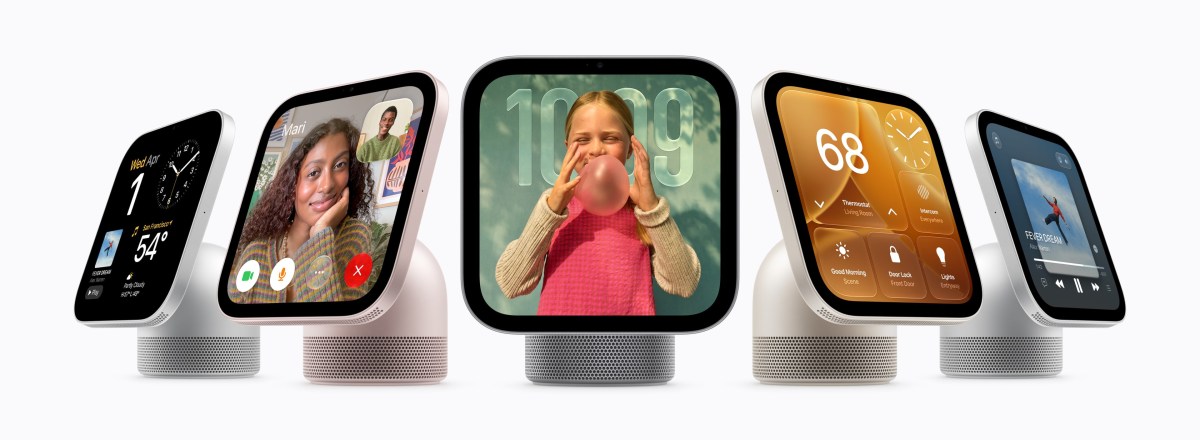
Apple officially released HomeView on October 13, 2026. This is an important product for the company to further expand its smart home business. The standard version is equipped with a 7-inch Liquid Retina display, combined with a speaker base, Siri AI voice assistant, and Apple Intelligence functions, which can be used to control smart home devices, play music, make FaceTime video calls, and display family schedules and other information. Apple has also launched a wall-mounted version, allowing users to choose the installation method according to their home layout.
According to Gurman's news in Bloomberg's Power On newsletter, Apple does not intend to limit HomeView to its current fixed design, but hopes to enable the device to more naturally participate in interactions among family members through a larger screen and automatic steering mechanism.
According to reports, the internal code name of this yet-to-be-announced device is J595. Its screen size is expected to be about 9 inches, about two inches larger than the existing HomeView's 7-inch screen. A larger display area can accommodate more information and is also expected to improve the use experience in scenarios such as video calls, smart home control panels, and home information display.
The most eye-catching change of the new equipment is the electric robotic arm that can rotate 360 degrees. Unlike the existing HomeView, which requires users to manually adjust the screen angle, the new model is expected to be able to automatically change the orientation of the display. As the user moves around the room, the device can rotate to the user's location so that the screen always maintains a good viewing angle.
This mechanism may also be combined with the device's speech recognition capabilities. When family members speak from different locations, HomeView Max is expected to recognize the person making the sound and turn the screen in the corresponding direction. For example, when family members are preparing food in the kitchen, they can ask the device for recipes while moving; when multiple people are sitting around the dining table, the screen may also adjust its orientation according to the current interactive object.
If the relevant functions are finally realized, this will make HomeView Max significantly different from ordinary smart speakers and fixed smart displays. Amazon has previously explored the design of automatic screen steering and user tracking on some Echo devices, and Apple obviously hopes to combine similar interaction methods with its own voice assistant, personal information services and smart home ecosystem.
Siri AI is expected to remain at the core of new devices. When Apple released HomeView, it emphasized that the device can identify different users in the home and provide corresponding services based on the personal information of different people. The standard version of HomeView can recognize up to six family members, displaying independent home screens, apps and widgets for each person, while distinguishing personal content from that of other family members.
When used with an Apple Intelligence-enabled iPhone or iPad, HomeView can also leverage the user's personal contextual information, such as calendar, messages and related app data, to provide more personalized answers. For a device that can automatically adjust its orientation in a room, this personal recognition and voice interaction capability may be even more important, because it needs to determine who should be facing and who should provide information.
However, Apple has not yet officially announced HomeView Max, so the above design is still a research and development plan disclosed by the media, rather than a confirmed mass production specification. The final name of the device, screen parameters, robotic arm structure, camera configuration, and actual functions may all change before the official release.
In terms of release time, Gurman predicts that HomeView Max may be launched between 2027 and 2028. This means that even if research and development work is underway, consumers may still have to wait a year or more to see the official product.
Apple’s current HomeView is priced at US$299, with the standard version and wall-mounted version priced the same, and is scheduled to be launched in the first markets on November 13, 2026. However, Apple announced that HomeView will not be sold in the EU for the time being because Siri AI is not yet available in the iOS system in the EU. For European consumers, this means that even if the hardware has been released, regional restrictions on related software services may still affect the actual listing arrangement of the product.
From the perspective of Apple's product layout, the research and development of HomeView Max shows that the company hopes to upgrade the smart home display from a fixed information panel to a device that can actively adapt to the user's location and interaction scenarios. A larger screen can improve information display capabilities, an electric robotic arm may allow the device to move the line of sight among family members, and Siri AI is responsible for understanding user needs and providing personalized services.
But this design also brings new challenges. The robotic arm needs to maintain reliability in long-term use while avoiding excessive noise; automatic tracking and voice recognition also involve family privacy issues; if the device rotates frequently or misjudges the speaker, it may also affect the user experience. Whether Apple can find the right balance between automation, reliability, and privacy protection will determine whether this product can ultimately demonstrate practical advantages over ordinary smart displays.
Currently, HomeView Max is still in the rumor stage. What is certain is that Apple has made smart home display devices part of its home ecological layout, and larger screens, automatic rotation and more personalized voice interaction are exactly the directions in which the next generation of products is expected to focus on.
Comments