
Abstract:
The European cave rabbit commonly found in British countryside today is not native to the area. Archaeologists have found rabbit bones at Roman-era sites, but existing written records mainly date from the Norman period. In a historical review, Alex Brown, associate professor of medieval history at Durham University, teased out the changing status of rabbits in England: They were once a rare source of food and fur for the aristocracy, and later, with socioeconomic changes, they were gradually eaten and used by a wider range of people.
In 1176, Richard de Vicca, a landowner in the Isles of Scilly, admitted that he had not paid tithes on his rabbits because he had thought the animals were exempt from tax. This record shows that rabbits were still quite novel at the time. In the 13th century, King Henry III of England took out 10 live rabbits from the royal homeland of Guildford and gave them to Geoffrey Despenser, lord of Mattley in Worcestershire. A few years later, he sent people to capture 30 to 40 more rabbits, but he requested that they be taken only when the rabbit population was sufficient to avoid depletion of the population. Henry III did not include rabbit meat in the royal purchase list until the Christmas banquet in 1240.
Rabbit meat was an expensive delicacy at the time, costing about four to five times that of chicken. Rabbit owners will guard against poachers and predators, and some breeding areas even build watchtowers and stone huts to guard them. Rabbits also provided fur, with common gray rabbit skins used for warmth, and more rare silvery gray or black furs; black rabbit fur is recorded as being used in Henry VII's nighttime clothing.
Brown links the growing popularity of rabbits to social changes following the Black Death. The plague from 1346 to 1353 caused a significant reduction in the European population. The survivors obtained more land, the bargaining power and income of laborers also increased, and some people began to pursue the lifestyle of the aristocratic class. In 1363, England passed a decree restricting the clothing of different social classes. One of the reasons was that people's clothing transcended their status and caused extravagance and waste. By the 14th and 15th centuries, wealthier farmers began to eat rabbit meat, and craftsmen also used rabbit skins. Rabbits were no longer just the exclusive enjoyment of the upper class. This process is accompanied by changes in living standards and social mobility after the Black Death, but it cannot be simply attributed to the single factor of the epidemic.
The expansion of the rabbit population also brings new conflicts. Complaints of rabbits damaging crops and land appeared in estate accounts. In 1390, Parliament passed regulations restricting laborers and craftsmen from hunting hares and other game. At that time, the rulers were worried that the people might gather in the name of hunting and plot a rebellion. The prohibited tools listed in the decree include hounds, ferrets, nets, ropes, etc. Hunting rabbits is not only a matter of food and resources, but also involves who has the right to use the land and enjoy the prey.
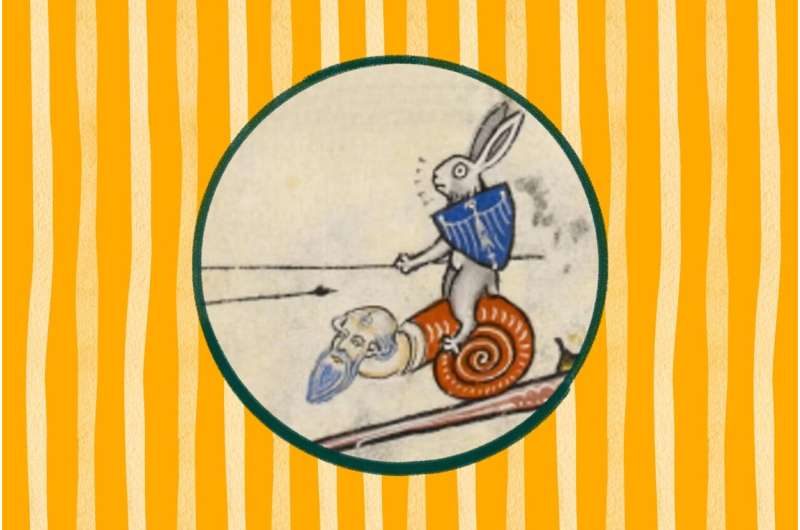
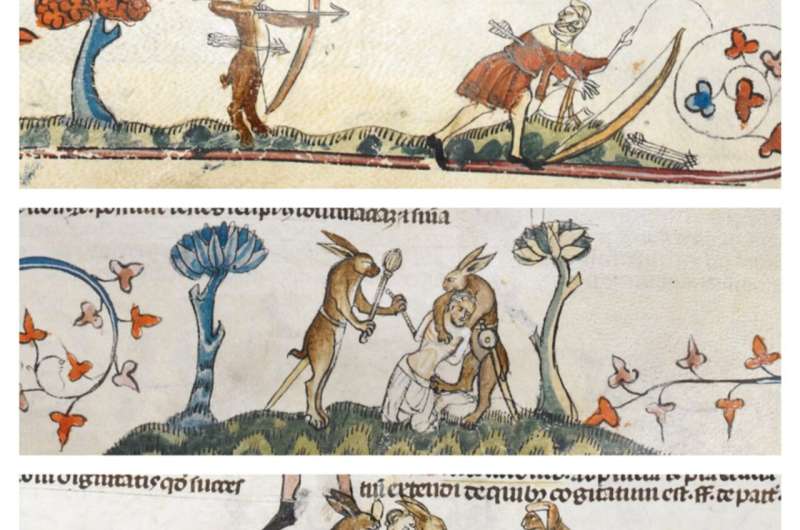
Rabbits in medieval manuscripts often reverse this hierarchical relationship. Rabbits ride on snails and fight with guns and spears, kill hunters and hounds, or send humans to rabbit court, forming a satirical image of "the world is turned upside down." The "Smithfield Decree" in the collection of the British Library was painted in the 1440s. It depicts rabbits capturing, trying and executing hunters and hounds in consecutive scenes. This kind of absurd humor not only parodies the culture of chivalry, but also allows weak prey to punish the predators in turn. By 1555, the Swiss naturalist Conrad Gessner had written that rabbits were bred in almost every country, but especially in England.
Comments