
Abstract:
Apple is quietly expanding its device-side artificial intelligence capabilities, and the latest disclosed information shows that the company’s planning for local large-scale models far exceeds previous expectations. From iPhone to Mac, Apple is trying to establish a local AI system covering different performance levels and gradually introduce ultra-large-scale artificial intelligence models into the personal device ecosystem.
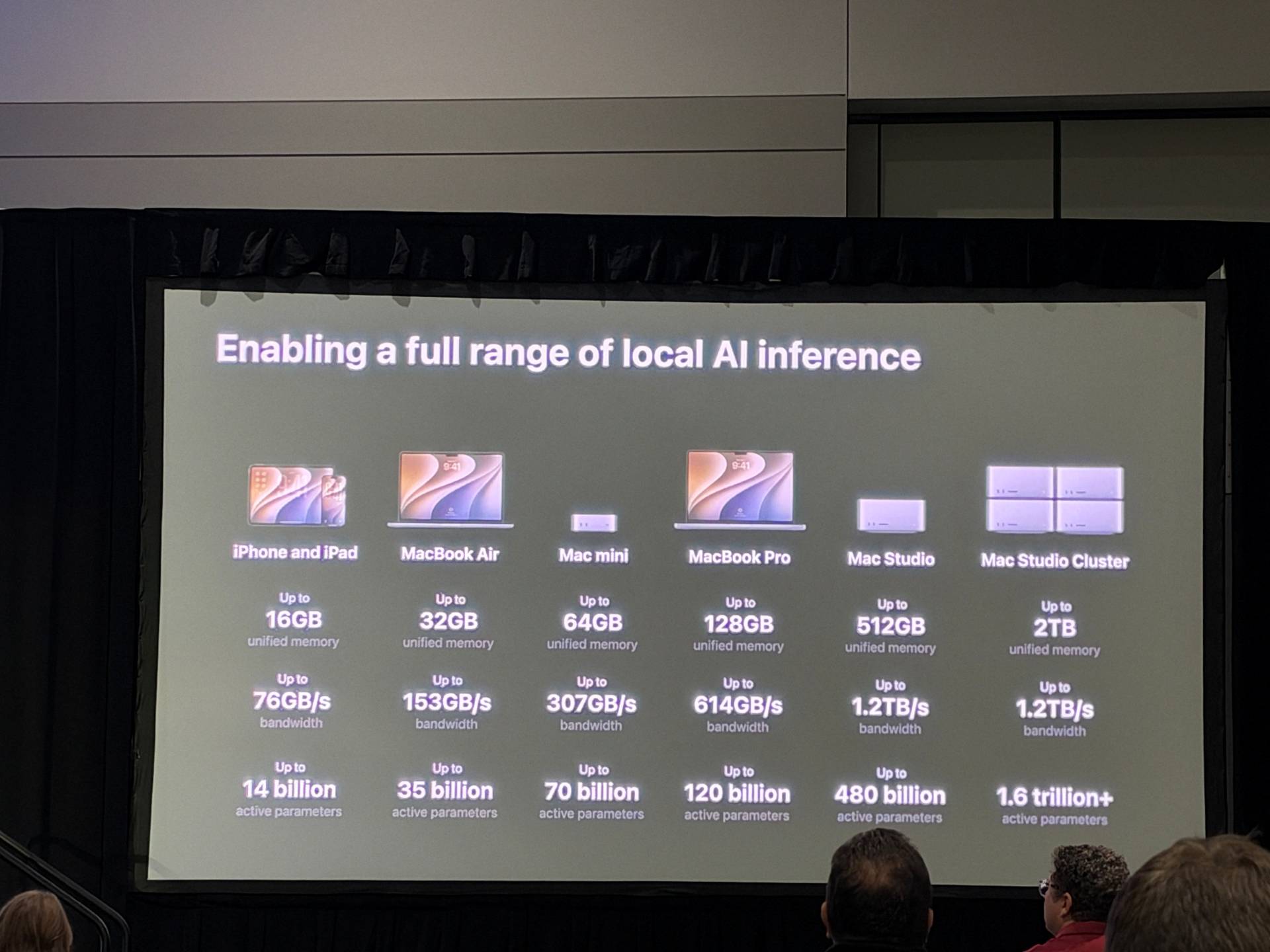
According to the latest technical information, Apple is currently studying a large language model that can run an activation parameter scale of 14 billion on the iPhone. The "activation parameters" here are not equivalent to the total number of parameters of the model, but refer to the scale of parameters actually involved in the calculation during an inference process.
Industry insiders pointed out that for mobile devices, being able to run a 14 billion activation parameter model locally is already a quite radical goal. This means that future iPhones will not only be able to undertake basic text generation, voice interaction and intelligent assistant tasks, but are also expected to handle more complex reasoning, content creation and multi-modal artificial intelligence workloads.
The key to promoting this capability improvement is that Apple has continued to enhance device-side artificial intelligence hardware in recent years.
From the continuously upgraded neural network engine of the A-series chips, to the continued expansion of the unified memory architecture, to the introduction of stronger AI computing capabilities in the iPhone 18 Pro series, Apple is gradually paving the way for larger-scale local models.
However, what really attracts attention is Apple's long-term plan for the Mac platform.
According to data, Apple is researching an artificial intelligence model with a total parameter scale of 1.6 trillion. Although a system of this scale obviously cannot be fully loaded into an ordinary personal computer like a traditional model, Apple is exploring a technology route based on the Hybrid Expert Architecture (MoE).
Under this architecture, the model has an extremely large total number of parameters, but only a smaller part of the parameters are activated for calculation in each inference. Therefore, even if the overall scale reaches the trillion level, there is still a chance that the actual operating cost will be controlled within the acceptable range of consumer-grade equipment.
If this plan is finally realized, high-performance Macs in the future will have the opportunity to run large models that far exceed the capabilities of current mainstream device-side AI systems to handle tasks such as complex scientific research analysis, software development, professional content generation, and enterprise-level intelligent workflows.
Unlike many AI services that rely on cloud computing, Apple still insists on emphasizing the importance of local processing.
The company has long believed that device-side AI can provide better privacy protection, lower response delays and a more stable offline experience. Therefore, from Apple Intelligence to future larger generative AI systems, Apple hopes to keep the reasoning process within the user device as much as possible.
Analysts believe that this route has both similarities and significant differences with the overall industry trend.
Companies such as Microsoft, Google, OpenAI, and Anthropic are continuing to expand the scale of cloud models, while Apple is more focused on how to adapt large models to consumer-grade hardware. Therefore, Apple’s future competitive advantage may not lie in having the largest model, but in how to make complex artificial intelligence capabilities actually run on the devices in the hands of users.
At the same time, this news also reflects Apple’s judgment on the future development of artificial intelligence.
If the iPhone can stably run a 14 billion activation parameter model, and the Mac further moves towards a 1.6 trillion parameter level system, then Apple devices will no longer be just terminals for accessing cloud AI in the future, but will gradually become independent artificial intelligence platforms with strong local reasoning capabilities.
As Apple Intelligence capabilities continue to expand and the performance of next-generation chips continues to improve, Apple is clearly preparing for a new computing era with device-side AI as its core. The planning span from 14 billion parameters to 1.6 trillion parameters also shows that the company’s ambitions for future artificial intelligence capabilities far exceed many people’s imagination.
Comments