
Abstract:
Apple officially released the fourth-generation Apple TV 4K on October 13, local time. This is the first major update for this product since the previous-generation model was launched in October 2022. The new product is equipped with an A19 chip, adds support for the artificial intelligence version of Siri, and upgrades the Siri Remote to add a precise search function. In addition, the new device is equipped with a far-field microphone, allowing users to interact with Siri directly through voice without picking up the remote control.
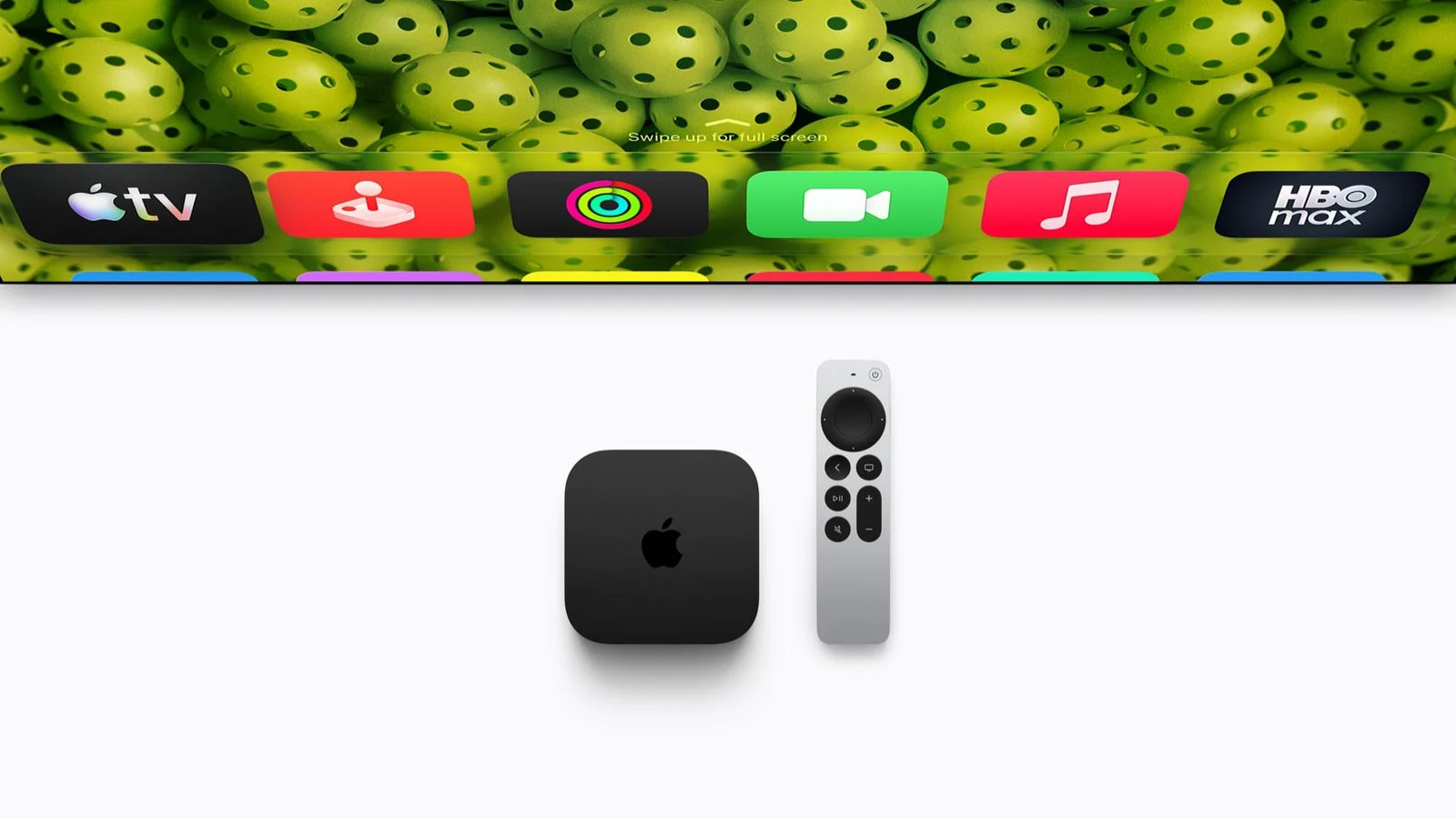
The new Apple TV 4K has been pre-ordered on October 13 and is scheduled to be officially launched on November 13. Pricing starts at $299 in the US market. This update not only involves processor performance and wireless connection capabilities, but also reflects Apple’s strategic direction of further developing Apple TV from a traditional streaming media playback device into a home smart control center.
In terms of hardware, the most important upgrade of the new Apple TV 4K is the use of the A19 chip. The previous generation product was released in 2022 and was equipped with the A15 Bionic chip, while the new processor spans multiple generations. Stronger computing power can not only improve the smoothness of system operations, application startup and game running, but also provide a hardware foundation for Apple to introduce more complex artificial intelligence functions on the TV platform.
As artificial intelligence gradually becomes an important part of the Apple ecosystem, Apple TV also needs to have stronger processing capabilities to support the new generation of Siri's natural language interaction and context understanding functions. In the future, users are expected to use more natural voice expressions to search for film and television content, query information and control home devices without having to strictly follow fixed instructions.
However, the specific experience of artificial intelligence functions still depends on Apple’s software deployment and service support. Equipped with the A19 chip does not mean that all Apple Intelligence functions will be immediately available on Apple TV. The actual available functions are subject to the software version and support range officially announced by Apple.
The remote control is another focus of this upgrade. The new Siri Remote adds a precise search function related to Apple's "Find" network. When users cannot find the remote control, they can use compatible devices such as iPhone to locate the location of the remote control.
This feature is especially useful for users who often forget their remote control in the cracks of the sofa, under the blanket, or elsewhere in the room. Compared with traditional solutions that can only rely on sound to find devices, precise search can provide more intuitive location guidance and help users shorten search time.
The remote control itself has also been upgraded accordingly. Apple hopes to solve a practical problem that Apple TV users have encountered for a long time through better positioning capabilities. For a device intended primarily for use in a living room setting, the remote is small and easily obscured by couches, cushions, and other items, so the Find feature, while not the most eye-catching tech upgrade, could be one of the most practical improvements for everyday use.
The new Apple TV 4K also has a built-in far-field microphone, which allows users to speak directly to the device and interact with Siri without first having to pick up the Siri Remote and press the voice button. This design makes the use of Apple TV closer to smart speakers such as HomePod.
For example, while sitting on the sofa, users can search for movies and TV shows, ask for relevant information, or control compatible smart home devices directly through voice, without having to find a remote control first. For users who want to integrate Apple TV into their home smart control system, the built-in microphone can reduce operating steps and make voice interaction more natural.
However, far-field microphones also mean that the device needs to be able to recognize the user's voice commands in a living room environment. The sound of TV playback, multiple people talking at the same time, and room acoustic conditions may affect the speech recognition effect. Apple needs to use microphone arrays, software algorithms and voice processing technology to ensure that the device can reliably respond to user requests in an actual home environment.
In terms of wireless connectivity, the new Apple TV 4K is expected to use Apple’s self-developed N1 wireless chip, supporting Wi-Fi 7 and Bluetooth 6.0. This upgrade is expected to improve wireless connectivity performance compared to the previous generation and provide a better foundation for high-bandwidth streaming, low-latency interactions, and smart home device connectivity.
Wi-Fi 7 can provide higher theoretical transmission capabilities in compatible network environments and improve network resource utilization efficiency through related technologies. However, how much performance improvement users can actually get still depends on whether the router in the home supports the corresponding standards, the level of network congestion, and the quality of the Internet connection. Just changing the Apple TV does not guarantee that the streaming experience will change significantly in all network environments.
For home entertainment devices, stable wireless connections are also very important. In addition to playing 4K film and television content, Apple TV also undertakes tasks such as application downloads, online games, family photo display and smart home control. More advanced wireless chips are expected to provide more stable connection conditions for these usage scenarios.
In terms of appearance, the new Apple TV 4K has not been significantly redesigned, and it still uses the compact black body of the previous generation. Apple will focus its main upgrades on internal hardware, voice interaction and remote control functions, rather than changing the appearance to distinguish new and old products.
This strategy means that it may be difficult for existing users to visually distinguish the old and new models at a glance, but the changes in internal computing capabilities and interaction methods are more obvious. For Apple, retaining the original design also helps maintain the product's simple appearance in a living room environment and avoids unnecessary volume changes introduced by redesign.
In terms of price, the new Apple TV 4K starts at $299 in the US market. Compared with the adjusted starting price of US$199 in the US market of the previous generation of products, the price of the new model has increased significantly. Apple still needs to prove that this price increase is attractive enough through stronger processors, artificial intelligence capabilities, and new interactive experiences.
In recent years, Apple TV has been facing a real problem: for ordinary users who only need to watch Netflix, YouTube or other streaming services, many TVs already have related applications built-in, and lower-priced streaming devices can also meet basic needs. Therefore, Apple TV needs to provide added value beyond ordinary TV systems to convince users to pay a higher price.
Apple hopes to achieve this goal through stronger hardware performance, Apple ecosystem integration, gaming capabilities and smart home control. For users who already own iPhones, HomePods, and other Apple devices, Apple TV can work with existing devices to provide a more unified experience.
For example, users can access movie and TV content in the Apple TV app through Apple TV, use AirPlay to cast videos and photos from iPhone or iPad to the TV, and can also perform smart home control through compatible home devices. With the upgrade of Siri's functions, these originally scattered operations are expected to be further integrated.
This release is also closely related to Apple’s ongoing smart home strategy. Apple launched a new round of product releases called "Welcome Home" on October 13, focusing on home devices and smart interaction. In addition to Apple TV 4K, the company also plans to launch a new smart home hub device HomeView and an upgraded version of HomePod mini.
In this system, Apple TV may no longer be just a media player box connected to the TV, but an important node between home entertainment and intelligent control. A built-in microphone allows users to directly issue voice commands, a stronger processor enables more complex interactions, and upgraded wireless connectivity helps the device collaborate with other smart home products.
However, whether Apple can use this to expand its market share still depends on software experience and third-party device compatibility. The smart home market already has products from Amazon, Google and many professional equipment manufacturers. Consumers often have lights, door locks, cameras, thermostats and sensors from different brands. Only by allowing these devices to work together conveniently can Apple's smart home strategy be truly valuable.
For existing Apple TV users, whether the new product is worth upgrading needs to be judged based on specific needs. If the main use is to play film and television content, and the previous generation device runs smoothly, then the need to upgrade may be limited based on the video playback function alone. On the contrary, if users want to experience stronger processing performance, artificial intelligence version of Siri, direct voice interaction and precise search functions of the remote control, the new product will be more attractive.
What is particularly noteworthy is that Apple is trying to pave the way for a new round of development of Siri through hardware upgrades. In the past, the capabilities of voice assistants were often limited by factors such as model performance, cloud services, and device computing capabilities. With the development of artificial intelligence technology, users' expectations for voice assistants have also shifted from simple execution of instructions to more natural dialogue, context understanding and multi-step task processing.
Whether Apple TV can truly benefit from this change ultimately depends on whether Siri can provide a reliable and useful experience. If artificial intelligence only adds some demonstration functions but cannot significantly improve content search, home control and daily interactions, then stronger chips and higher selling prices may not be enough to impress consumers.
Overall, the fourth-generation Apple TV 4K is an important update for this product line by Apple in recent years. The A19 chip, artificial intelligence version of Siri, built-in far-field microphone, Siri Remote that supports accurate search, and upgraded wireless connectivity capabilities together constitute the main selling points of the new product.
The focus of Apple’s upgrade is no longer limited to improving video playback performance, but hopes to make Apple TV more deeply integrated into home entertainment and smart home environments. The success of new products will depend on whether these features can truly improve the user experience and whether consumers are willing to pay more for stronger artificial intelligence and home interaction capabilities.
Comments