
Abstract:
At the Silicon Valley and World Forum, ASML President and CEO Christophe Fouquet expressed his views in front of U.S. Deputy Secretary of State Herberger and opposed cutting off after-sales maintenance services for China's DUV lithography machines. He believes that even if ASML engineers withdraw from domestic wafer fabs, the equipment will not be shut down, and other technicians will soon take over the maintenance work.
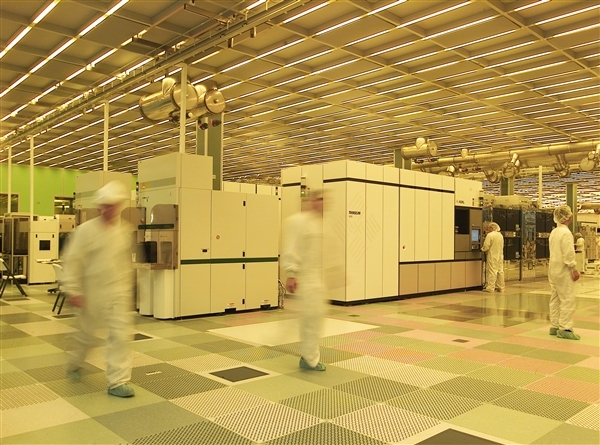
Fuquet first elaborates on the risks from the perspective of revenue. In 2025, the mainland Chinese market will contribute 33% of ASML's annual revenue, making it its largest market. The agency predicts that this proportion will fall back to 20% in 2026. Equipment sales are subject to cyclical fluctuations, while maintenance, spare parts, and software upgrades provide continuous and stable cash flow and are important sectors that support performance.
If it proactively cuts off after-sales service, ASML will not only lose stable service income, but also lose continuous control over the operating status of the delivered equipment, weakening the original manufacturer's ability to bind customers in the long term.
Currently, cutting off after-sales services to China is still at the policy discussion stage and has not been officially implemented. Domestic wafer fabs are accelerating the establishment of localized maintenance systems, and ASML is also trying to retain service channels to China within the existing control framework.
The advancement of domestic lithography machines is also changing the industrial structure. Shanghai Microelectronics' 28nm immersion DUV lithography machine will complete acceptance in 2025 and enter the mass production stage in 2026. The supply of mature process equipment will gradually become independent.
Fukai has repeatedly stated that maintenance services are the core for original manufacturers to maintain their industrial influence.
If this link is forcibly severed by policy, domestic fabs will quickly establish independent operation and maintenance capabilities. This capability will not disappear with policy changes after it is formed.
For ASML, compared with the short-term revenue decline, the greater hidden danger is to get rid of customers' dependence on original manufacturers.
Comments