
Abstract:
American digital photo frame manufacturer Aura has launched a new generation of Ink e-ink photo frames. The new product reduces the screen size from 13 inches in the previous generation to 10 inches, while improving the color display technology and reducing the price from US$499 to US$349. Aura hopes that through this product, the electronic photo frame will be closer in appearance to traditional paper photos, so that it can naturally integrate into the home decoration, rather than looking like an electronic screen placed on the wall.
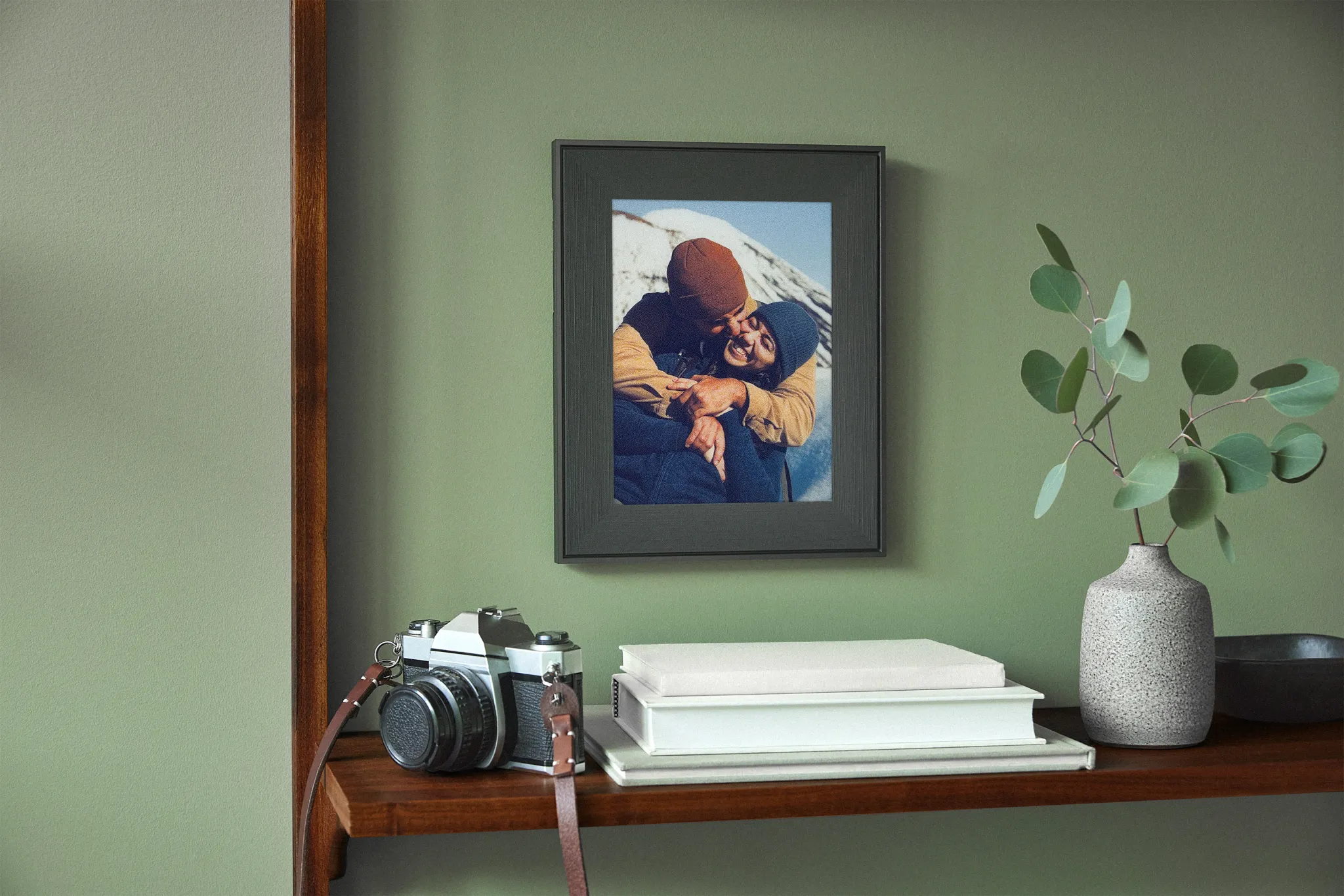
This product is called Ink 10-inch, which is the follow-up to the 13-inch Ink e-ink photo frame previously launched by Aura. Unlike traditional digital photo frames that use LCD or OLED screens, the Ink series uses E Ink's Spectra 6 color e-paper technology. Its biggest feature is that the screen surface does not have the obvious luminous texture of traditional monitors, and looks more like a real printed photo under ambient light.
Aura co-founder and chief technology officer Eric Jensen said that when the company was founded, it was hoped to create an electronic photo frame that could display images like paper photos and automatically change the content, but the electronic ink technology at the time could not meet the requirements. As color electronic paper gradually matures, this idea finally meets the conditions for commercial realization.

Spectra 6 uses a special color e-ink technology, but it can't display millions of colors like a regular monitor. Its native display capability only has six colors, so how to make photos look more natural has become a key issue in product design.
Aura has developed a proprietary dithering algorithm (Dithering) for this purpose. This technology arranges pixels of different colors in specific patterns so that the human eye can perceive them as richer, continuous colors and gradient effects at a certain viewing distance.
The new Ink 10-inch also has an important improvement in display technology. Aura collaborated with E Ink to add three proprietary colors to the original Spectra 6 technology, namely off-white, mustard yellow and orange. In this way, the system has more options when processing photo edges and color transitions, which can reduce the abrupt color blocks that previously appeared due to limited colors, making the image edges smoother, and visually equivalent to improving the performance of some details.
For example, in the color processing of characters' faces, new technology can reduce the need to use white and red adjacent to each other to simulate mid-tones in the past, thereby making skin colors more natural. Aura pays special attention to this point because one of the main uses for consumers buying electronic photo frames is to display photos of family members and children.
However, this technology still cannot achieve color reproduction that is completely consistent with the original photo. Compared with printed photos, the color saturation on the e-ink screen is still lower, and the overall visual effect also has a certain retro feel. TechCrunch reporters believe that this slightly softer color performance makes landscape photos look and feel similar to traditional film photography.
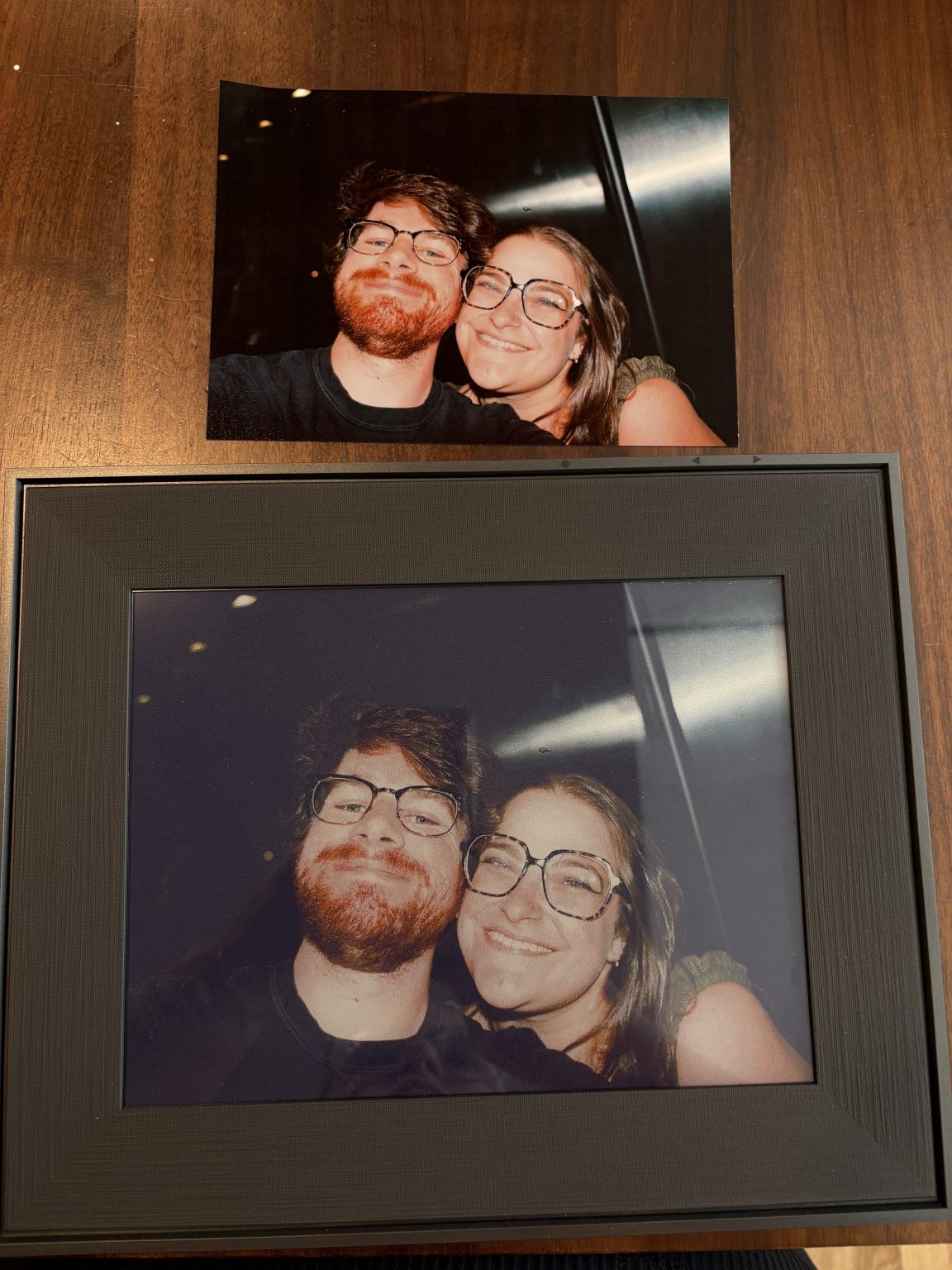
In terms of appearance, the Ink 10-inch features a black frame with dark gray linen textured padding. Aura said the darker border was chosen to reduce the visual contrast between the photo frame and the e-ink display area, making the overall look closer to a regular framed photo.
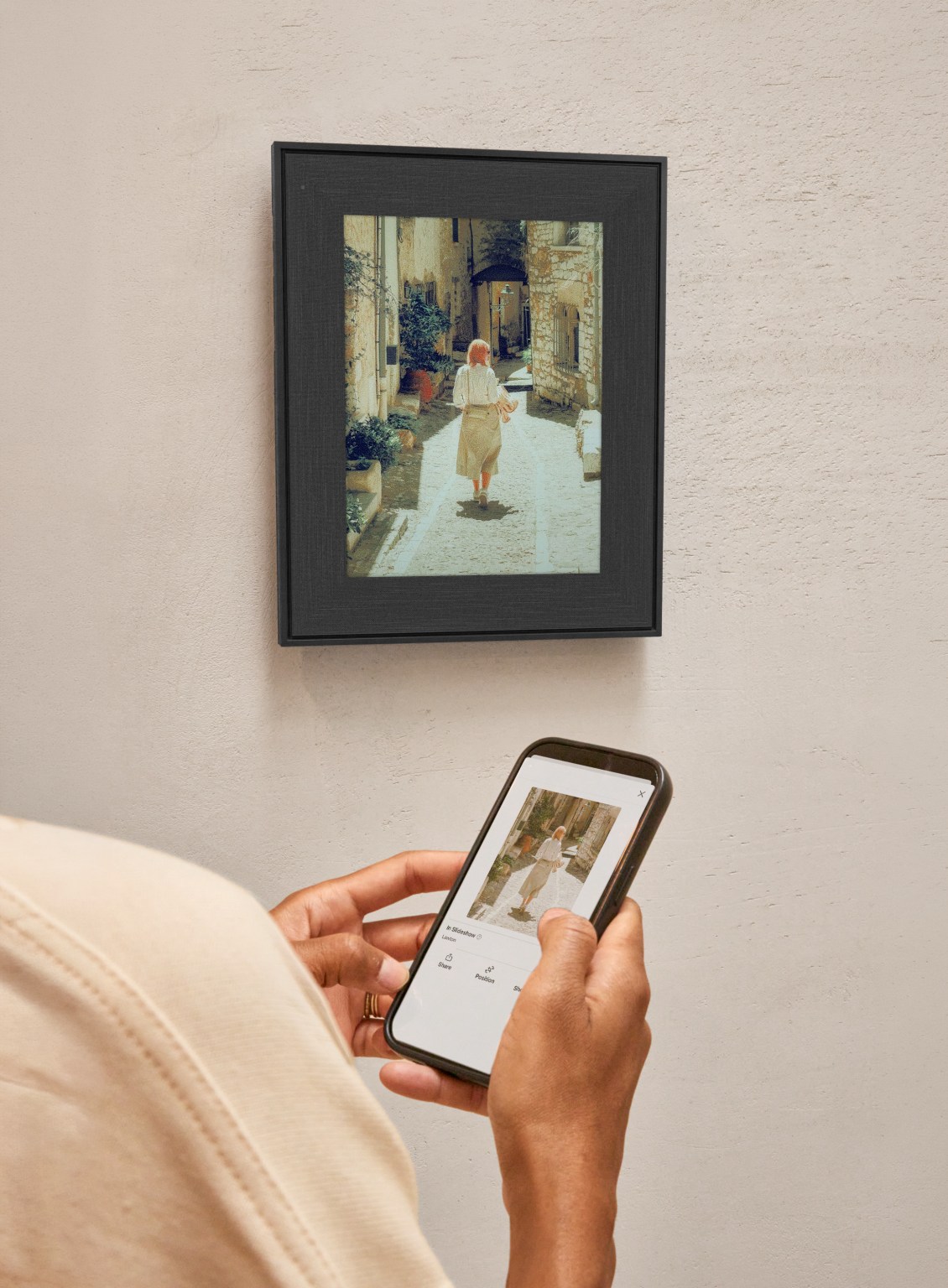
New products continue to support the Aura mobile app. Users can upload photos directly from their phone, or create shared albums where family and friends can send pictures to the frame together. Aura co-founder Eric Jensen revealed that on average, about four people share photos per Aura photo frame. For example, parents can allow their children to upload their latest photos to a photo frame at home, allowing family members to continue to share new content from their lives even when they are not in the same place.
Battery life is another advantage of e-ink photo frames. Aura claims that the Ink 10-inch can be used for up to three months on a single charge. The product is equipped with a USB-C charging interface, and also provides wall hanging accessories and desktop stands.

However, actual battery life will be affected by the usage environment. Since the e-ink photo frame consumes power when changing photos, if the device frequently updates pictures, or is installed in a dark environment that requires frequent use of front lighting, the battery life may be significantly shortened. When TechCrunch reporters previously experienced the 13-inch version, the actual usage time was about a month, which was far from the battery life claimed by the manufacturer.
Aura recommends that users set the e-ink photo frame to update photos once a day rather than switching frequently. In addition to reducing battery consumption, this also prevents users from frequently seeing images gradually generated through the dithering algorithm.
From the perspective of product positioning, the Ink 10-inch is not intended to compete with cheap LCD digital photo frames, but to combine digital photo display with traditional home decoration. Its greatest value is not that its color performance can exceed that of ordinary monitors, but that it allows digital photos to be displayed for a long time in a manner close to paper photos, while retaining the convenience of remote updates and sharing with multiple people.
Compared with the 13-inch version priced at US$499, the new 10-inch product is US$150 lower, a price drop of about 30%. Although US$349 is still significantly higher than an ordinary digital photo frame, this product provides a more acceptable option for consumers who want to incorporate a digital photo frame into their home photo wall but do not like the appearance of traditional electronic screens.
Comments