
Abstract:
Bill Gates accused the Trump administration of hindering efforts to prevent AI risks, warning that the technology could be exploited to cause a pandemic. Speaking at the Future of AI Summit on Wednesday, the Microsoft co-founder said the AI model has demonstrated "amazing" capabilities, meaning its potential to benefit humanity, as well as its potential to cause harm, cannot be overstated.
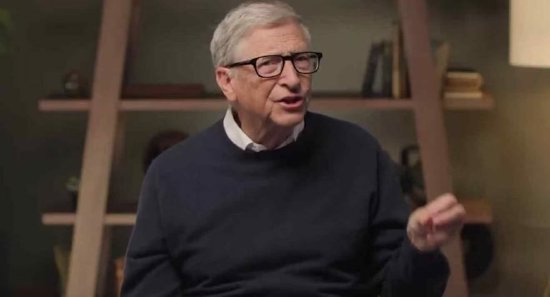
He said that malicious entities using AI tools to create biological weapons or attack network vulnerabilities throughout society are the most pressing risks at the moment. What is particularly noteworthy is that some so-called "open" models are available to developers for free, and the security protection and monitoring mechanisms of such models can be removed.
The technology tycoon warned that biosafety incidents caused by AI may cause "a scale of damage far greater than the epidemic."
Gates said that despite the above-mentioned risks, global efforts to regulate and monitor AI and its impact have stalled due to the inaction of the White House.
"If the United States is not involved, the value of the relevant actions is very limited. So we are now at a stalemate... The only question is how many vicious incidents will happen before they change their stance."
Gates is one of the technology leaders who continues to issue strong warnings. He warned that the current development path of AI may lead to the technology being abused or leaving human control, with catastrophic consequences. The philanthropist has previously warned that AI could kill a billion people and have a massive impact on the job market.
In recent months, concerns about the security risks of this emerging technology have continued to rise. Anthropic's IPO prospectus last week warned that AI may bring "catastrophic or even existential risks" to mankind. Gates praised this cutting-edge AI laboratory for daring to be frank about the risks of AI: "They have always been very frank, and this is another example."
Despite the astonishing rate of iteration of AI technology, President Trump has rejected calls to strengthen government regulation of AI. He has dismissed attempts to promote the G20 AI guidelines as a "globalist solution" and prefers self-regulation by the technology industry.
Gates believes that industry self-regulation will not work: "Once multiple companies participate, the responsibility for solving this problem can only rise to the government level."
He called on the government to set benchmarks for the security protection and monitoring mechanisms built into AI models, lead global actions to investigate network vulnerabilities, and build a large-scale monitoring system covering air, sewage, and blood to detect potential infections caused by AI as early as possible.
Gates received OpenAI’s ChatGPT pre-release version in advance in 2022. He revealed that OpenAI and Anthropic will most likely launch new models this year, and there will be "two major releases" in 2027.
He added that as these new models come online, "the model itself losing control" will become a serious problem in the near future. Gates advocated that the government needs to further improve the security mechanism and conduct third-party audits of new models.
He also called for accelerating the exploration of the positive value of AI, such as drug research and development and shortening hospital waiting times: "These benefits will not happen naturally."
Gates also expressed support for taxing billionaires and ultra-high-income groups. In the context of AI profoundly reshaping society, this statement is equivalent to expressing support for California’s “rich tax” referendum proposal. According to the preliminary vote count results on Tuesday in the U.S. midterm elections, this proposal is likely to be rejected.
He affirmed the philanthropic commitments of the co-founders of OpenAI and Anthropic, and said that he is communicating and cooperating with them to "ensure that these funds will play a huge role in many fields such as global health."
Comments