
Abstract:
The British Ministry of Defense is studying an unusual method of troop delivery and plans to invest 6 million pounds (about 8.1 million U.S. dollars) to evaluate the feasibility of pedal-powered paragliders for reconnaissance and troop penetration. The research, carried out by UK Defense Innovation Unit, British start-up Blakcro, in collaboration with the Ministry of Defence, aims to enable soldiers to carry out missions behind enemy lines without relying on traditional transport aircraft and runways.
Since World War II, parachuting has been a covert means of delivering troops behind enemy lines. The traditional method requires soldiers to parachute from a transport aircraft, but the ram air wing paraglider used by the modern military allows paratroopers to control the flight direction more precisely and stay in the air for a longer time. However, this type of paraglider still needs to be launched by an aircraft, the transport aircraft itself may reveal the intention of the operation, and there also needs to be a suitable airport for the aircraft to take off and land.
If terrain conditions permit, paraglider pilots can take off directly from the ground, but this usually requires nearby mountains suitable for takeoff and open areas suitable for landing. Powered paragliders attempt to further break away from this limitation, allowing pilots to take off directly from the ground and fly long distances without a runway.
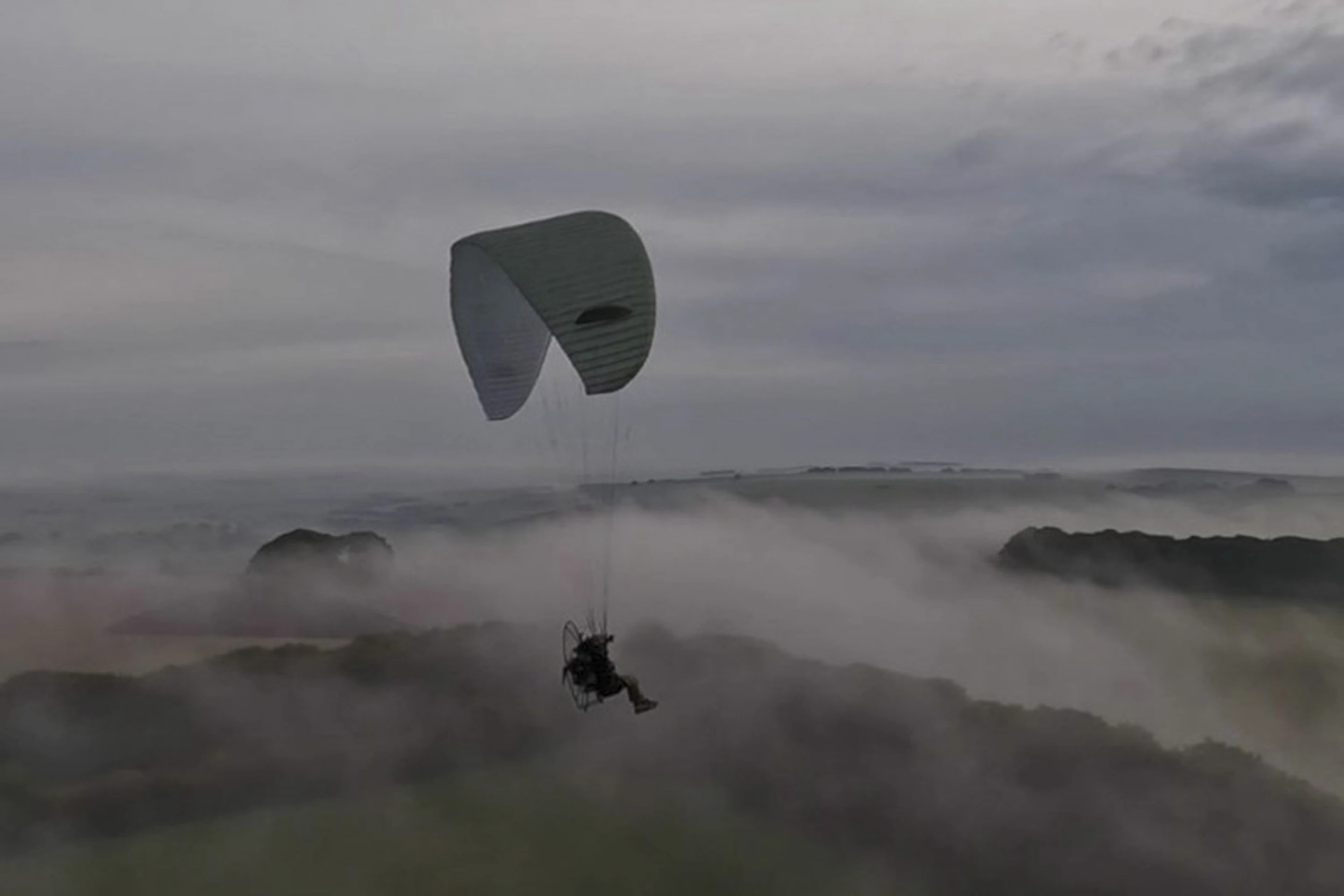
Blakcro is a start-up company located in Wiltshire, England. Its powered paraglider adds a powered fan and titanium alloy frame installed behind the pilot to the traditional paraglider. The entire system folds up and fits into a large backpack, unfolding and reassembling in just 8 minutes.
After the pilot wears the device, he can unfold the light wing into the wind when the fan is at idle or standby, and then take off through a short run-up. After taking off, the pilot increases the fan speed to provide forward thrust for the paraglider and controls the flight by changing the flight speed and direction. Specifically, the pilot can pull the control rope to deform the trailing edge of the wing, or turn by changing the center of gravity of the body on the harness.
This powered paraglider is not a new concept. The U.S. military has conducted relevant tests before, and similar equipment has also been reported to be used in irregular armed operations in the Middle East. In the movie "007: The Last Day," James Bond also used a snow paraglider to fight enemies.
The British Ministry of Defense stated that this powered paraglider has a range of up to 200 miles (about 322 kilometers) and has low acoustic, visual and radar characteristics, so it is expected to be used for covert reconnaissance and troop delivery. The Royal Marines and Parachute Regiment will take part in the trials later this year.
When introducing this cooperation on social media, the British Ministry of Defense stated that the powered paraglider can be assembled in 8 minutes, has a powered flight capability of up to 200 miles, and does not require a runway. The Ministry of Defense believes that this technology reflects the value of supporting local flexible and innovative enterprises and helps promote the development of advanced military capabilities.
Comments