
Abstract:
In response to increasingly tightening export controls on semiconductor manufacturing equipment, China's two leading memory chip manufacturers Changxin Memory (CXMT) and Yangtze Memory Technology (YMTC) were revealed to have launched large-scale strategic reserves in the past few quarters. The latest industry survey report points out that the two chip giants have purchased and reserved sufficient ASML deep ultraviolet (DUV) lithography machines and key components in advance. Their existing reserves are sufficient to support production expansion and daily wafer manufacturing needs for up to three years in the future.
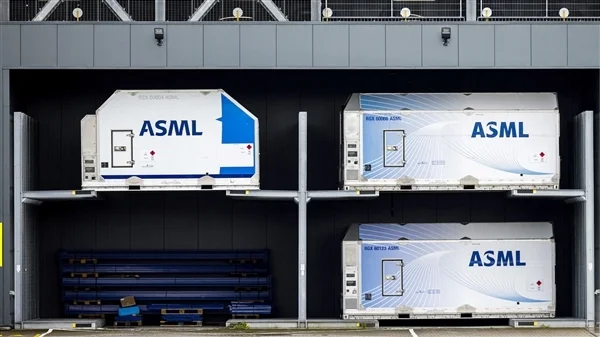
In recent years, as restrictions on advanced process semiconductor manufacturing equipment in many European and American countries have gradually spread from extreme ultraviolet (EUV) to mid-to-high-end immersion DUV lithography systems, China's local semiconductor supply chain is facing rising supply chain uncertainty. Against this background, as China's key leaders in the fields of dynamic random access memory (DRAM) and three-dimensional flash memory (3D NAND), Changxin Memory and Yangtze Memory chose to accelerate the use of capital expenditures to snap up lithography equipment from global core suppliers such as ASML before the new export ban and licensing review were fully implemented.
Market research data shows that the Chinese mainland market has become one of ASML's most important revenue sources in the past year or so, and its shipments to China are mainly concentrated in various DUV lithography machine systems. Industry analysts pointed out that the equipment reserved by Changxin Storage and Yangtze River Storage mainly includes NXT:1980 series and other models of immersion DUV lithography machines. Although due to physical wavelength limitations, DUV cannot directly expose ultra-microscopic transistor structures at once like EUV. However, through complex manufacturing process engineering innovations such as multiple exposures and multiple patterning, the two companies can still use existing DUV machines to steadily promote the mass production and iteration of next-generation high-density DRAM and ultra-high-level 3D NAND chips.
In addition to the rapid introduction of complete machine systems, the reserve strategy also extends deeply to consumable equipment parts and maintenance consumables. Sources revealed that the two wafer fabs have not only stockpiled complete machines, but also simultaneously established a large-scale key parts library to prevent possible future crises of limited after-sales technical services or parts supply cuts. This three-year equipment safety buffer period not only effectively ensures the continued and steady ramp-up of domestic mainstream memory chip production capacity, but also provides a crucial time window for local semiconductor equipment manufacturers to develop, test and verify independent lithography machines and supporting supply chains.
Industry experts believe that although large-scale hoarding of advanced equipment locks in huge cash flows and may face practical challenges in equipment maintenance, calibration and long-term depreciation, under the pressure of the current complex geopolitical landscape and industrial decoupling, this advance reserve strategy is generally regarded as a pragmatic self-protection strategy for China's memory chip industry to maintain the foundation of production capacity and hedge against the risk of external blockade. As reserve machines are gradually installed in factories and transferred to actual production lines, China's global market share in mature and mainstream storage technology is expected to continue to maintain steady expansion in the next few years.
Comments