
Abstract:
Faced with the surge in global demand for artificial intelligence computing power and the resistance to power grid load and environmental protection in many places in Europe and the United States, global technology giants and hyperscale data center investors are setting their sights on the Patagonia region of Argentina, the southernmost tip of South America. With its cold and dry climate, abundant renewable wind energy, cheap Vaca Muerta shale gas resources, and vast undeveloped desert land, this plateau that is ravaged by strong winds all year round is becoming a new highland for large-scale computing power hubs in the eyes of international capital.
Currently, the world's major technology companies are facing severe bottlenecks when building ultra-large-scale server clusters locally. Many regions have criticized data centers for exacerbating local power grid tensions, driving up residents' electricity bills, and triggering water and environmental disputes. In contrast, Argentina has yet to see such a social backlash and is open to the introduction of large-scale tech infrastructure to boost local tax revenue and the economy. In order to seize the opportunity in the international computing power arms race, the government led by Argentine President Javier Millay has launched a number of policies including the Large Investment Incentive Mechanism (RIGI), promising to provide tax, foreign exchange and customs supervision stability guarantees for up to 30 years for eligible major investment projects, which has greatly boosted the confidence of multinational investment institutions.
In many concrete projects being promoted, a number of technology giants have entered into intensive contacts with local energy companies. Previously, OpenAI has signed a memorandum of intent to cooperate with local Argentinian developer Sur Energy, planning to build a clean energy data center with a power supply of up to 500 megawatts in Patagonia. The potential total investment is expected to reach tens of billions of dollars. Pampa Energía, Argentina's main power giant, is also promoting the construction of a 500-megawatt data center in Neuquen Province near the Vaca Muerta shale gas field. It initially plans to test the water through a 20- to 40-megawatt pilot project, and expects to finalize preliminary agreements with potential tenants before the end of 2026. In addition, multinational developers such as Green Capital from Poland have also leased more than 1,200 square kilometers of land in Chubut Province and plan to independently build large-scale wind power and photovoltaic power stations to support large computing power clusters with a capacity of several thousand megawatts in the future in an off-grid mode for self-use.
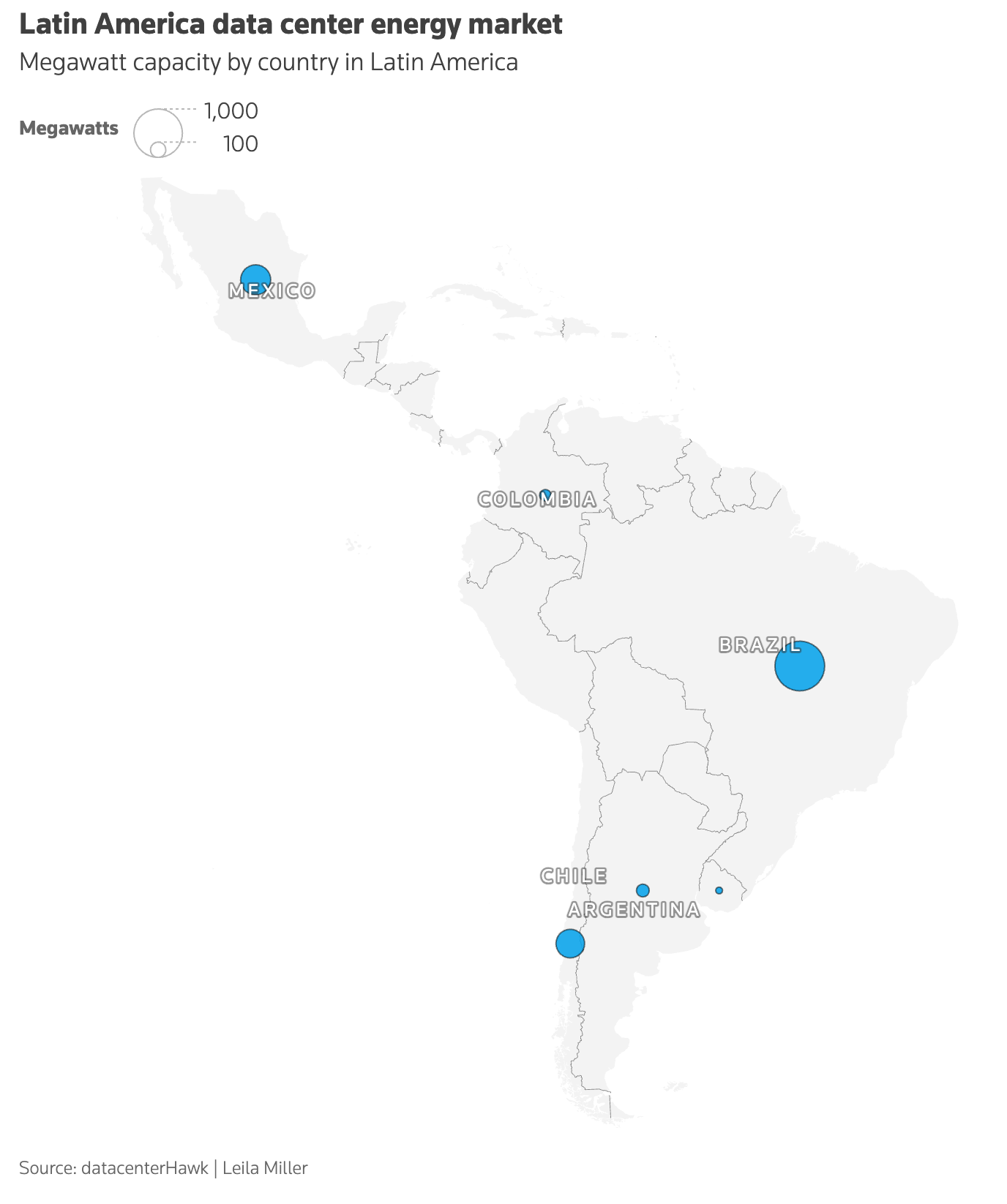
For large-scale AI model training tasks that rely heavily on power consumption but are not very sensitive to network round-trip delays, relocating servers to environments far away from major population centers but with low energy is becoming the new norm in the industry. Patagonia not only has the world's most stable onshore wind power resources, but its year-round low natural temperatures can also significantly reduce the huge power consumption of conventional mechanical refrigeration systems in data centers. At the same time, the Argentinian telecommunications management department is planning to add a second submarine optical cable landing station and is committed to opening up a communication channel from the southern wilderness to the global backbone network.
However, consulting agencies and industry experts also remind that there are still many challenges to overcome from theoretical resource advantages to actual project implementation. At present, most planned projects in Patagonia are still in the early survey and agreement negotiation stages, and the lack of key physical infrastructure such as high-voltage transmission pipeline networks and long-distance optical fiber networks is still a core bottleneck. Investors generally adopt a cautious wait-and-see attitude. Subsequent on-site inspections and final commercial contract signings by multinational technology companies in the region will become a key benchmark to test whether Patagonia can truly emerge as a new ecology of artificial intelligence computing power in the southern hemisphere.
Comments