
Abstract:
China's memory chip industry is narrowing the technological gap with the world's leading manufacturers at an unprecedented speed. According to the latest assessment of the Korea Semiconductor Industry Association, China's two major memory companies, Yangtze River Memory (YMTC) and Changxin Memory (CXMT), have achieved significant catch-up in key technology areas. Among them, the technology gap in the NAND flash memory field has narrowed to about 1 year, the DRAM field is about 2 years, and the gap in the high-bandwidth memory (HBM) field is about 3 years.
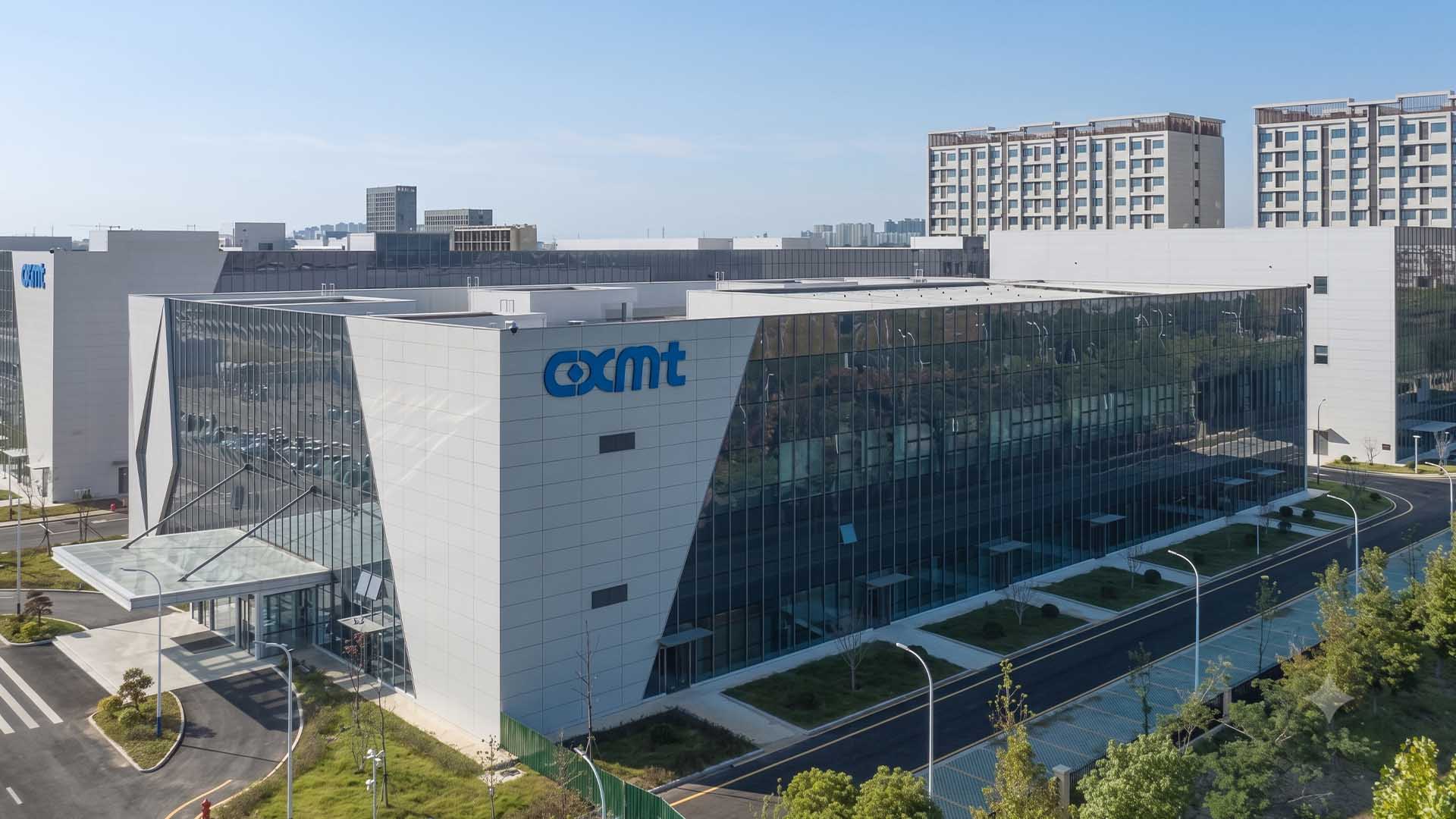
This assessment result has attracted widespread attention in the Korean semiconductor industry. It is worth noting that only a few years ago, the industry generally believed that there was still a technology generation gap of nearly 5 years between China's memory industry and the international advanced level. Today, this gap has been significantly compressed in multiple segments, showing that the development speed of China's storage industry in recent years has far exceeded market expectations.
In the field of NAND flash memory, Yangtze Memory is considered to have made the most obvious progress. As the largest NAND manufacturer in China, the company has continued to promote the research and development of high-level digital 3D NAND technology in recent years. Industry data shows that when Samsung Electronics and SK Hynix begin mass production of 300-layer NAND products in 2025, Yangtze Memory already has the production capacity of 270-layer products. According to the current development route, Yangtze Memory is expected to promote 400-level NAND products in 2027, which means that the time gap between it and international leading companies will be further compressed to about one year.
The development in the DRAM field is also attracting attention. Korean companies Samsung Electronics and SK Hynix will begin mass production of DDR5 products in 2023, while Changxin Memory will enter the DDR5 era in 2025, so it is considered to maintain a technology gap of about two years with the international leading level. However, Changxin Memory has significantly accelerated its product iteration in recent years. Not only has it achieved mass production of LPDDR5X, it has also begun to promote the production of LPDDR6 products to further enhance its market competitiveness.
Compared with NAND and traditional DRAM, high-bandwidth memory HBM is still regarded as the most challenging technical field in China's storage industry. Current industry assessments believe that there is still a gap of about 3 years between China's HBM technology and the international leading level. Although Changxin Memory has started trial production of HBM3E products, the yield rate is still at a low level, especially in core manufacturing links such as TSV through-silicon via vertical interconnects, which still face obvious technical challenges.
In order to accelerate HBM research and development, Chinese storage companies are trying more innovative technology routes. The report pointed out that Changxin Storage is cooperating with Yangtze Storage to build HBM products using Yangtze Storage’s mature Xtacking hybrid bonding technology. Different from the traditional method of connecting memory chips through micro-bumps, this copper-to-copper hybrid bonding technology can directly connect different wafer layers, shorten the circuit path, improve stacking efficiency, and is expected to reduce the dependence on advanced EUV lithography equipment to a certain extent.
Analysts believe that the progress made by Chinese storage companies in recent years is not only reflected in the laboratory technology verification stage, but also in product mass production and industrialization capabilities. With the expansion of production capacity, accumulation of talents and the gradual improvement of the local equipment supporting system, China's storage industry is gradually transforming from a mere catcher in the past to an important market player with international competitiveness.
For the Korean storage industry, this change is also of great significance. Samsung Electronics and SK Hynix have long held a leading position in the global storage market, but as Chinese companies continue to narrow the gap, market competition is expected to further intensify in the future.
Although Chinese companies still lag behind international leading manufacturers in terms of advanced HBM products and some high-end processes, industry observers generally believe that Yangtze Memory and Changxin Memory have caught up faster than many people expected in recent years. If the current development trend continues, the global storage industry landscape may usher in new changes in the next few years.
Comments