
Abstract:
The European Space Agency's (ESA) planetary defense Hera mission recently captured the Didymos binary asteroid system at close range for the first time. NASA's DART probe hit its smaller companion star Dimorphos on September 26, 2022, and this new image provides a never-before-seen perspective: looking back at the entire system from the side of the adjacent parent asteroid.
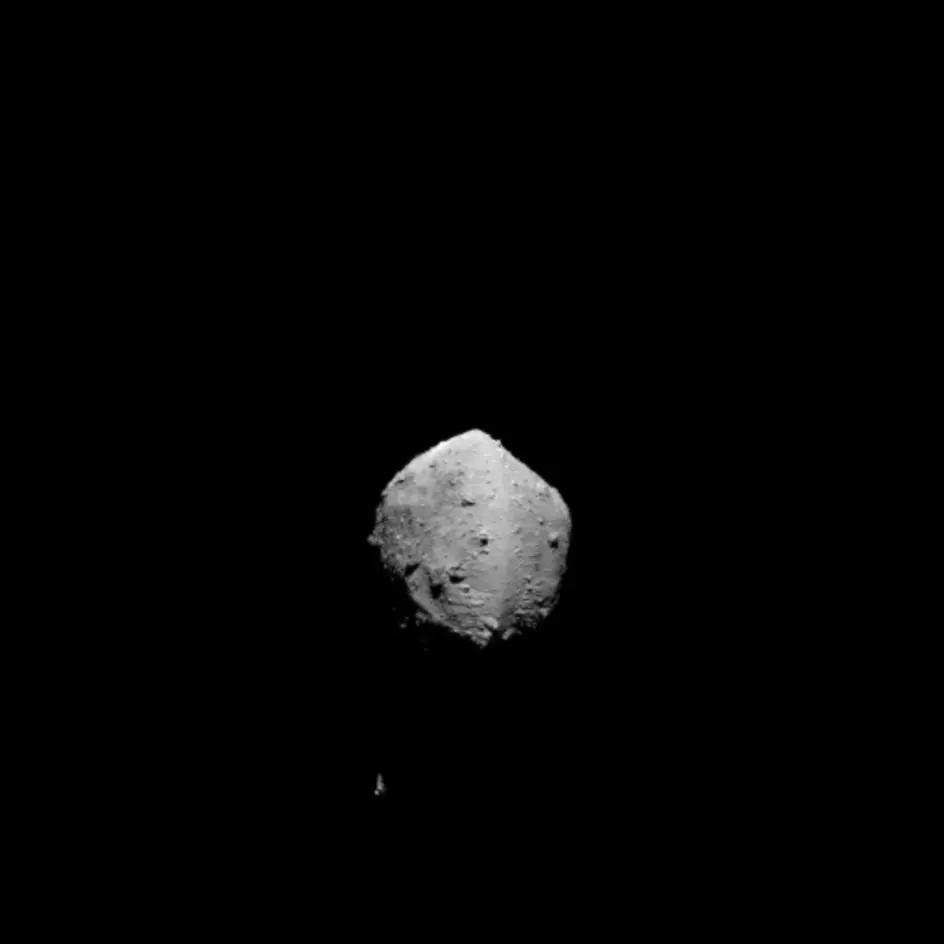
This image was taken from a distance of 60 kilometers by the black-and-white Asteroid Viewer Camera on the Hera spacecraft. In the image, the 151-meter-diameter Demophos is mostly hidden in shadow, while its orbiting 780-meter-diameter Didymos is clearly visible.
“The first words we said were: Wow!” said Patrick Michel, chief scientist of the Hera mission and research director of the French National Center for Scientific Research/Côte d’Azur Observatory. “This is another side of Didymos, exactly the same as the side that the DART camera showed us shortly before the impact. It’s completely different, so it feels like you’re looking at a whole new world. This side of Didymos still retains the central equatorial ridge we’ve seen before, but other than that it looks very different, filled with large and small boulders and craters, as well as patterns that look like grooves or ridges.”
Michael Küppers, ESA's Hera mission scientist, added: "We expect a large amount of impact sputter across about a kilometer of space between Demovos and Didymos, so some of these features may originate from this material transport process. We have exciting work to tease this out next. We look forward to seeing more detail on both objects and systematically mapping any changes we identify."
Demophos, a smaller object barely visible in this image, is the first object in the solar system to have its orbit measurably altered by human activity. After the impact of the 580-kilogram DART detector at a speed of about 6.1 kilometers per second, Demovos' orbit around Didymos was shortened by 33 minutes, with an error of about one minute, far exceeding the previously predicted change.
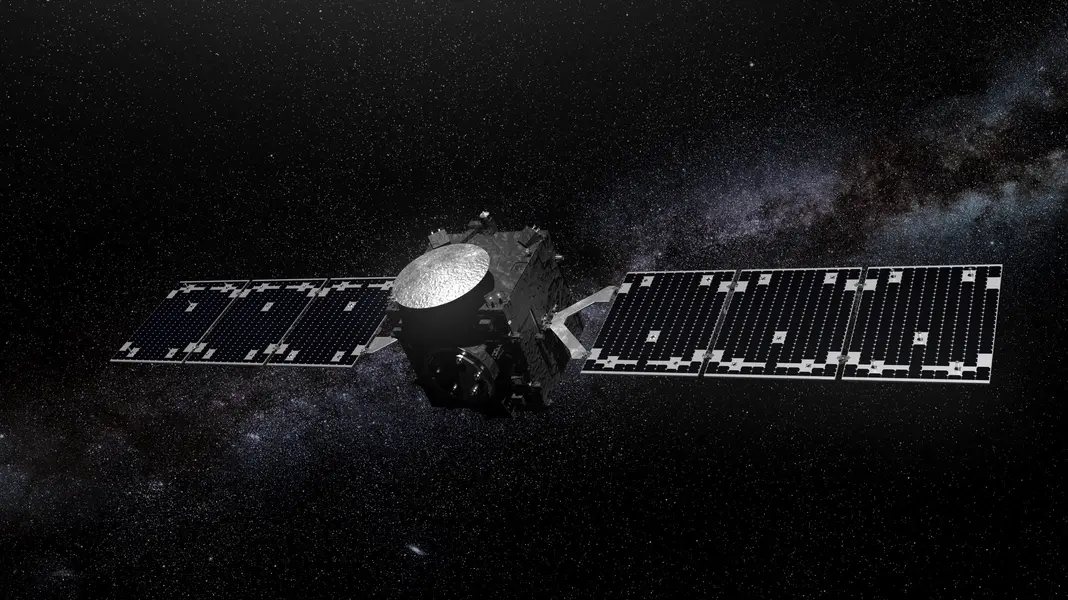
After two years of flight, the Hera probe arrived at the twin asteroids - currently 196.8 million kilometers away from the Earth - and is about to launch a close "impact site investigation." Hera's discovery will help transform kinetic impact, a method of asteroid deflection, from a one-time experiment into a well-understood, repeatable technology for future threats to Earth.
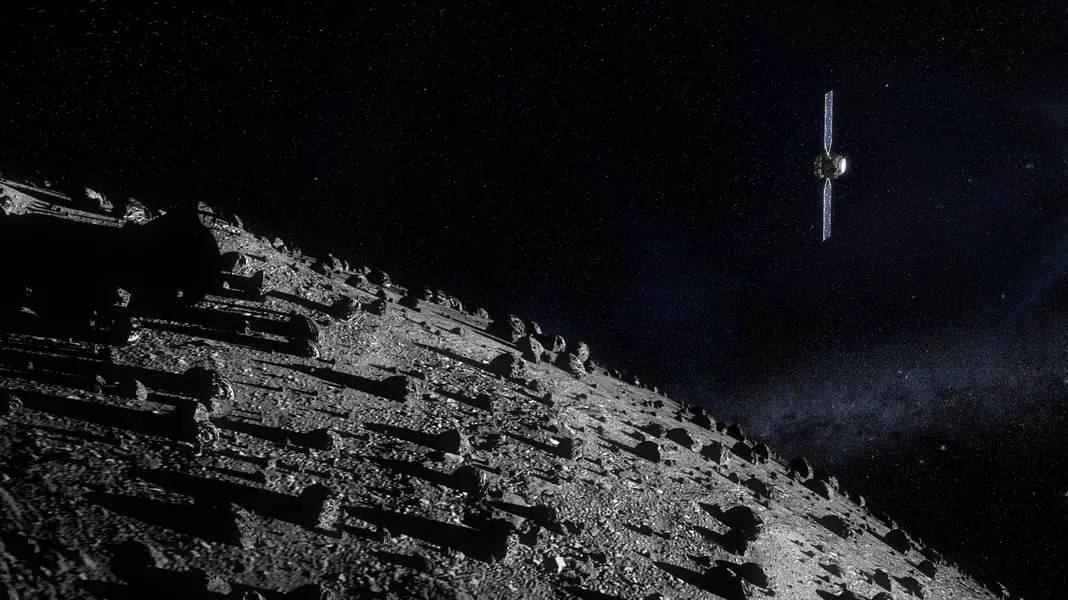
“Seeing this image is an extremely exciting moment for the entire Hera team,” said Hera mission manager Ian Canelli. “It has taken us years of hard work and dedication to get to this point, but we are motivated by the thought that this adventure has only just begun.”
High-definition detailed images of the two asteroids will be released on November 25.
Comments