
Abstract:
The United Nations issued a warning on Thursday: The El Niño climate event is continuing to intensify and evolve into a "super" climate phenomenon that will last until February 2027. Many countries are facing risks of floods, droughts, and extreme heat. Celeste Saulo, Secretary-General of the United Nations World Meteorological Organization, said: "It has the potential to bring a heavy blow to people and economies around the world."
Saulo added: "The damage caused by droughts and floods has already appeared, and as El Niño further intensifies, the impact of various disasters will continue to worsen."
Asia-Pacific and Latin American countries will bear the brunt of the direct impact, but the knock-on effects on food commodities and energy will be felt around the world.
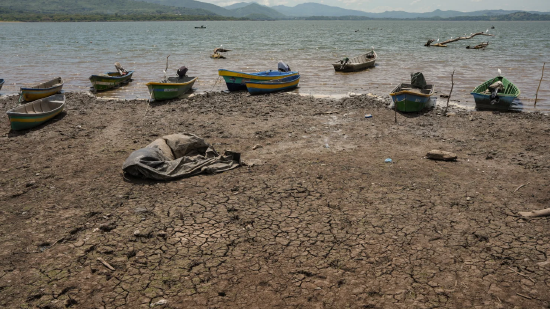
September 2026 On March 1, in Metapan, El Salvador, the water level of Lake Jiha dropped significantly due to drought, and boats were anchored on the lake.
Guatemala, Honduras, and El Salvador suffered from abnormal weather and drought. An Oxfam report pointed out that this phenomenon is related to El Niño, which has caused severe crop yield losses; at the same time, Indonesia is experiencing destructive forest fires. The intensity of the Indian monsoon season is weak, suppressing the growth of crops such as rice, sugar, cotton, and soybeans; Peru's anchovy fishery has suffered a "devastating blow", and anchovies are an important raw material for animal feed.
Extreme weather will have unpredictable impacts on energy production and demand. The output of hydropower, wind power, and photovoltaic power generation may be disrupted; the oil and gas exploration, refining, chemical business, and mining industries also face the risk of disruption.
United Nations Secretary-General Antonio Guterres said on Thursday that El Niño is "getting more intense before our eyes."
“The world has entered the danger zone of extreme weather. It is now a race between rising disaster risks and our determination to take climate action and protect people. We must win this race.”
The criterion for the formation of El Niño: seawater temperatures in the tropical eastern Pacific Ocean are 0.5 degrees Celsius higher than the long-term average.
The latest research from the World Meteorological Organization shows that the sea surface temperature in July was more than 2 degrees Celsius higher than the normal value; from the end of July to mid-August, the sea surface temperature was 2.2-2.6 degrees Celsius higher than the average. The World Meteorological Organization said temperatures in the lower ocean were "more anomalous", with subsurface water temperatures more than 8 degrees Celsius above average in July and early August.
El Niño, meaning "little boy" in Spanish, is a natural climate phenomenon that alternates with La Niña ("little girl") on a 2-7 year cycle.
Comments