
Abstract:
The French shipbuilding company Naval Group recently publicly demonstrated a new generation warship concept plan "SCX 26" designed for the naval combat environment of the 2040s. This future ship adopts a rare dual-island structure design and integrates laser weapons, electromagnetic rail guns and large-scale unmanned combat systems, aiming to deal with the increasingly severe missile saturation attacks and drone swarm threats in future maritime battlefields.
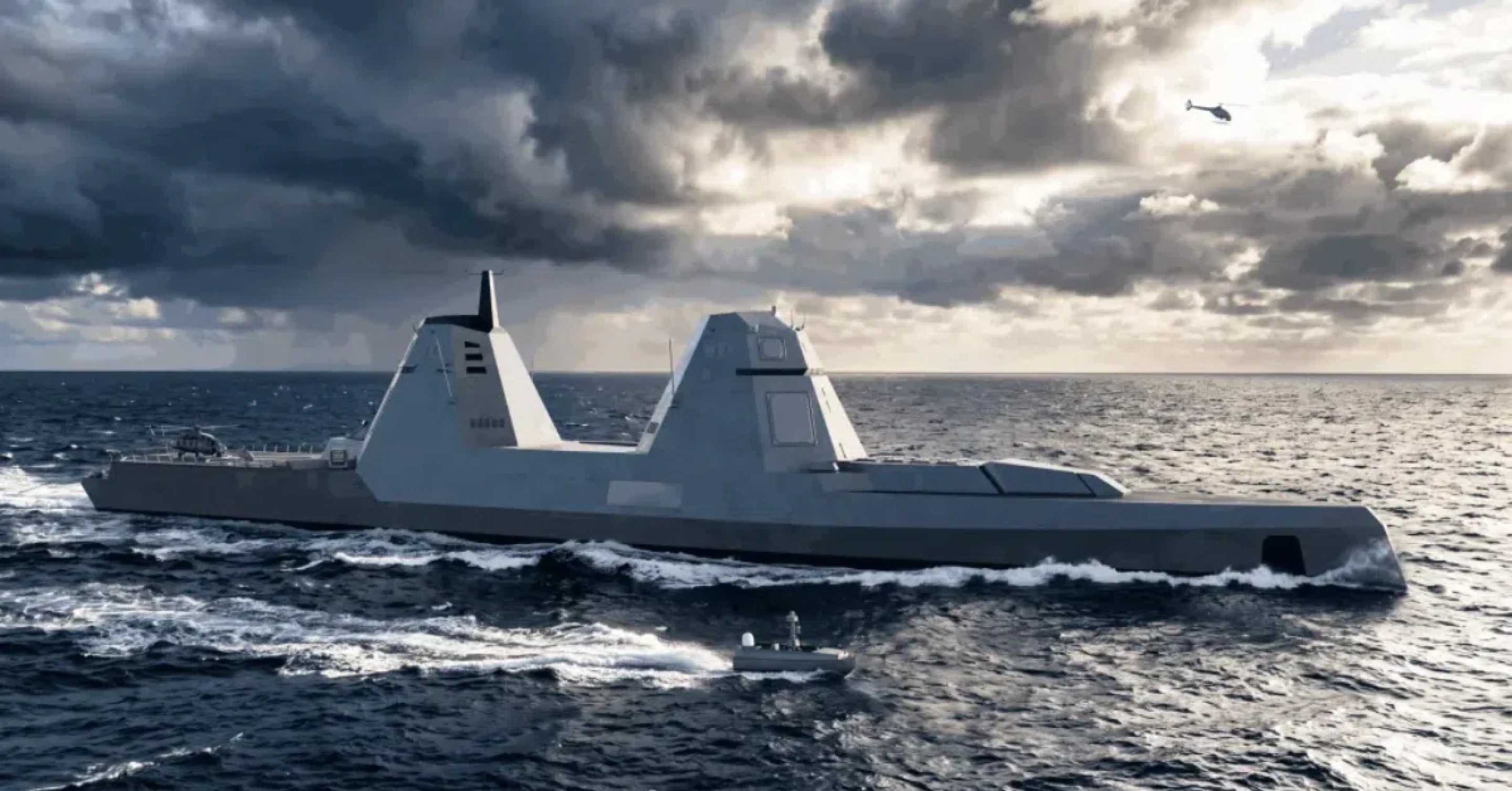
With the rapid development of naval combat technology, navies of various countries are facing new challenges. The current general view is that future ships must not only have stronger firepower, but also have higher survivability and stronger adaptability to cope with changing combat tasks and new threats. Therefore, modular design, high degree of automation and manned/unmanned cooperative combat capabilities are becoming important directions for the development of future warships.
According to information released by Naval Group, the SCX 26 is a large surface warship concept with a displacement of approximately 8,000 to 10,000 tons. Its design focuses on firepower delivery, survivability and mission flexibility. In addition to being a traditional strike platform, it is envisioned as a large command ship capable of coordinating and managing manned and unmanned combat platforms, and can serve as a networked combat hub for future fleets.
In terms of performance, the SCX 26 is about 170 meters long, can reach a top speed of 30 knots, and has a maximum range of about 8,000 nautical miles. The ship can accommodate 150 core crew members and can also carry approximately 100 additional unmanned system operators, special mission force members and fleet command personnel to provide support for complex ocean missions.
The weapon system reflects the development trend of future warfare. A total of up to 128 vertical launch system units are reserved at the front and rear of the ship, which can be equipped with different types of missiles such as air defense, anti-submarine, anti-hypersonic and land attack missiles according to mission needs. In order to deal with large-scale drone attacks, the ship also plans to deploy a 100-kilowatt laser weapon system, which can be used to quickly intercept incoming targets.
In addition to laser weapons, SCX 26 also plans to be equipped with a stealth-designed 57mm electromagnetic railgun turret and an auxiliary artillery system that can achieve 360-degree omnidirectional coverage and be operated by a remote control system. These weapons will jointly form the ship's near, medium and long-range defense system and improve its response capabilities in the face of complex threats.
A general mission cabin area is set up in the middle of the hull, which can quickly install various mission modules according to different combat needs. The stern of the ship is planned to build a large hangar and electric lifting equipment for storage, maintenance, launch and recovery of various air, surface and underwater unmanned platforms, so that the warship can adjust the configuration of unmanned combat forces according to the mission.
The most recognizable feature of the entire ship is its use of two separate towering stealth island structures. Each ship island has an independent bridge and distributed mast system for deploying antennas and various sensors. Naval Group stated that the main purpose of this design is to increase redundancy, so that even if the ship is severely hit by a missile hit or a cyber attack, it can still maintain combat capability.
The dual-ship island structure can also disperse the deployment of radars, communication equipment, electronic warfare systems and other electronic equipment, thereby expanding the surveillance range and reducing signal interference between systems. This is particularly critical for future networked naval warfare, because SCX 26 is designed to be the core node of the entire combat system. It can command other ships, unmanned platforms and aviation assets in real time through the digital network, and support each combat unit to autonomously perform tasks when necessary.
Analysts believe that although SCX 26 is still in the conceptual design stage, the many technical directions it displays reflect important trends in future naval development. As unmanned systems, directed energy weapons and networked command technologies continue to mature, in the future large surface warships may gradually transform from mere firepower platforms into comprehensive maritime combat centers integrating command and control, unmanned collaboration and information operations.
Comments