
Abstract:
The latest data from market research institution Counterpoint Research shows that driven by the boom in artificial intelligence infrastructure construction, the global DRAM market will achieve a year-on-year revenue growth of 369% in the third quarter of 2026. As the demand for high-performance memory in AI accelerators and data centers continues to rise, the DRAM average selling price (ASP) has reached the level of $1.9 per Gb.
From the perspective of manufacturer structure, Korean companies continue to dominate the global DRAM market. Among them, Samsung Electronics ranks first with a market share of 38%, and SK Hynix ranks second with a 29% share. Although SK Hynix's third-quarter revenue increased by more than 40% quarter-on-quarter, the current overall momentum is more favorable to Samsung.
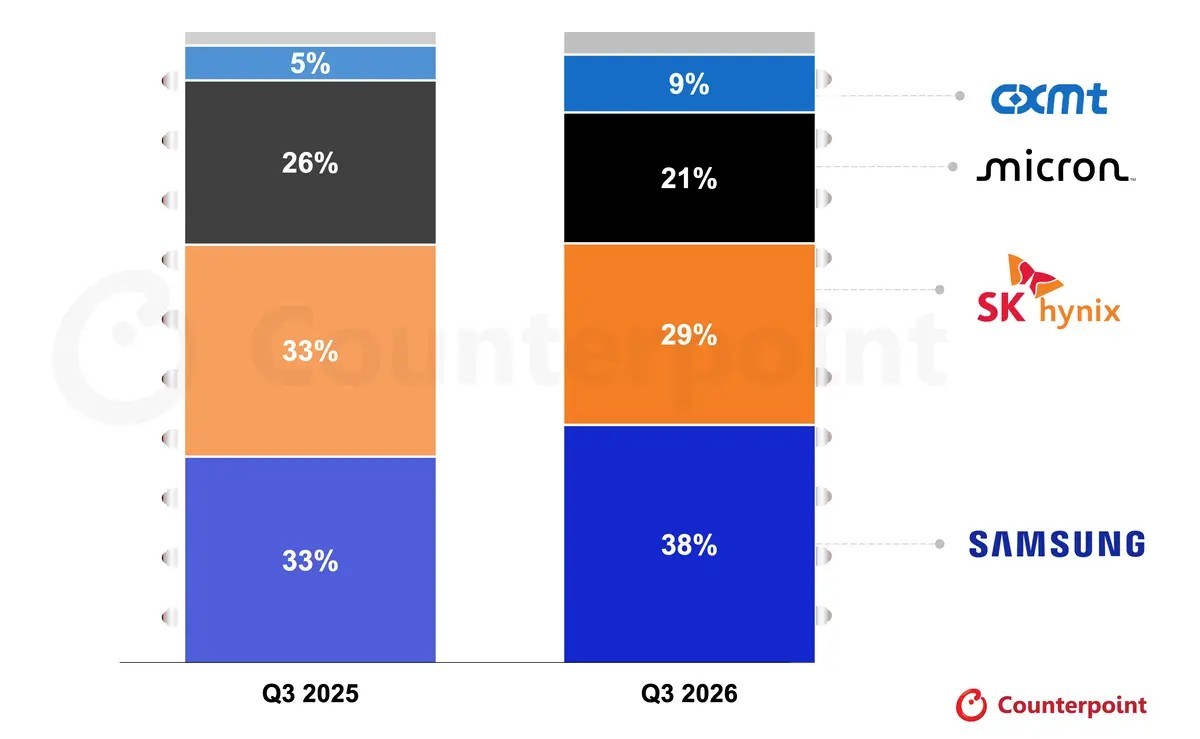
American memory chip manufacturer Micron ranks third with a market share of 21%, and China Changxin Memory (CXMT) ranks fourth with a 9% share. Although Changxin Storage's market share increased compared with the same period last year, it fell by 1 percentage point compared with the second quarter of this year.
However, the market competition landscape is changing with the evolution of high-bandwidth memory (HBM) technology. Counterpoint pointed out that SK Hynix previously dominated the HBM3E market, but the industry is transitioning to a new generation of HBM4, and Samsung has already taken the lead in the HBM4 field.
This technological transformation also poses a challenge to Changxin Storage. The company plans to start mass production of HBM3E next year, but there is still a certain gap compared with the latest development pace of the industry.
However, not all AI applications rely on HBM. With the rapid rise of Agentic AI (intelligent agent AI), the demand for DDR and LPDDR used as system memory has also experienced explosive growth. Data shows that DDR demand increased by 500% year-on-year, and LPDDR demand increased by 400% year-on-year. Unlike HBM, which is mainly used for AI accelerator cards, this type of memory assumes the basic tasks of system operation and data processing.
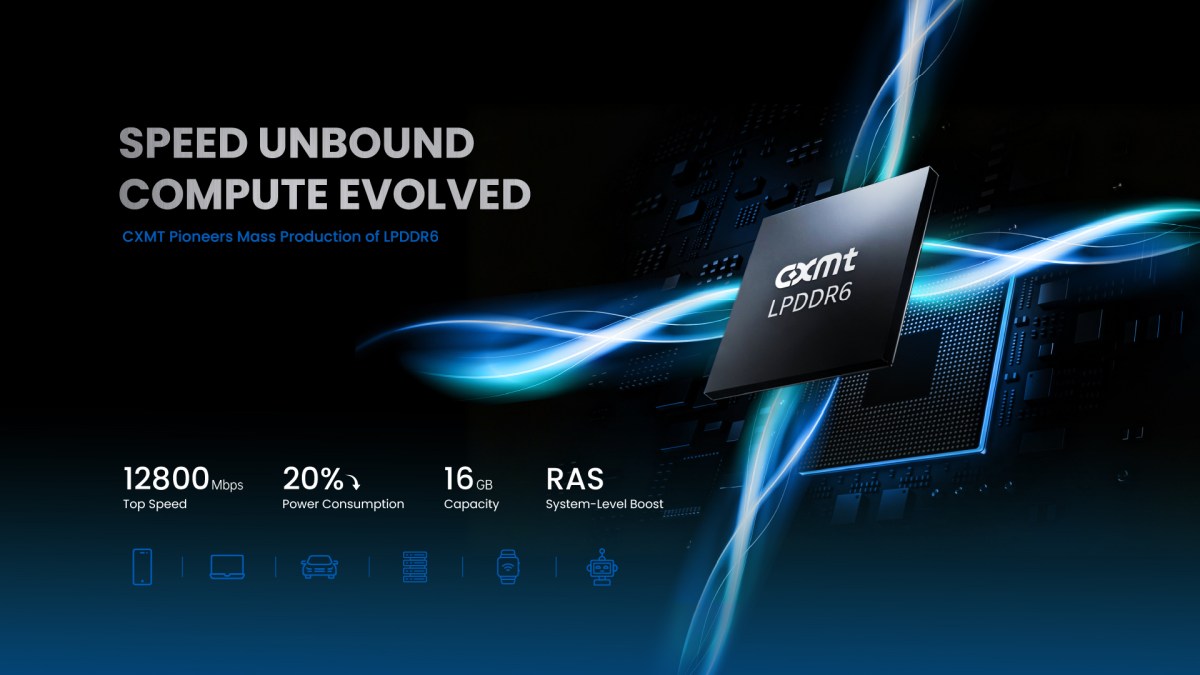
In the field of mobile memory, Changxin Memory took the lead in achieving mass production of the latest generation LPDDR6. It is worth noting that the 16GB memory version of Xiaomi 18 Fold folding screen phone already uses LPDDR6, while the 12GB version continues to use LPDDR5X.
From a profitability perspective, HBM remains the most profitable product category in the DRAM field. HBM-related revenue in the third quarter almost doubled compared with the same period last year. But at the same time, the revenue growth rate of DDR and LPDDR is exceeding that of HBM, showing that the AI era is benefiting the entire memory industry chain.
Counterpoint also pointed out that although the price increase of DRAM has slowed down since the second half of 2026 compared with the first half of the year, the overall price level will still remain high. MS Hwang, the agency's research director, said memory prices are expected to remain strong next year. Among them, the price of HBM products, whose growth this year lags behind that of ordinary DRAM, is catching up with the market level, and long-term supply agreements are providing support for prices. In addition, since the major new wafer fabs will not be officially put into operation until 2028, the tight supply situation will not be significantly alleviated in the short term.
Under the dual influence of the continued expansion of AI demand and the limited release of new production capacity, the global DRAM market is in the midst of a new boom cycle, and memory prices may remain at a high level in the next few years.
Comments