
Abstract:
A seemingly contradictory phenomenon is emerging in the global personal computer market: computer shipments have begun to decline, but the revenue of major manufacturers is increasing. The key factor driving this change is the shortage of memory chips caused by the construction of artificial intelligence infrastructure and the resulting increase in machine prices.
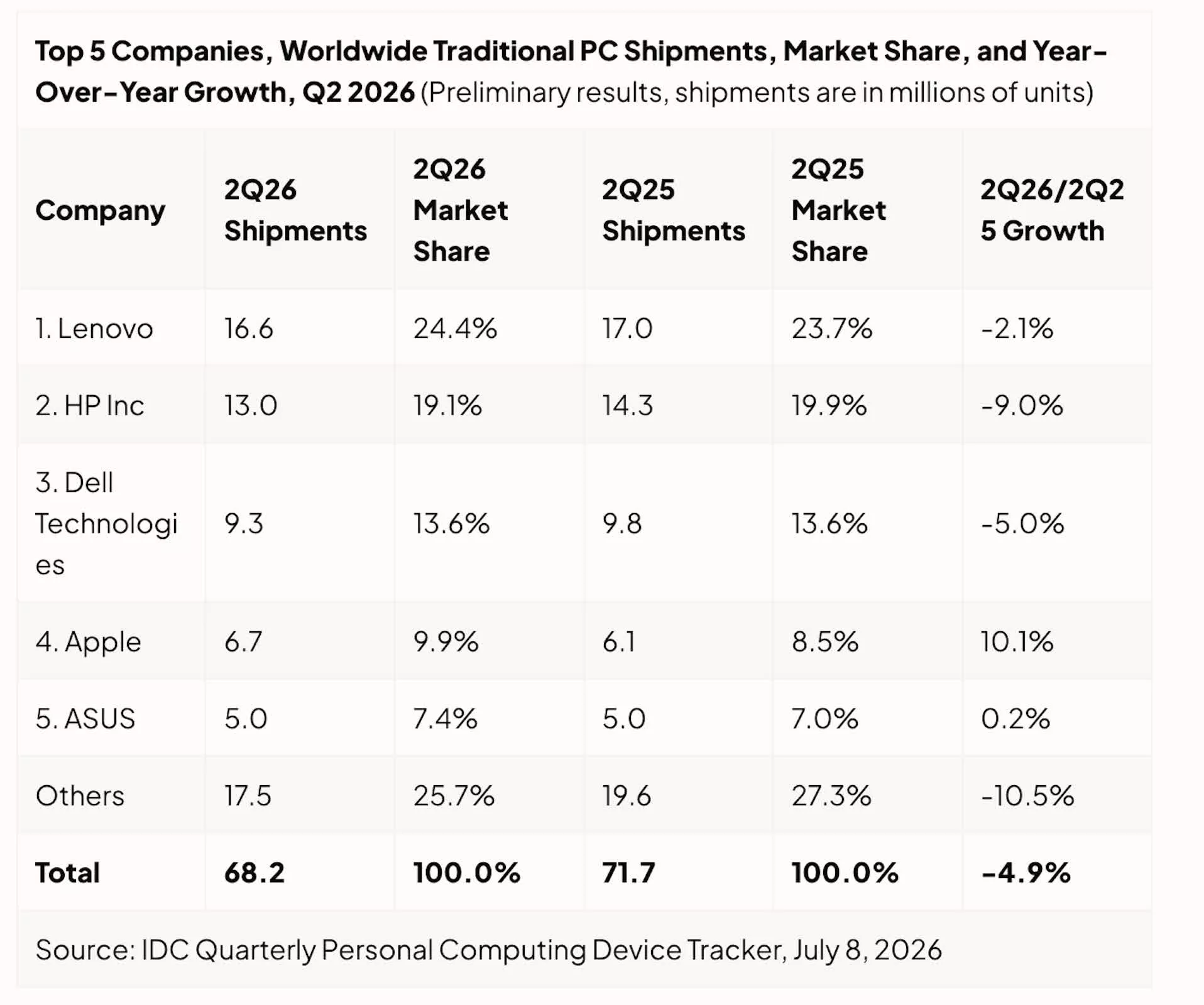
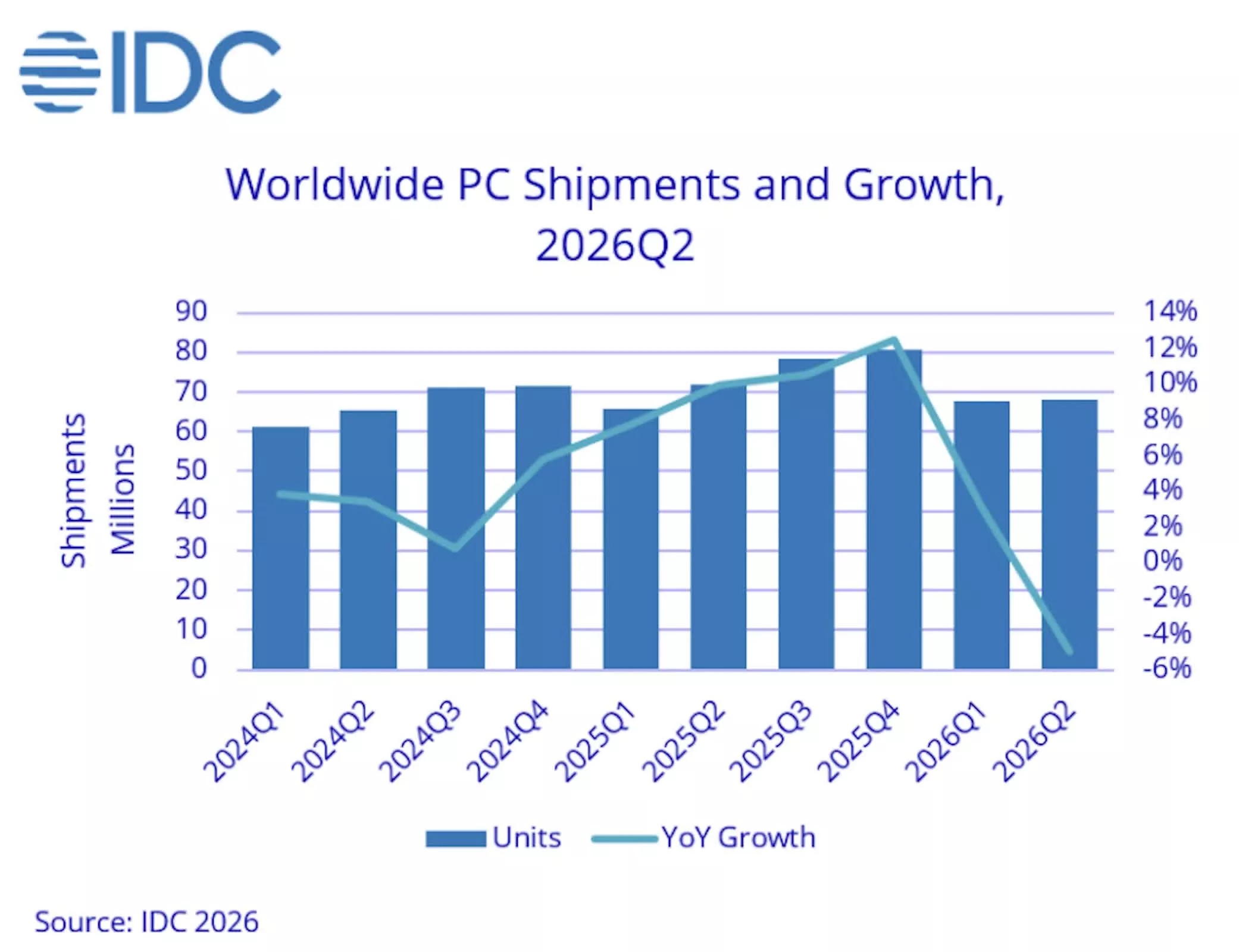
According to data from market research firm IDC, global PC shipments fell 4.9% year-on-year in the second quarter of 2026 to approximately 68.2 million units. This is also the first time the global PC market has declined after two consecutive years of growth. IDC predicts that the average selling price of PCs will increase by about 20% in 2026, and may continue to rise slightly in 2027, while shipments will further decrease.
The tight supply of memory chips is the main reason for this market change. As large technology companies build artificial intelligence data centers on a large scale, demand for high-end memory such as HBM and other DRAM products has increased dramatically. Memory manufacturers prefer to supply limited production capacity to more profitable AI-related customers, and ordinary PCs, smartphones and other consumer electronics products are therefore squeezed.
The rise in memory prices will eventually be transmitted to the machine market. Computer manufacturers have had to raise prices to make up for lower sales. Jitesh Ubrani, director of IDC's consumer research department, said that manufacturers must increase prices to offset the impact of reduced shipments in order to maintain or even expand revenue.
For now, the strategy appears to be working. Despite the decline in sales, corporate customers and some consumers are still willing to buy more expensive computers, especially high-end models with stronger processing power and larger memory capacity for artificial intelligence applications. Manufacturers are also actively promoting so-called AI PCs, using local artificial intelligence processing capabilities, dedicated AI acceleration units, and higher-specification hardware as the basis for price increases.
HP is a representative of this trend. The company recently released data showing that its PC business revenue increased by 18% year-on-year, but shipments fell by 16%. Dell and Lenovo's PC business revenue also increased by about 20% and 30% respectively. This means that although manufacturers sell fewer computers, they earn more revenue through higher average selling prices.
The enterprise market is still an important support for high-priced PCs. Some industries subject to regulatory requirements cannot hand over all data and workloads to the cloud for processing, so they need to deploy computers and workstations with AI capabilities locally. Enterprise equipment refresh cycles and local AI computing needs have helped manufacturers offset the consumer market's resistance to high-priced products.
However, there are obvious risks with this growth model. Ordinary consumers are more price-sensitive. Faced with the rising costs of memory, processors and other components, they may postpone replacement plans and continue to use existing devices. At the same time, when companies purchase AI computers, they also need to reallocate budgets between terminal equipment upgrades, cloud computing services and data center construction.
IDC predicts that the memory supply shortage will be difficult to alleviate in the short term, and the market may not gradually return to normal until around 2028. Building new memory factories takes years, and the AI industry's demand for high-performance memory continues to grow. Therefore, in the future, PC manufacturers may still adopt the strategy of "sell less and sell each unit more expensively".
This change also means that the PC industry is gradually getting rid of the past model of relying on scale expansion and hardware price reduction to drive growth. As AI functions become an important selling point of high-end computers, manufacturers are paying more attention to product profit margins rather than simply pursuing shipments. For consumers, the future computer market may no longer be one in which performance continues to improve and prices continue to drop, but in which performance upgrades and price increases occur simultaneously.
Comments