
Abstract:
HP recently officially launched the OmniDesk Mini mini desktop computer. This product adopts a highly compact mini host design and is positioned in scenarios such as daily office work, content creation, software development, and AI-assisted work. The overall volume of the product is only about 0.8 liters, the body size is about 13×13×4.8 cm, and the weight is about 475 grams. It takes up almost no space on the desktop. HP hopes to use this product to compress the performance and expansion capabilities of traditional desktop computers into a size close to that of a handheld computer.
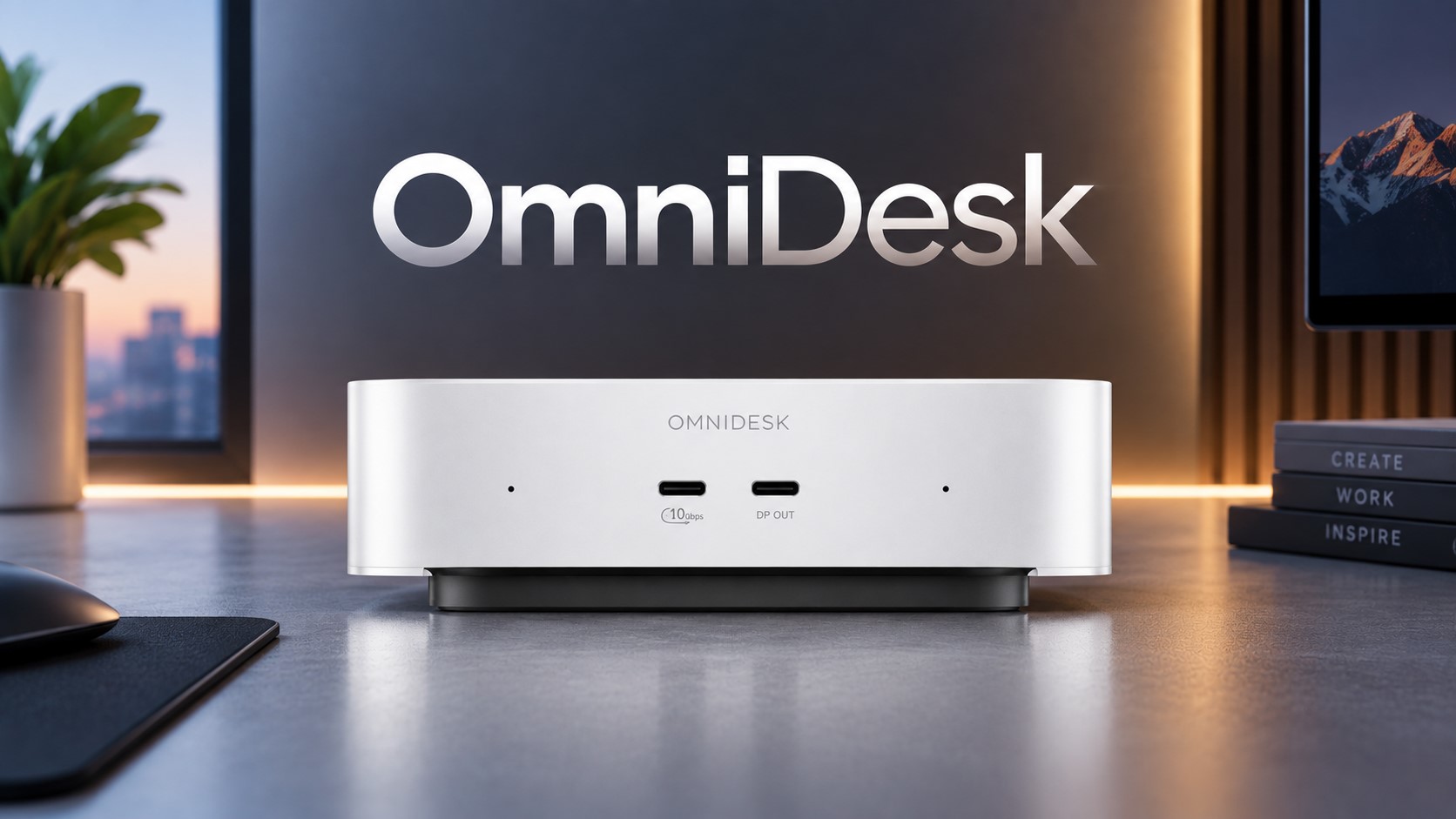
OmniDesk Mini was originally announced during Computex 2026. At that time, HP positioned it as a new mini PC for the AI era and emphasized that it was the world's first mini AI PC to support Thunderbolt Share. The product was originally planned to be launched in August 2026, but HP has already begun to provide actual configurations in some markets. The launch time and specific models vary in different regions.
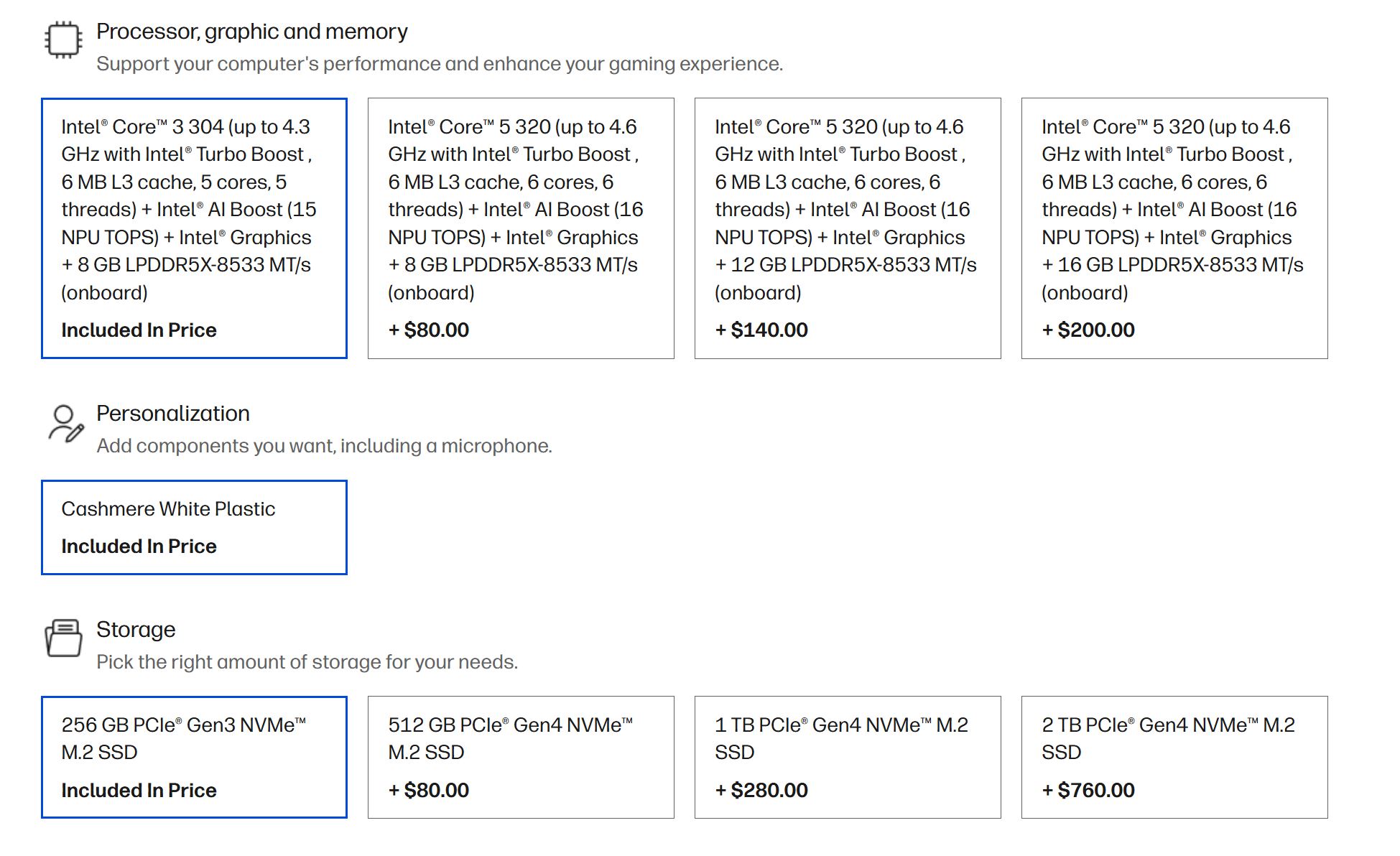
One of the biggest features of OmniDesk Mini is that it provides multiple processor platforms from entry-level Core 3 to high-end Core Ultra 9. The entry-level version uses Intel Core 3 304 processor, with 5 cores and 5 threads, with a maximum turbo frequency of 4.3GHz, and integrated Intel AI Boost NPU, with an AI computing power of 15 TOPS. The higher-level Core 5 315 and Core 5 320 have 6 cores and 6 threads, with the highest frequencies reaching 4.4GHz and 4.6GHz respectively.
For users with higher performance requirements, OmniDesk Mini can also be equipped with Core Ultra 5 325, Core Ultra 7 356H and Core Ultra 9 386H. The highest-end Core Ultra 9 386H has 16 cores and 16 threads, a maximum core frequency of 4.9GHz, and is equipped with 50 TOPS Intel AI Boost NPU. Core Ultra 7 356H also has 16 cores and 16 threads, a maximum frequency of 4.7GHz, and an NPU computing power of 50 TOPS, while the Core Ultra 5 325 has 8 cores and 8 threads, and an NPU computing power of 47 TOPS.
This means that OmniDesk Mini is not actually just one hardware version, but covers multiple grades from ordinary home and office users to developers and AI workload users. The entry-level version uses a non-Ultra series processor, while the higher-spec version uses the Core Ultra Series 3 platform, so the CPU and AI performance gap between different models is quite obvious.
In terms of memory, OmniDesk Mini uses onboard LPDDR5X memory. Depending on the specific motherboard and processor configuration, the capacity can be increased from 8GB, 12GB to 16GB, 24GB or even 32GB, and the maximum frequency reaches 8533 MT/s. Since the memory is designed onboard, users cannot replace or expand the memory themselves like traditional desktop computers, so it is particularly important to choose the appropriate memory capacity when purchasing.
In terms of storage, some versions are equipped with PCIe NVMe M.2 solid-state drives, and HP offers different capacity options such as 256GB, 512GB, 1TB and 2TB. Versions with higher specification motherboards can also use PCIe 5.0 x4 SSD, while some low-end versions use PCIe 4.0 SSD. In addition, some low-end models also provide UFS storage solutions. OmniDesk Mini provides two M.2 slots inside, which allows it to have certain storage expansion capabilities even though it is very compact. For users who need a large amount of local data, development environment or AI model files, this is more practical than simply providing an SSD slot.
In terms of graphics processing, OmniDesk Mini is not equipped with an independent GPU, but relies on Intel Graphics integrated into the Intel processor. Therefore, this product is not designed for large-scale 3D games or professional GPU computing. However, for office work, multimedia playback, program development and general content creation, integrated graphics cards can already meet basic needs.
In terms of AI, HP clearly wants to differentiate the OmniDesk Mini from traditional mini office computers. Core Ultra series processors have built-in NPUs that can undertake some local AI computing tasks, thereby reducing the dependence of some AI workloads on the CPU and GPU. HP positions it as a small desktop platform capable of running native AI applications, developing AI tools, and handling AI-assisted workflows.
Another great feature of OmniDesk Mini is Thunderbolt Share. With a Thunderbolt connection, two compatible Windows computers can share a keyboard and mouse, enabling screen sharing and high-speed file transfers. For developers, creators or office users who use two computers at the same time, this means that they can quickly switch between the two machines without purchasing additional KVM equipment.
In terms of display output, the high-spec version can connect up to four 4K monitors simultaneously. This capability enables OmniDesk Mini, although its size is only at the palm level, but its scalability in a multi-screen office environment is close to that of a traditional desktop workstation.
The interface configuration is also quite rich. The high-spec version provides two Thunderbolt 4 interfaces, as well as USB-C, USB-A, HDMI 2.1 and RJ45 wired network interfaces. Some versions also support 2.5GbE wired networks. In terms of wireless communication, the product can be equipped with Wi-Fi 7 and Bluetooth 6.0, while some configurations announced earlier support Wi-Fi 6E and Bluetooth 5.3.
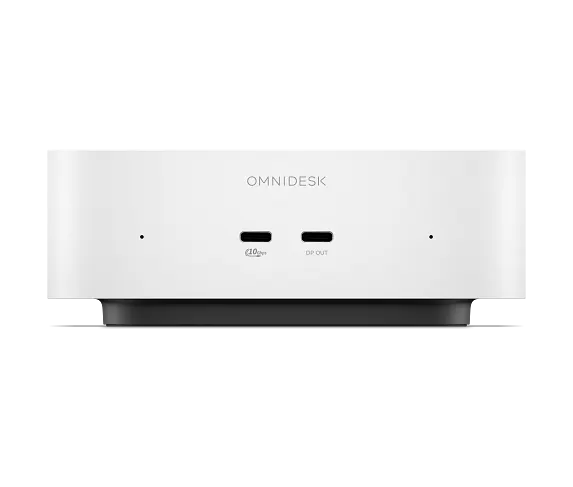
From the perspective of body design, OmniDesk Mini adopts a very simple square metal style, with a volume of approximately 13×13×4.8 cm, which is equivalent to a small router or even a smaller desktop device. HP obviously hopes it can be placed directly next to the monitor or in the corner of the desktop without taking up a lot of space like a traditional desktop.
In the Japanese market, HP announced that the entry-level OmniDesk Mini is priced from 198,000 yen, configured with Core 3 304, 8GB memory and 512GB SSD; the basic performance version with Core 5 315, 12GB memory and 512GB SSD is priced from 229,900 yen. However, prices vary greatly in different regions. A version starting at about US$799.99 has appeared in the U.S. market, so the prices in different markets cannot be simply converted directly.
It should be noted that OmniDesk Mini actually has two significantly different platforms. One set uses lower-power Core 3/Core 5 series processors, and the other uses Core Ultra Series 3. Although the two share a similar mini body design, there are obvious differences in CPU and NPU performance, memory specifications and interface capabilities. Therefore, consumers cannot judge performance based solely on the product name "OmniDesk Mini" when purchasing.
Compared with Apple Mac mini, OmniDesk Mini does have a certain degree of competition in terms of size and product positioning. Both are trying to compress a complete desktop computer into a very small body. However, there are obvious differences between the two products in terms of processor architecture, operating system, and graphics performance. Therefore, HP's more accurate competitive target is actually a high-end mini PC in the Windows ecosystem, rather than simply copying the Mac mini product route.
As AI PCs gradually move from promotional concepts to practical applications, HP is also redefining the purpose of mini desktops. In the past, mini PCs mainly emphasized space saving and low power consumption, while OmniDesk Mini began to integrate functions such as NPU, local AI computing, Thunderbolt Share, multi-screen output, and high-speed storage into a body of less than 1 liter.
For ordinary office users, it can replace traditional bulky desktops; for developers, it can provide a multi-screen working environment and local AI development capabilities; and for users who use multiple computers at the same time, Thunderbolt Share can further simplify collaboration between desktop devices.
However, onboard memory and integrated graphics also mean that this product has clear usage boundaries. After purchasing the low-memory version, it cannot be upgraded by simply replacing the memory. The lack of an independent GPU also determines that it is not suitable for high-intensity 3D games, professional GPU rendering, and large-scale local AI model running. For these needs, users still need to choose products with independent graphics cards or higher-specification workstation hardware.
Overall, OmniDesk Mini represents HP's repositioning of the new generation of Windows mini PCs: it is no longer just a "shrunken desktop", but attempts to compress AI computing, multi-screen work, dual-PC collaboration and high-speed connection capabilities into a desktop device of less than 1 liter. As the performance of processor-integrated NPUs continues to improve, this type of small PC is likely to become an important hardware carrier for Windows local AI applications in the future.
Comments