
Abstract:
Huawei has expanded rapidly in China's consumer electronics and new energy vehicle fields in recent years, but the latest market performance shows that this rapid growth is gradually slowing down. As China's smartphone market matures and competition among new energy vehicles further intensifies, Huawei is moving from a stage of rapid expansion to a stage of competition that relies more on product innovation and ecological capabilities.
In terms of smartphone business, Huawei has quickly regained China's high-end market with products such as the Mate series and Pura series. Especially after the continuous advancement of domestic chips and self-developed technology, Huawei mobile phones have once again become an important competitor in China's high-end smartphone market.
However, China's overall smartphone market has entered a relatively mature stage, consumers' replacement cycles have been extended, and the growth of total market demand is limited. Under such circumstances, even if Huawei continues to increase its market share, it will be difficult to replicate the rapid growth of previous years.
Huawei currently faces more diverse competitors than in the past. Apple continues to occupy an important position in the high-end market, while Chinese manufacturers such as Xiaomi, OPPO, and vivo have also continued to strengthen their high-end products and self-developed chip capabilities. As the technological gap between domestic brands gradually narrows, it has become increasingly difficult to maintain rapid growth solely relying on brand influence.
Folding screen mobile phones are one of Huawei’s key areas of development in recent years. Huawei entered the folding screen market early and launched a variety of folding devices, including traditional inner-folding, outer-folding and tri-folding mobile phones. However, the folding screen market itself is still a relatively niche high-end market, and it is difficult to completely offset the impact of the slowdown in demand in the entire smartphone market.
At the same time, Huawei is investing more resources into the new energy vehicle industry. Through cooperation models such as Hongmeng Intelligent Travel, Huawei does not directly compete in the market as a traditional car manufacturer, but provides automobile companies with capabilities such as smart driving, smart cockpits, vehicle systems, and channels.
This model helped Huawei quickly enter the new energy vehicle market and cooperate with automobile companies such as Cyrus, Chery, JAC, and BAIC. Brands such as Wenjie, Zhijie, and Xiangjie have become important players in China's new energy vehicle market.
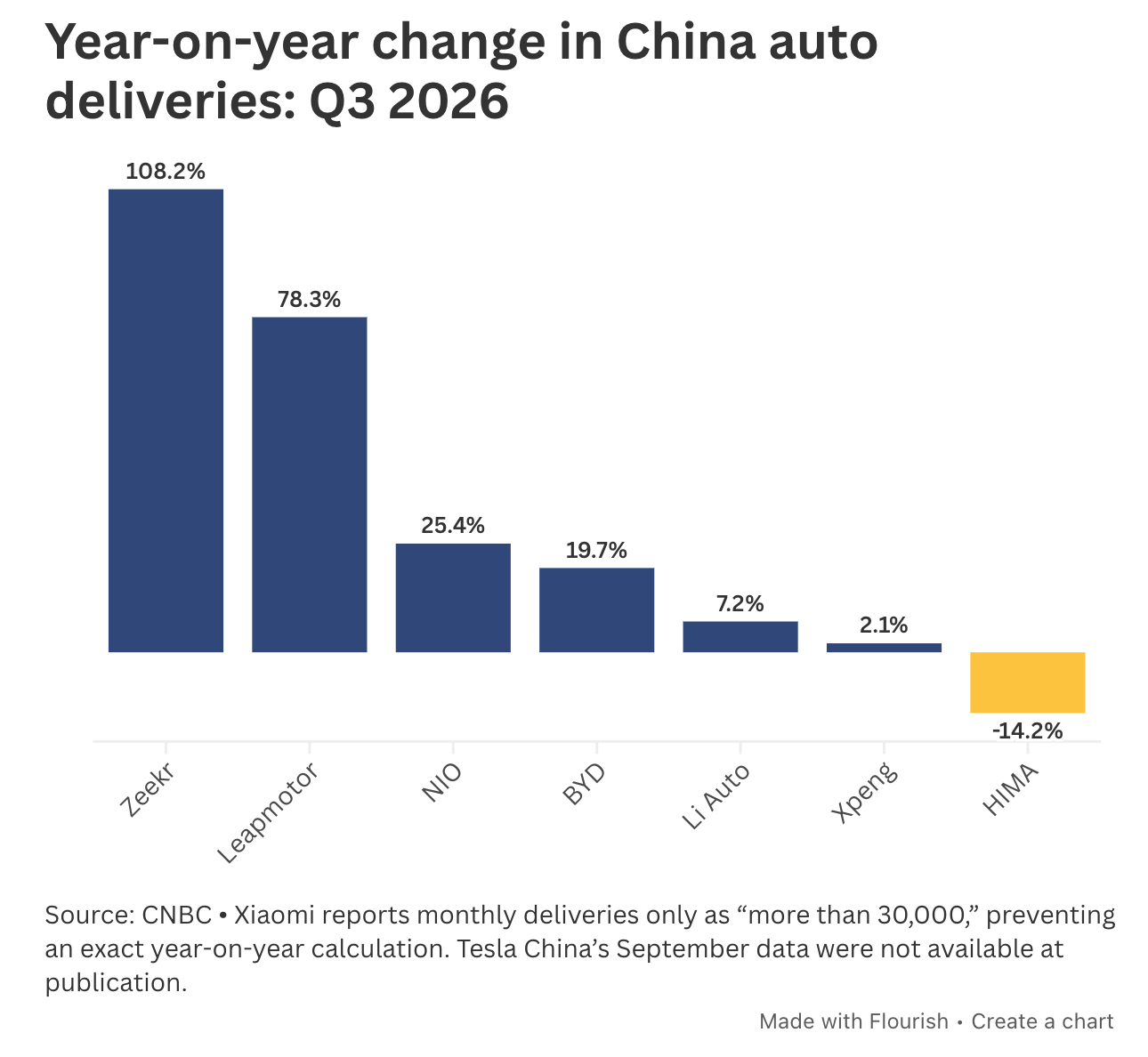
But competition in the new energy vehicle industry is also entering a more intense stage. China's new energy vehicle market has shifted from rapid growth to large-scale competition. A large number of automakers are constantly launching new models and competing for consumers through price cuts, configuration upgrades and smart driving functions.
Although Huawei's cooperation models have strong smart cockpits and assisted driving capabilities, their prices are usually in the mid-to-high-end range. Therefore, they must also face competition from Xiaomi, Ideal, NIO, BYD and other traditional and emerging automobile companies.
At the same time, new energy vehicle consumers are increasingly demanding smart driving. In the past, being equipped with advanced smart cockpits and assisted driving systems could become obvious selling points in itself, but now more and more Chinese automakers are beginning to provide similar functions. Huawei's technical advantages are gradually becoming an important part of the competition in high-end models from a "unique selling point".
This does not mean that Huawei is withdrawing from the new energy vehicle market. On the contrary, Huawei is still expanding its Hongmeng Intelligent Travel system and continuing to cooperate with more car manufacturers. The problem is that as more and more manufacturers adopt similar intelligent technologies, Huawei needs to maintain its leading edge through continuous software updates, hardware upgrades and brand building.
Another challenge facing Huawei is how to coordinate the ecological relationship between smartphones, cars and other consumer electronics products. Huawei has been promoting the Hongmeng ecosystem in recent years, hoping that mobile phones, tablets, computers, cars, smart homes and other devices can form closer cross-device collaboration.
In the long term, this ecological strategy may be more important than the market share of a single product. If users use Huawei mobile phones and Hongmeng Smart cars at the same time, the interconnection experience between devices may increase user stickiness and create ecological advantages that are difficult for other manufacturers to copy.
However, the ecological strategy also means that Huawei needs to face multiple highly competitive markets at the same time. Smartphones need to compete with Apple and Chinese Android manufacturers, the automotive business needs to face BYD, Geely, Ideal, Xiaomi and other companies, and the operating system and AI ecosystem need to compete with Apple, Google and other artificial intelligence platforms.
Therefore, what Huawei is currently facing is not the problem of declining sales of a specific product, but the inevitable entry into a mature competitive stage after rapid expansion.
In the smartphone market, it has become increasingly difficult for Chinese consumers to realize the huge replacement value through simple performance upgrades; in the new energy vehicle market, smart driving, smart cockpits and high configurations are also rapidly becoming popular. Technological innovations that could bring rapid growth in the past are gradually becoming the basic threshold for market competition.
Whether Huawei can maintain growth in the future depends largely on whether it can continue to launch new technologies with obvious differentiation while truly connecting mobile phones, cars, AI and the Hongmeng ecosystem.
From this perspective, Huawei's current changes are closer to "growth model transformation" rather than a business decline in a simple sense. The growth that previously relied on new products, technological breakthroughs and rapid market share expansion is slowing down. In the next stage, it will need to rely on ecological scale, software services, brand premiums and continuous innovation to drive business growth.
For a technology company that simultaneously deploys mobile phones, cars, operating systems, chips, and artificial intelligence, how to maintain technological leadership in multiple mature markets will become a more important challenge for Huawei in the next few years than simply pursuing sales growth.
Comments