
Abstract:
Neurable, a brain-computer interface technology company, officially released its first fully independently developed consumer product "Neurable One". This seemingly ordinary wireless headset actually has 12 built-in electroencephalogram (EEG) sensors that can continuously monitor brain activity and analyze concentration and fatigue levels in real time when users are working, studying or listening to music.
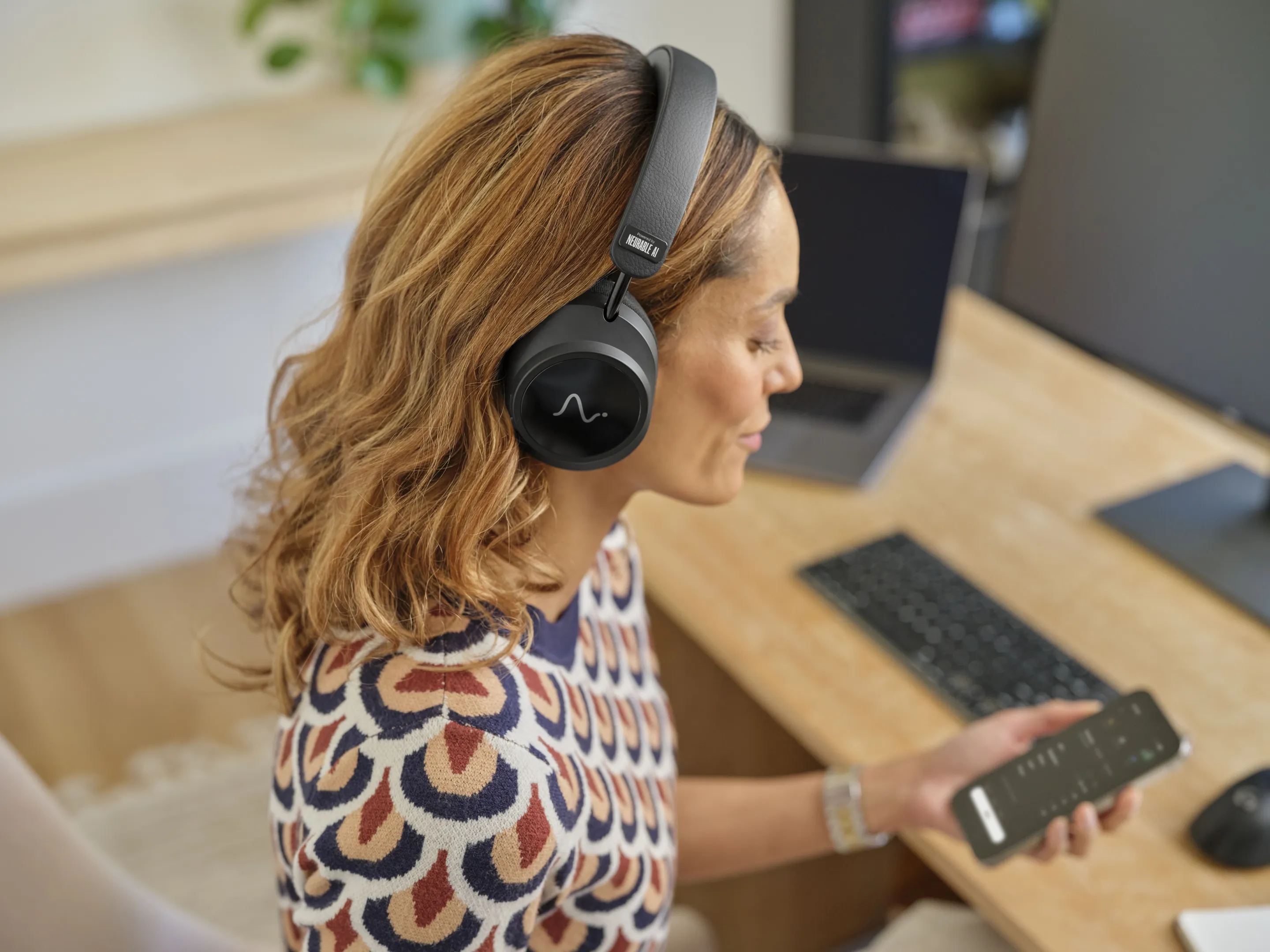
Neurable was founded in 2015 and originated from the Brain-Computer Interface Research Laboratory of the University of Michigan. After more than ten years of research and development and the accumulation of multiple cooperative products, the company has integrated hardware, software and brain signal processing technology into the same product for the first time, trying to bring EEG monitoring technology that was originally limited to laboratories into the mass consumer market.
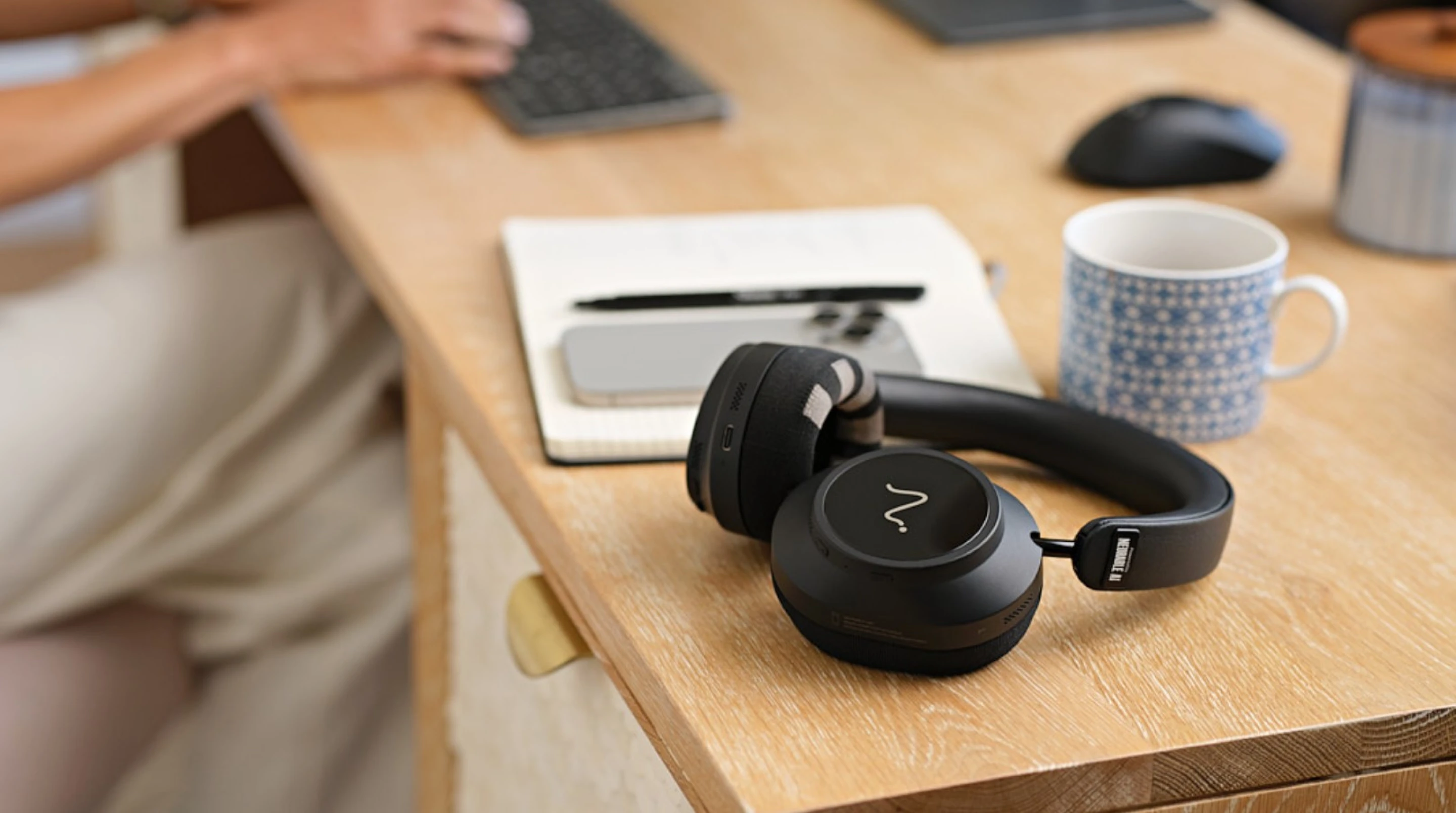
Neurable One embeds 12 fabric-based EEG sensors directly inside the earmuffs, with 6 sensors on each side of the earmuffs. These sensors can continuously collect electrical signals from the surface of the brain without the need for gels, electrode caps or professional operators required by traditional EEG detection. From the appearance, it is still an ordinary pair of high-end noise-canceling headphones, and users can hardly see any obvious traces of EEG monitoring equipment.
EEG technology itself is not a new technology. Its core difficulty lies in how to obtain stable and reliable signals in a real environment. Traditional EEG detection usually requires a quiet environment and strictly controlled conditions, while the signal processing algorithm developed by Neurable is able to filter out interference caused by walking, head movement, chewing, music playback, and the active noise reduction system itself to extract effective brain activity data.
According to reports, the system is supported by more than 80 patented technologies. The sensor can perform 16-bit precision sampling and record EEG data at a frequency of 125Hz. Neurable emphasized that this technology does not read the user's thoughts, language, image content or emotional state, and its function is mainly focused on cognitive performance analysis rather than "mind reading".
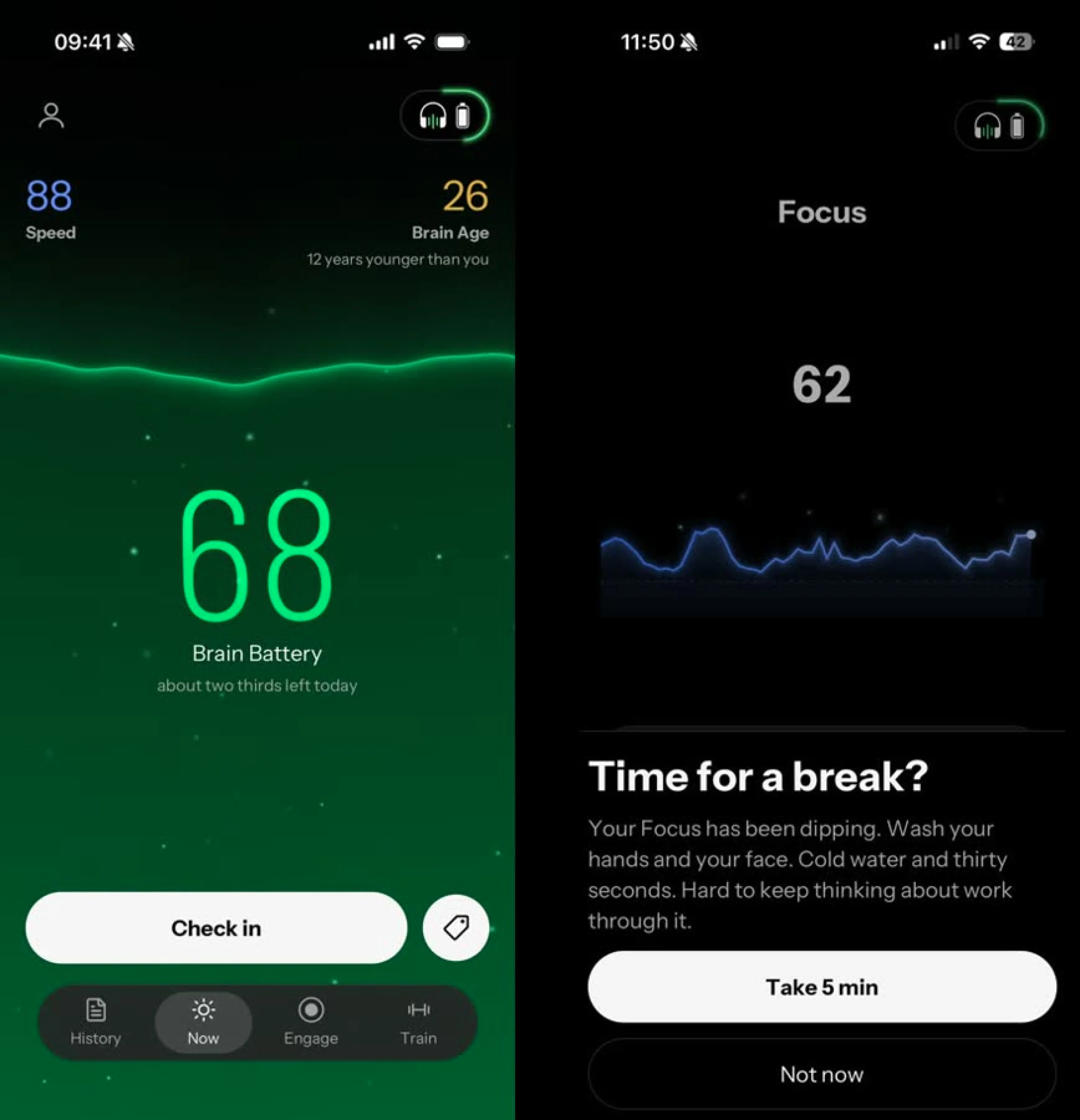
The headset companion application converts EEG signals into multiple understandable indicators, including a total of eight key brain indicators such as concentration, cognitive load, fatigue, drowsiness, brain battery and Alpha peak frequency. Applications can record trends in this data and build long-term profiles.
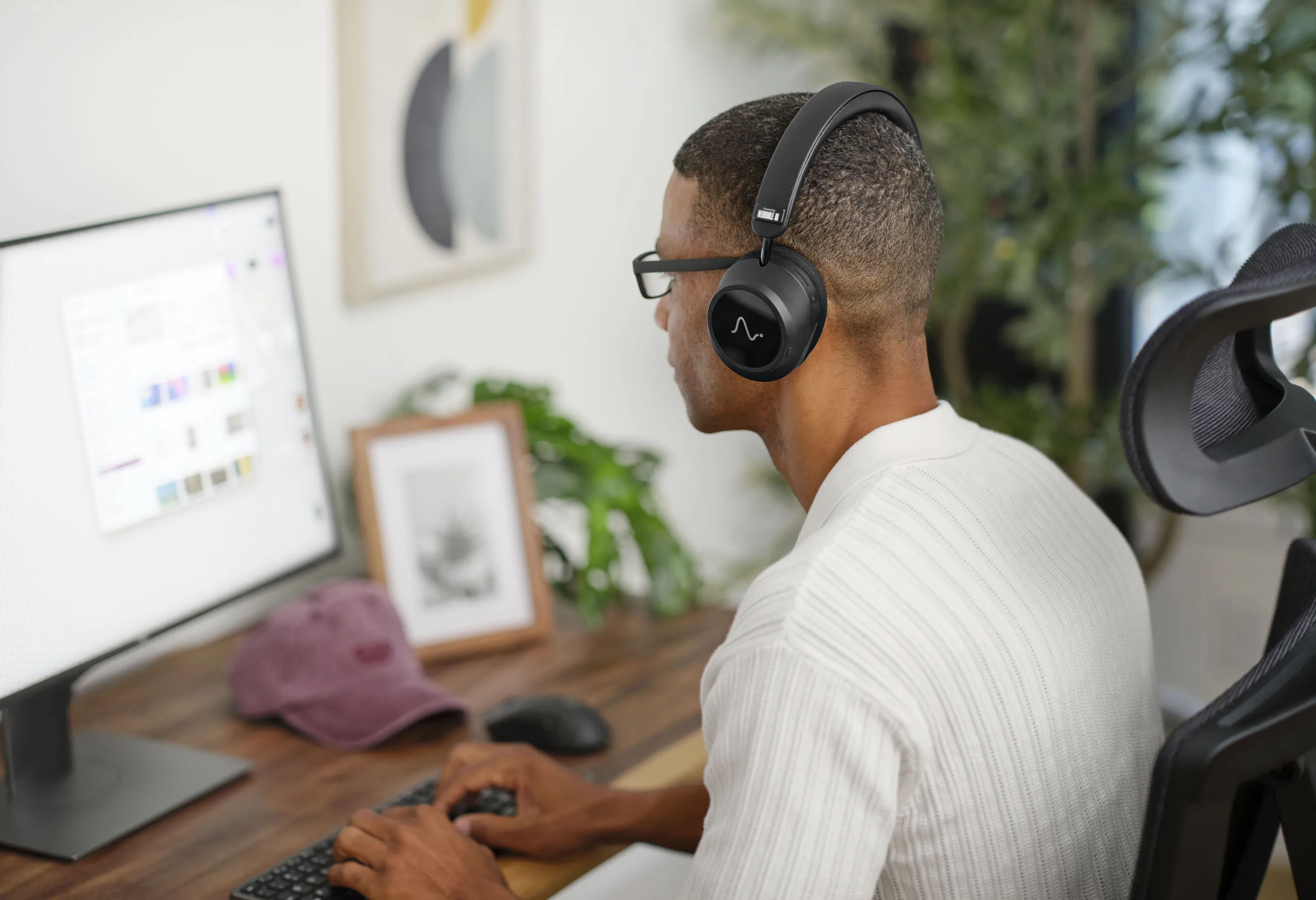
During actual use, users can see changes in their concentration status in real time while working. When the system detects that attention begins to decline, the headset will remind you by adjusting the audio playback method; if it finds that brain fatigue has accumulated, it will suggest that the user pauses work and takes a rest. The system also supports a one-minute quick detection mode. Users can take measurements before and after drinking coffee, after staying up late, or after resting to compare brain state changes.
In addition to real-time feedback, Neurable also generates weekly and monthly analysis reports to help users understand long-term focus, recovery capabilities, and changes in work habits. The company hopes to expand brain health management from one-time measurement to long-term continuous tracking.
In terms of hardware, Neurable One also has high-end consumer-grade headphone configurations, including a 40mm beryllium diaphragm unit, active noise reduction function, ambient sound mode, and six microphones. The headset supports Bluetooth 5.2 connection, AAC and aptX encoding, and multi-device connectivity.

In terms of battery life, the battery life can reach up to 22 hours when used as an ordinary headset only; the battery life after turning on the EEG monitoring function is about 12 hours. The device uses a USB-C interface to charge, and officials say that it can be used for about two hours after charging for 15 minutes.
Neurable positions this product as a health and productivity aid rather than a medical device. The company believes that as wearable devices continue to develop, people have been able to continuously monitor heart rate, sleep and exercise data, and brain status is expected to become the next important personal health indicator to be widely tracked.
Neurable One is currently available for pre-order in the US market, priced at US$499. Industry insiders believe that this product represents that brain-computer interface technology is gradually moving from the scientific research field to the general consumer market, and may also become a new direction for the development of smart wearable devices in the future.
Comments