
Abstract:
After nearly ten years of operation, the Linux mobile operating system project postmarketOS announced its official name change. The development team stated that one of the most practical reasons for making this decision is that too many people do not know this project at all and cannot remember its name.
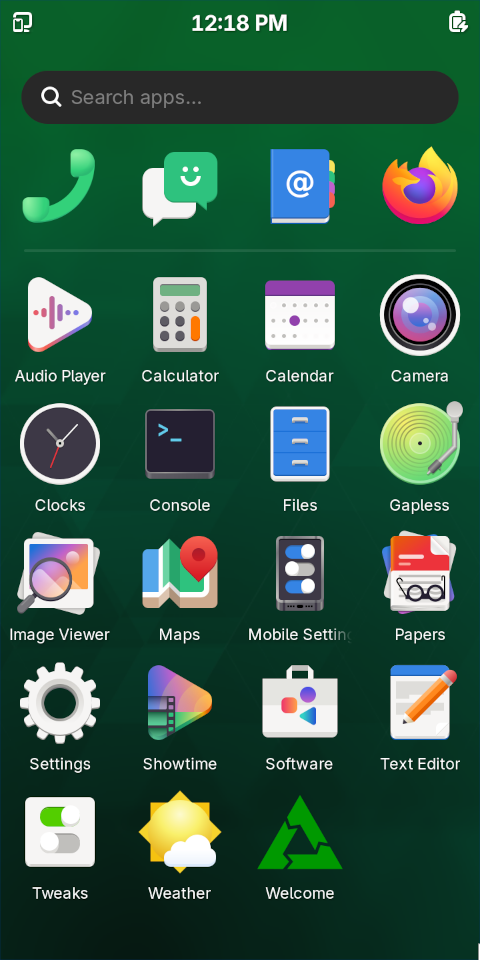
According to information released by the project team, postmarketOS will continue to develop under the new name "Nura" in the future. The name change was not a hasty decision, but followed about a year of discussion and evaluation process. The developers ultimately concluded that the original name had become a significant obstacle to project promotion and public recognition.
For many Linux users, postmarketOS is no stranger. The project was born in 2017 with the goal of providing a true GNU/Linux experience based on the mainline Linux kernel on smartphones and tablet devices, rather than the traditional Android system.
Unlike most mobile operating systems that rely on the Android ecosystem, postmarketOS supports multiple desktop environments such as Phosh and Plasma Mobile, allowing devices to run a large number of native Linux applications. Since the system is built on Alpine Linux, the overall size is lightweight and the resource usage is low. It has also become the "rebirth" choice for many old smartphones.
The development team stated that the original name "postmarketOS" reflected the original concept of the project, which was to provide new vitality to old devices that have stopped official support. However, as the project continued to develop, the name became less and less accurate in reflecting reality.
For example, manufacturers such as PINE64 have directly sold devices with postmarketOS pre-installed, and Fairphone 4 received full porting support on the day it was launched. Judging from these cases, the system is no longer limited to "an alternative after product delisting" and has become a platform officially supported by some devices.
In addition, the team also pointed out that the name postmarketOS is too long, the pronunciation is not natural enough, and the capitalization is often mistaken by users.
Some people write "PostmarketOS", some people write "Postmarketos", and some people write "post-market OS". Because the name itself is complex and unintuitive, this has caused long-term problems in project promotion and brand communication.
In fact, even for users who have been paying attention to the Linux ecosystem for a long time, it is not easy to spell postmarketOS completely and accurately. The development team believes that in an open source project that needs to attract participation from developers, hardware manufacturers, and ordinary users, this naming barrier has reached a point where it must be resolved.
However, the name change does not mean that the development of the project will go smoothly.
The team said that in addition to the name issue, the biggest long-term challenge facing mobile Linux is still the closed ecosystem of mobile phone hardware. Many device manufacturers rely on proprietary drivers and closed components, and developers have to spend a lot of time reversing the relevant code and even writing drivers from scratch in order for the device to successfully boot the mainline Linux system.
And just getting the device to turn on is actually just the beginning. Compared with starting the system, what is more difficult is to achieve native support for complex functions such as cameras, hardware video acceleration, and VoLTE voice calls.
Even in the face of these challenges, the project team achieved remarkable results. Currently, devices including OnePlus 6, OnePlus 6T, Google Pixel 3a, Google Pixel 3a XL, Fairphone 4 and Xiaomi Poco F1 can all run complete Linux systems directly without Android.
As for the new name "Nura", the idea came from community member Davide Depau. The name comes from the word "Nuraghe", a type of giant stone tower structure found in Sardinia, Italy, that is thousands of years old.
The development team had previously made clear requirements when soliciting suggestions for new names: the name should preferably be no more than three syllables, contain no special characters, have no accent marks, and be easy to pronounce and remember by users around the world. And “Nura” was ultimately deemed to best meet these criteria.
With the official name change completed, this Linux mobile project that has existed for nearly ten years has also entered a new stage of development. For the development team, a shorter, easier-to-remember new name not only helps to increase the project's visibility, but also means that its goal has gradually expanded from simply extending the life of old devices to building a truly mature mobile Linux ecosystem.
Comments