
Abstract:
Google is redesigning the Google Play Store built into a car's infotainment system to make it easier for drivers to find, download and use in-car apps. On October 13, local time, Google announced that it would launch a new version of the Play Store for cars equipped with Google built-in services. The new version adopts a dynamic layout that can automatically adjust according to the size and orientation of the car screen, and redesigns the application navigation interface to make it easier for users to find software suitable for use in the car.
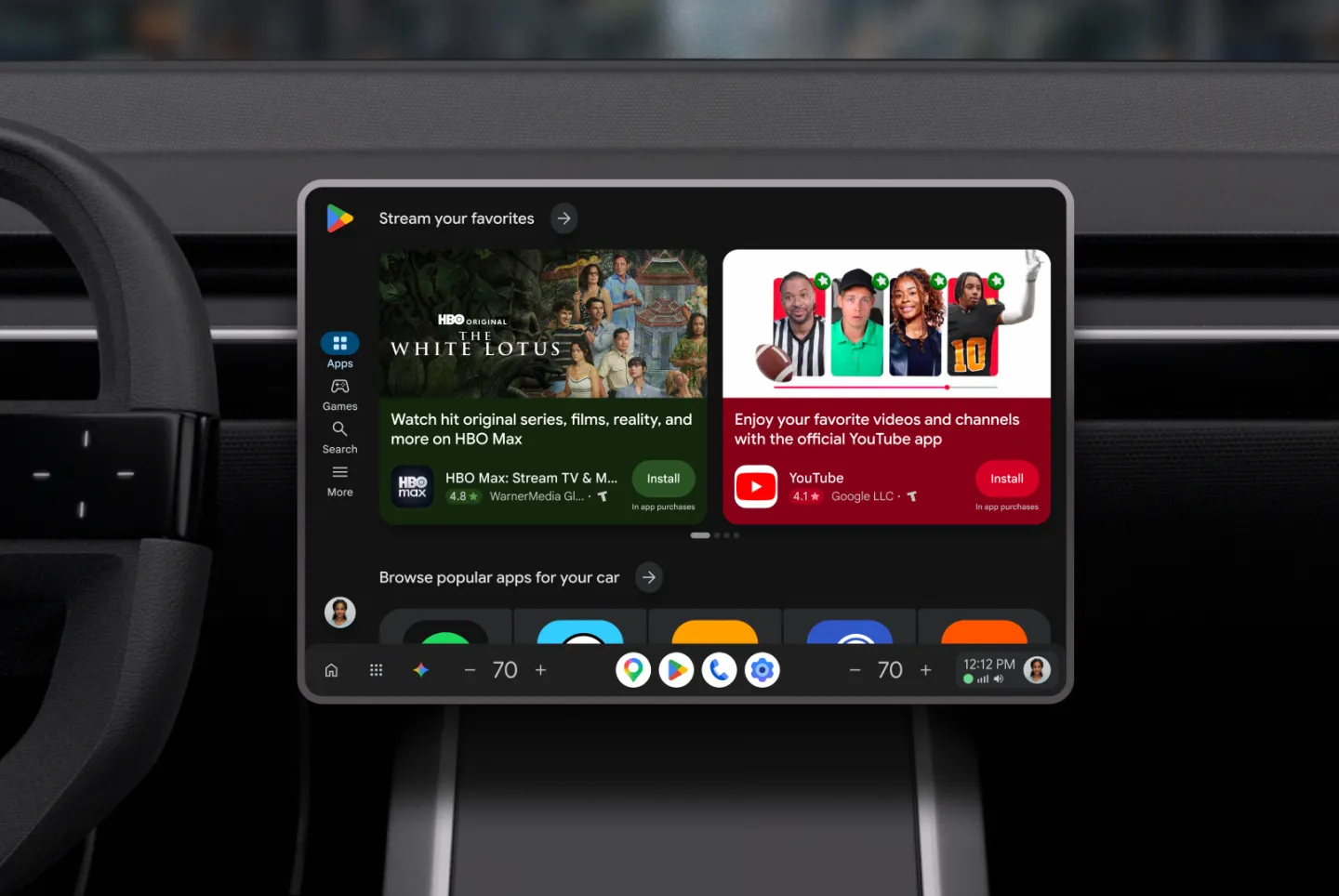
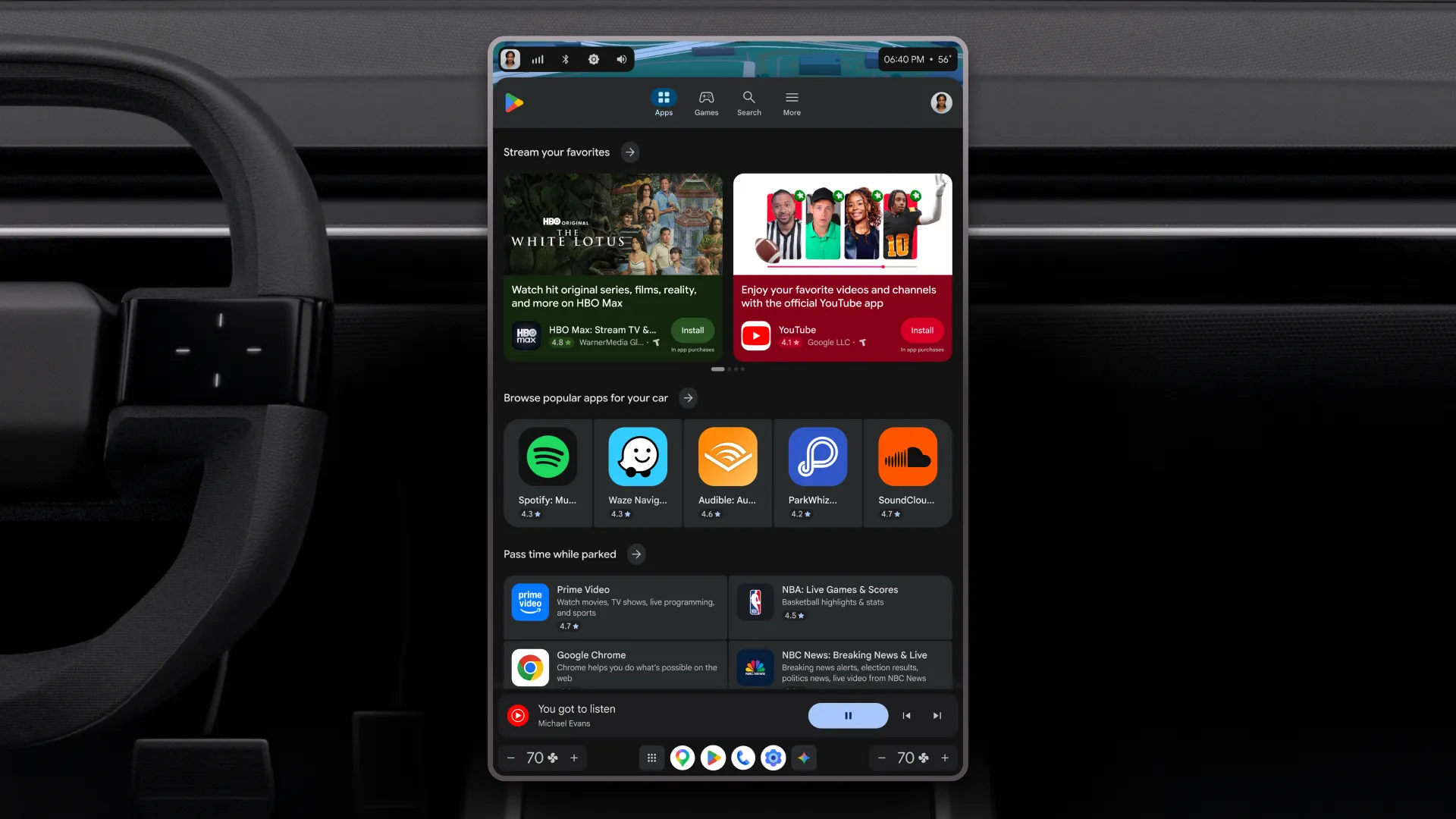
This update is expected to be rolled out gradually over the coming weeks. The new version of the store homepage will display selected applications, and users can click to download them directly without having to enter a complicated category page first. The interface navigation has also been simplified, mainly including four entrances: "Apps", "Games", "Search" and "More". When the vehicle uses a horizontal central control screen, the navigation menu will be displayed on the left side of the screen; if the vehicle is equipped with a vertical screen, the menu will be moved to the top of the screen to adapt to the display layout of different cars.
Google stated that the size, proportion and installation direction of car screens vary from model to model, so the interface of traditional mobile device app stores is not necessarily suitable for cars. The new version of Play Store will dynamically adjust the content display method according to the screen layout, hoping to make the application browsing experience more intuitive and reduce the operations that drivers need to perform when looking for software.
This update is for cars equipped with Google built-in services. The service allows automakers to integrate Google Maps, Google Play Store and other Google services directly into the vehicle's infotainment system, allowing users to use native in-car applications without connecting to their phone.
It should be noted that Google built-in and Android Auto are not the same technology. Android Auto mainly projects the applications and functions in the mobile phone onto the car display, while Google built-in means that the vehicle itself integrates Google-related services and can directly run compatible Android applications. Some models use the Android Automotive operating system as the underlying platform, but whether car manufacturers also provide Google built-in services still depends on the specific cooperation plan.
Volvo and Polestar are among the early adopters of Google car services. Google initially demonstrated related integration solutions on Polestar 2, and then introduced the service to Honda Accord Touring and other models in 2023. Today, cars equipped with Google built-in have covered more brands and models, and Google is also constantly expanding the number and types of in-car applications.
With the launch of the new Play Store, Google will also add a number of applications to the car platform, including Starz streaming service, Firefox browser, Ludo King game and Indian streaming platform JioHotstar. These applications are mainly aimed at entertainment and usage scenarios while the vehicle is parked. Users can watch content, browse the web or play games through the central control screen while waiting, charging or resting.
Among them, the addition of Firefox browser adds new web browsing options to the in-vehicle infotainment system. Unlike traditional car systems, which are mainly designed around navigation, music and phone functions, the browser allows users to access a wider range of online content while parked. However, the actual use of the browser in the car is still limited by factors such as screen size, input methods and vehicle security policies.
The newly added games further expand the entertainment functions of the in-car system. Ludo King is a mobile game based on the traditional board game, perfect for killing time while waiting in the car. As the performance and size of in-car screens continue to improve, Google hopes that cars will not only play the role of transportation, but also provide more digital entertainment experiences in charging, waiting and other scenarios.
The video playback function is also part of this ecological expansion of in-vehicle applications. Google allows users to watch YouTube videos on the center console while the vehicle is parked, while audio content can continue to be played while the vehicle is driving. However, full video playback functionality is only available to YouTube Premium subscribers.
This restriction reflects Google's trade-off between in-car entertainment and road safety. Video content can easily distract drivers, so related functions are mainly designed for parking conditions. While the vehicle is driving, users can still listen to the audio part of the video, but they cannot use the central control screen as an ordinary TV.
For electric car owners, such features may be particularly attractive. Drivers often have to wait for a while when recharging their vehicles at public charging stations. If you can watch videos, browse the web or run games directly through the car's central control screen, you don't have to rely entirely on your mobile phone or carry an extra tablet.
However, whether a specific application can be used depends on the car manufacturer's configuration, the region where the vehicle is located, and the application developer's adaptation. Even if an application has entered Google Play, it does not mean that all models equipped with Google built-in can download and run it. In-vehicle systems often have restrictions on available applications based on vehicle hardware, display layout, and safety requirements.
Google has been expanding its automotive application ecosystem in recent years. In addition to navigation, music and communication apps, the company is also pushing games, video streaming and other mobile apps suitable for large screens into cars. In 2025, Google announced that it would add dozens of applications to some cars equipped with Google built-in, and help developers bring mobile software optimized for large screens into the automotive environment through a dedicated in-vehicle application program.
The key to this plan is to make it easier for applications originally designed for mobile phones to adapt to car screens. Compared to smartphones, car displays may have a wider landscape layout, or they may use portrait screens or other special ratios. If the application cannot adapt to these differences, problems such as incomplete content display and inconvenient operation may occur.
The dynamic layout of the new Play Store is improved to address this problem. By making the store interface automatically adapt to different screens, Google hopes to make it easier for users to find apps while providing a more consistent experience for different car brands.
At the same time, Google is also further strengthening the role of artificial intelligence in vehicle systems. The company is promoting the Gemini artificial intelligence assistant to some models equipped with Google built-in, gradually replacing the traditional Google Assistant. Relevant models include Ford, General Motors, Honda, Nissan, Volvo and other brands. Specific functions and opening hours vary by car manufacturer, language and region.
Compared with traditional voice assistants, Gemini aims to support more natural conversations and understand more complex requests. For example, users can ask for directions, find information, or complete certain tasks in a way that is closer to everyday communication, without having to remember specific voice commands.
Artificial intelligence assistants and app store updates are not completely independent. As in-vehicle systems can run more applications and understand user needs through voice, drivers may discover and use in-vehicle software in a more natural way in the future. However, whether voice interaction can reduce operating steps and reduce the risk of distraction during actual driving still needs to be evaluated based on specific functions and usage environments.
Looking at larger industry trends, cars are increasingly becoming a computing platform that is constantly connected to the Internet, capable of running applications and receiving software updates. The infotainment system of traditional cars is usually pre-configured by the manufacturer, and the functions that users can use are relatively fixed; while cars with Google built-in services can download new software through the app store and gain more functions as the system is updated.
This also makes cooperation between automakers and Google even more important. Automakers need to provide a stable and easy-to-use in-vehicle software experience, and Google hopes to become an important part of the automotive digital ecosystem through maps, app stores, streaming services and artificial intelligence assistants.
However, the expansion of in-vehicle applications must still be based on safety. Entertainment applications are suitable for use when parked, and while driving, operations that may distract the driver need to be limited. In the future, Google and car manufacturers still need to find a balance between application richness, interaction convenience and driving safety.
In general, the new version of Google Play Store does not change the basic way in which cars run applications, but it further improves the discovery and use experience of in-car software through dynamic layout, simplified navigation and increased application selection. As more games, browsers and streaming services enter cars, the use of central control screens is gradually expanding from traditional navigation and audio control to richer digital entertainment and information services.
For car users equipped with Google built-in, what will be worth paying attention to in the next few weeks is when the new version of the store will be pushed to their models, and whether the new applications will be supported by the vehicle and region. With the simultaneous development of artificial intelligence services such as Gemini, Google obviously hopes to make cars no longer just display terminals connected to mobile phones, but become intelligent platforms that can independently run applications and provide personalized services.
Comments