
Abstract:
"Hand-hand knife" is a slang term in second-hand transactions: it means that as soon as the goods are received, the buyer will find faults, bargain, and not pay the agreed price. Nowadays, "hand-made knives" are used by some criminals and become a means of committing fraud. When the reporter investigated the chaos on the second-hand trading platform, he learned about many such experiences.
Second-hand goods have "extra scratches" out of thin air
Who did it?
In September this year, Mr. Li from Beijing listed an idle mobile phone on the second-hand trading platform Xianyu. What he didn't expect was that the phone was photographed for payment just a second after it was released.
Worried about unnecessary disputes, Mr. Li explained the defects of the mobile phone in detail through photos on the platform and informed the buyer in advance, and the buyer also expressed his acceptance. Subsequently, Mr. Li sent the mobile phone to the official testing center and issued a detailed test report.
Unexpectedly, the buyer received a message from his mobile phone a week later, pointing out that the photos taken by the mobile phone had spots, and he hoped to get a cheaper price. Considering the time cost and round-trip freight, Mr. Li had to accept a loss of 300 yuan.
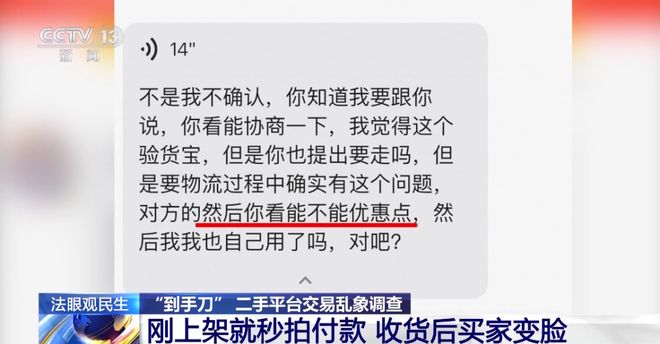
The reporter searched for "hand-made knives" on the Internet and found that many people who sold second-hand goods had similar experiences.
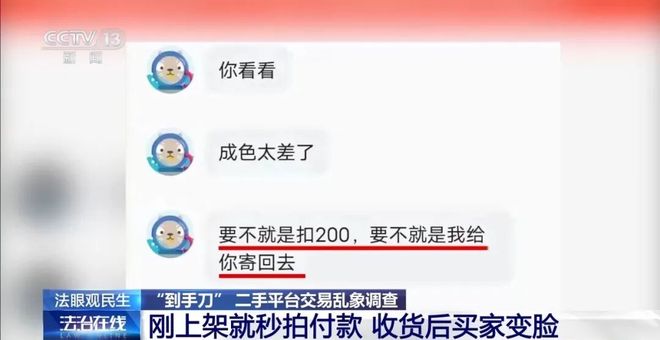
In June this year, a seller hung out a mobile phone on Xianyu, and the seller took a photo of it. After receiving the goods, he said he had discovered a problem and asked for a discount of 200 yuan. Some sellers posted chat records: The other party found faults after receiving the goods. In the unboxing video they sent, the goods had "extra scratches" out of thin air, so they asked for a few hundred yuan cheaper.
"Transaction dispute" is actually fraud
Dismantling the scam
Road
When sorting out the experiences of these parties, the reporter found that most sellers would choose to consider themselves unlucky and lower the price to the other party. On the one hand, it is very troublesome to defend rights. On the other hand, if the other party sends the goods back, if the items are damaged again, the gain will not be worth the loss.
So are these "hand-made knives" just scattered bargaining disputes, or are they organized and premeditated fraud? In March this year, the Fengtai District People's Court of Beijing issued a first-instance verdict on a second-hand luxury goods "hand-made knife" fraud case, revealing the complete routine of this type of scam.
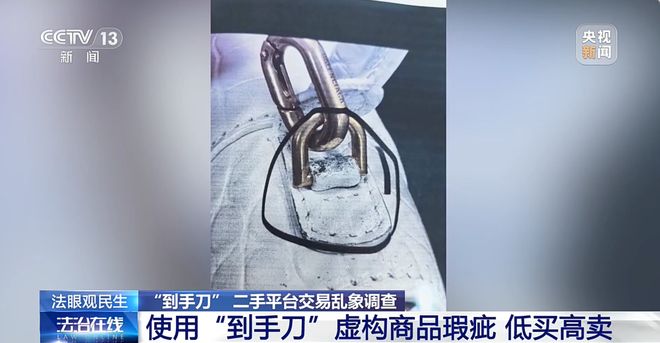
From October 2022 to March 2025, Jin and three other defendants opened a company that deals in second-hand luxury goods in a residential area in Fengtai District, Beijing. They receive goods from second-hand trading platforms, including mobile phones, computers, luxury bags and other items, buy low and sell high to earn the price difference. But in order to make more money, they lowered the price again and again, using the method of "getting money". So, how do they commit fraud? Judge Liu Ruizhen of the Fengtai District People’s Court of Beijing introduced——
Step 1, bypass inspection.
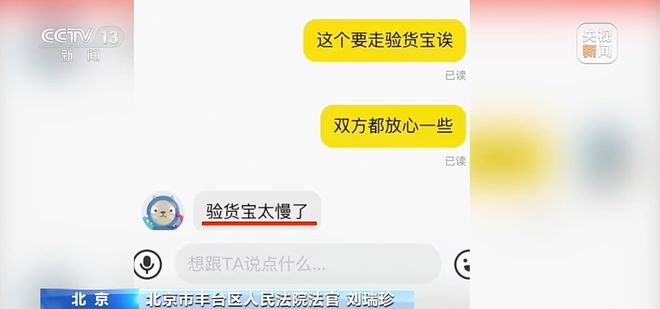
General second-hand trading platforms have official inspection channels. For goods such as second-hand luxury bags, after official inspection, the money will be settled at the negotiated price, and no one can tamper with it. Therefore, Jin and others tried every means to get the seller to give up the inspection and let the seller directly mail the product to their company without going through official inspection channels.
Step two, fake defects.
The gang will collude with the courier. When the goods have actually been received, the courier system still shows the status of not signed for. After getting the bag, they started to create defects, even wearing courier clothes to fake an unboxing video to pretend that the defect was inherent in the bag itself.
Step three, use fake prices to lower the price.
This is also a key step in "getting the knife in hand". The defendant Jin and others sent false photos of defects and false unboxing videos to the seller, and then claimed that the actual condition of the bag did not match his description. On the grounds that the bag was defective, he asked the seller to reduce the price, which caused the victim to fall into a misunderstanding and then agreed to their request for a refund.
If the seller doesn’t agree, they have their own solution. According to the testimony of company manager Zhou, the seller refused to give in, so they repaired the defects and sent them back as they were. But the package has been in the other party's hands for a few days. It is difficult for the seller to tell clearly what condition it is in when it is sent back. In many cases found by the court, the victims were eventually forced to sell at a reduced price.
The court found that the defendant Jin and three others defrauded Ms. Peng, Ms. Li and other victims out of a total of more than 120,000 yuan by forging defects and then bargaining. After the incident, Jin returned 100,000 yuan.
On March 13 this year, the Fengtai District People's Court of Beijing made a verdict in this case. Jin and three other defendants were convicted of fraud and were sentenced to fixed-term imprisonment ranging from four years and three months to one year, and were also fined. Chen, a courier who received goods for this company, was sentenced to two years in prison and fined 20,000 yuan for committing fraud.
How to deal with chaos?
How should sellers take precautions?
Article 1197 of the Civil Code of the People's Republic of China stipulates that if a network service provider knows or should know that a network user is using its network services to infringe the civil rights of others and fails to take necessary measures, it shall bear joint and several liability with the network user.
The reporter found that in the screenshots of conversations sent by some parties who had experienced "hand-knife", you can see the platform's system prompts, such as "This buyer's recent dispute rate is much higher than the platform average", "This buyer's refund rate is much higher than the platform average", etc. Legal experts believe that in addition to the above tips, if the platform recognizes that a suspicious account has committed illegal or criminal activities, it is also obliged to deal with it as soon as possible.
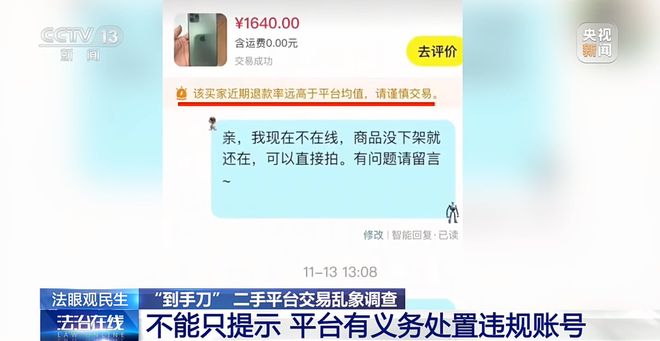
Zhu Wei, associate professor at China University of Political Science and Law, believes that in addition to providing third-party inspection services, platforms should also improve the complaint and reporting mechanism. For sellers and buyers on second-hand trading platforms, experts specifically remind them not to trade privately without leaving the platform, and to be especially wary of buyers’ rhetoric such as “pick up the goods by express delivery,” “add me on WeChat,” and “transfer money directly to you.” These are often precursors to the “hand-made knife” scam trap.
Judge Liu Ruizhen of the People’s Court of Fengtai District, Beijing suggested——
First choose a formal trading platform.
Secondly, do not trade away from the platform, do not trade privately, and try to choose the official identification service of the platform.
The last step is to preserve evidence and leave traces throughout the process. If a dispute occurs, you can call 12315 to make a complaint; if you find that you have been cheated, you can promptly report the case to the public security agency and submit relevant evidence.
The "hand-made knife" in second-hand transactions is no longer a simple price dispute, but may constitute a crime of fraud - from bypassing official inspections, forging product defects to lowering prices with fake videos, criminal gangs are interlocking and turn second-hand transactions into a tool for their own illegal profits.
The platform cannot just be a "matchmaker" for transactions, but also a "gatekeeper" for risks: for abnormal accounts that make instant payments, high-frequency refunds, and insist on bypassing inspections and leaving the platform for transactions, it cannot stop at pop-up prompts, but must proactively identify and deal with them decisively; those suspected of committing crimes must report the case to the public security agency in a timely manner.
Comments