
Abstract:
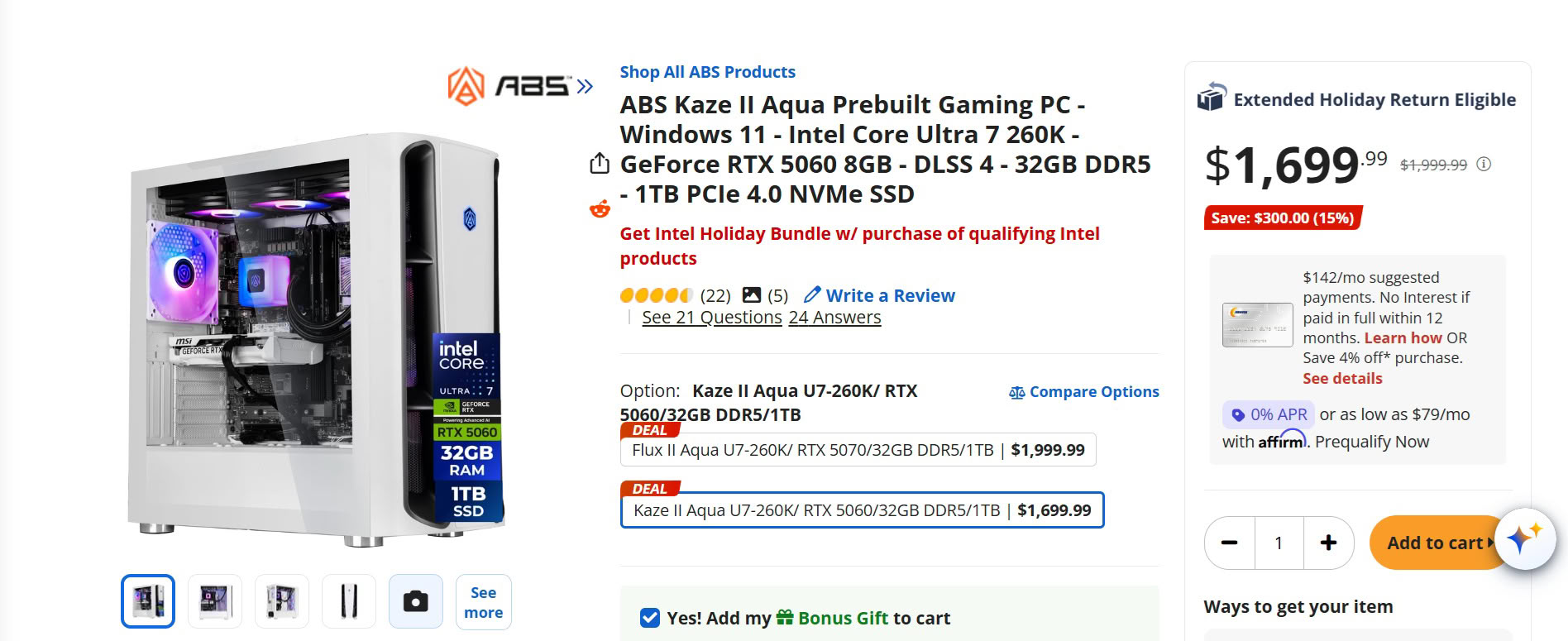
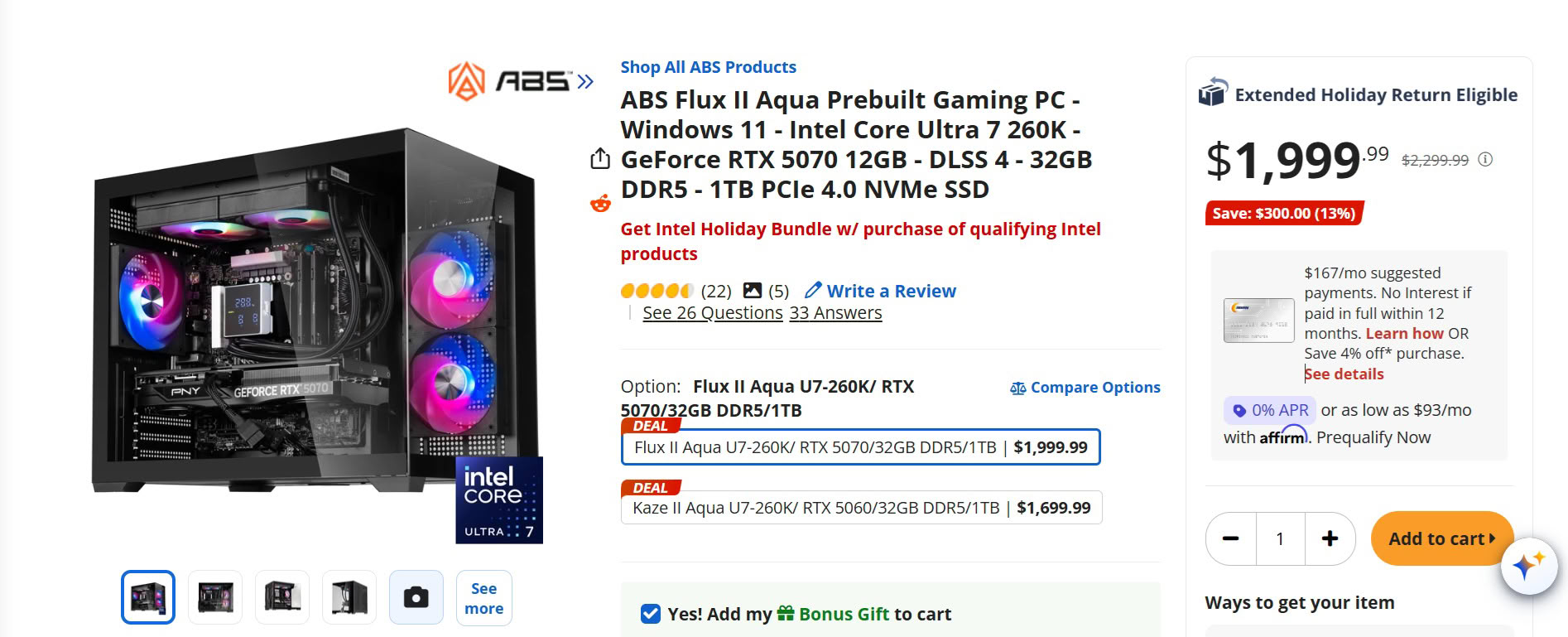
A new processor from Intel that has not been officially released before, the Core Ultra 7 260K, has quietly been put on sale recently, but it is currently only installed in two game consoles under the North American e-commerce platform Newegg's own brand ABS. Among them, the Kaze II Aqua equipped with an RTX 5060 graphics card is priced at US$1,699.99, and the Flux II Aqua equipped with an RTX 5070 graphics card is priced at US$1,999.99.
Newegg confirmed that this chip is exclusively customized for the ABS brand machine and will not be sold separately. Intel later characterized it as a "limited supply" model, confirmed that it would not launch a boxed retail version, and said that the complete product specifications would be launched on the official website within a few days.
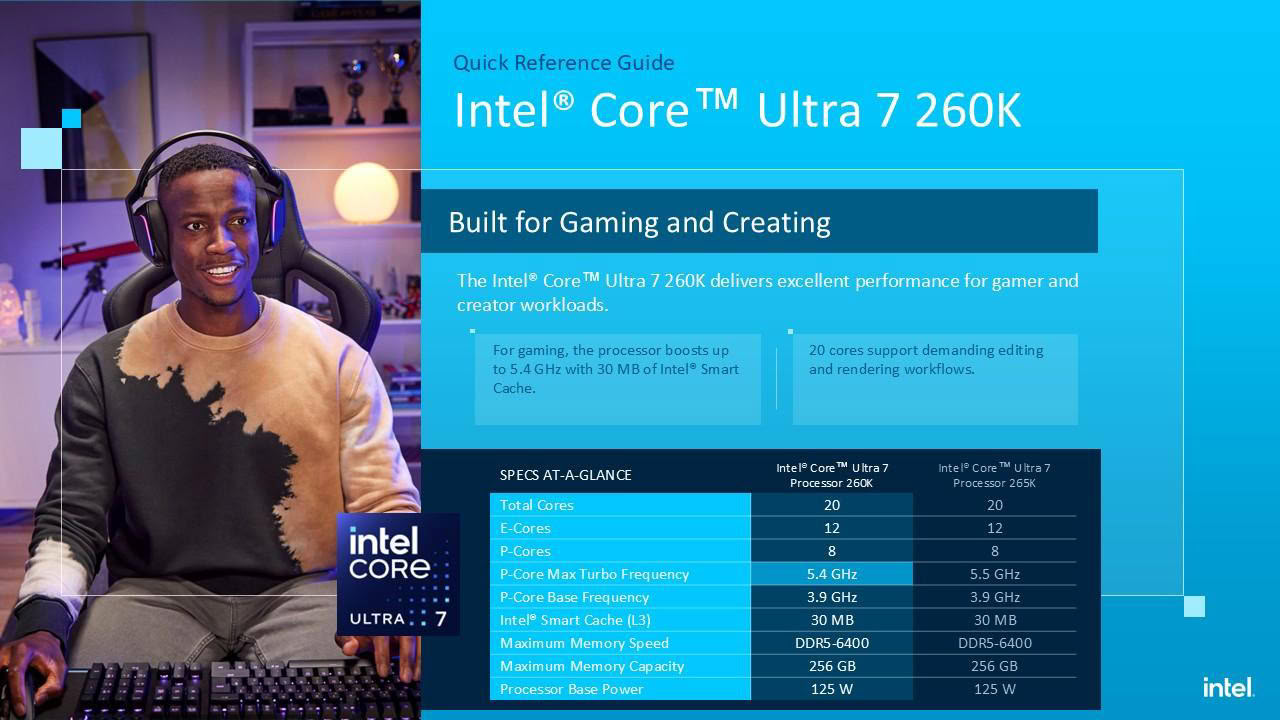
According to the parameters disclosed in Newegg’s official purchase guide, the overall specifications of the Core Ultra 7 260K are highly similar to the Core Ultra 7 265K, with only a slight decrease in the maximum turbo frequency. The processor continues the core layout of 8 performance cores (P cores) plus 12 energy efficiency cores (E cores). It is equipped with 30MB level 3 cache, has a basic power consumption of 125W, and supports up to 256GB of DDR5-6400 memory. However, the maximum acceleration frequency of the performance core is 5.4GHz, which is 0.1GHz lower than the 5.5GHz of the 265K. Due to the memory support specifications of DDR5-6400, this chip should belong to the first generation Arrow Lake series, not the subsequent Arrow Lake Refresh update product line, so it does not support DDR5-7200 high-frequency memory and Intel Binary Optimization Tool (Binary Optimization Tool).
In the early days of the product’s launch, the information on some pages of Newegg was once confusing. Not only was the model mistakenly labeled as the 260KF non-core display version in the partial description, but the maximum acceleration frequency was also shown as 5.2GHz in individual parameter columns. However, the current Flux II page has been uniformly corrected to 5.4GHz. Although no actual benchmark test results have been announced yet, based on the paper parameters, its actual performance is expected to be only a few millimeters different from 265K. Given that DIY installation players cannot purchase this processor separately from retail channels, the Core Ultra 7 270K Plus is still a more attractive option for users who plan to assemble their own Intel platforms.
Comments