
Abstract:
Mercury Research data shows that AMD’s desktop processor shipment share fell to 29.9% in the third quarter of 2026, down 5 percentage points from 34.9% in the second quarter; Intel rebounded to 70.1%. This is AMD's first quarterly share loss in months and its lowest level since early 2025. A year ago, AMD's desktop CPU shipment share was 33.6%.
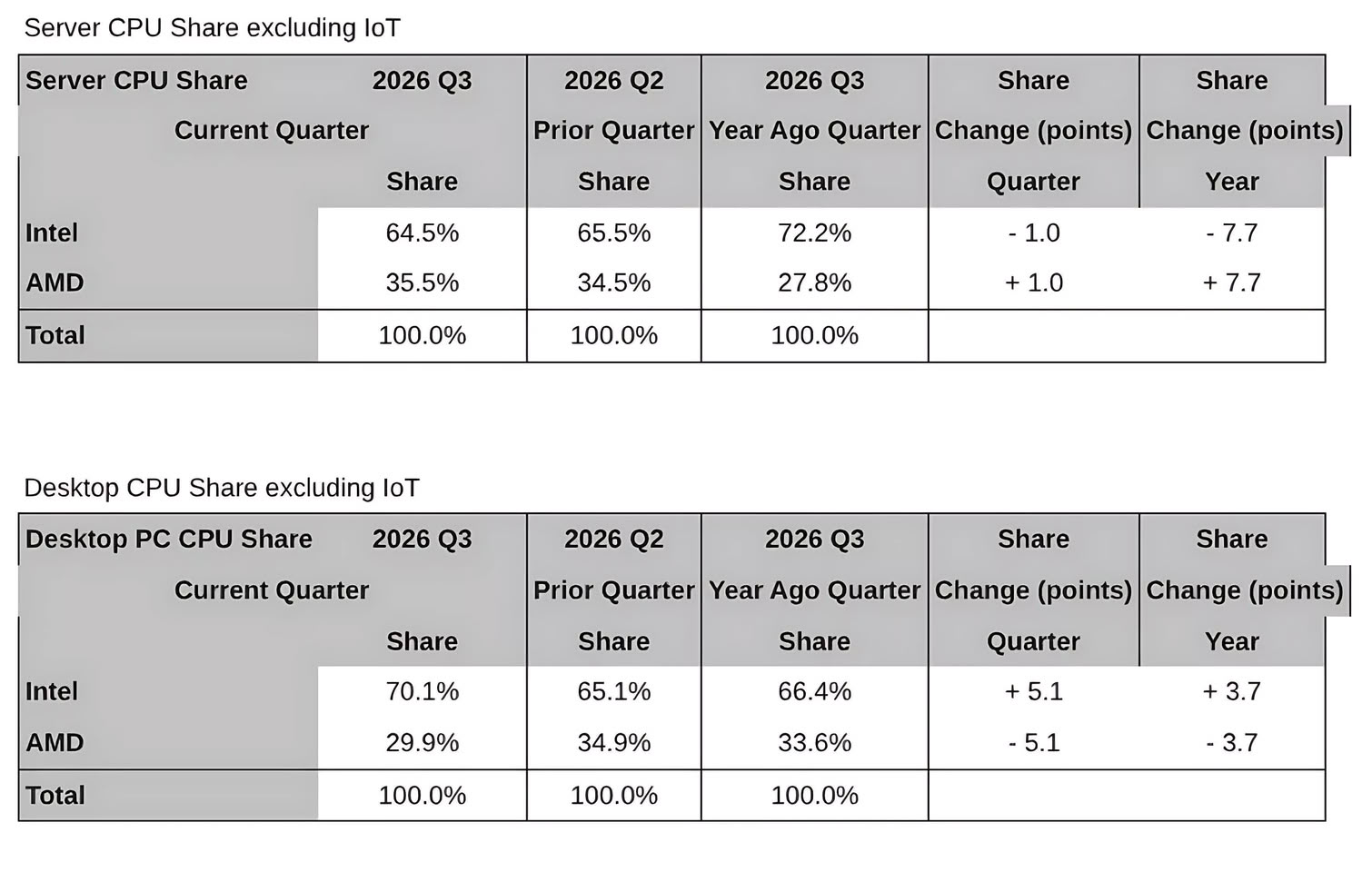
Mercury Research said it is currently difficult to identify a single reason for the change in share. The agency speculates that the third quarter is usually the season when desktop computer demand rebounds, and the weakening demand for notebook processors may allow Intel to shift more chip supply to the desktop market; Intel previously had a tight supply of desktop processors in the first half of 2026. In contrast, AMD doesn't appear to be experiencing the same seasonal growth.
AMD's high dependence on the gaming computer market may also be one of the influencing factors. Mercury Research pointed out that the limited supply of gaming graphics cards has dragged down the gaming PC market, which in turn affects the shipment of AMD desktop processors. AMD has previously admitted that market demand exceeds the company's supply capacity; at the same time, CEO Su Zifeng recently stated that the company is prioritizing its data center business.
Intel's share recovery doesn't necessarily mean its desktop processors are suddenly more popular among gamers. Mercury Research said that desktop processor shipments fell sharply in the second quarter of 2026; in the third quarter, both companies' mobile processor shipments also decreased by more than 10% compared with the previous quarter. The server market showed a different trend, with AMD's share rising from 34.5% in the second quarter to 35.5% in the third quarter. These figures reflect changes in the structure of processor shipments and cannot be directly equated to consumer purchasing preferences or retail sales.
Comments