
Abstract:
Intel CEO Chen Liwu said that the industry must break TSMC’s monopoly in the global foundry market. He proposed that orders should be spread among multiple suppliers to meet the growing demand for artificial intelligence chips. Intel is betting its future on the revival of its foundry business. Chen Liwu also said that the surge in demand for central processors will continue to cause supply constraints.
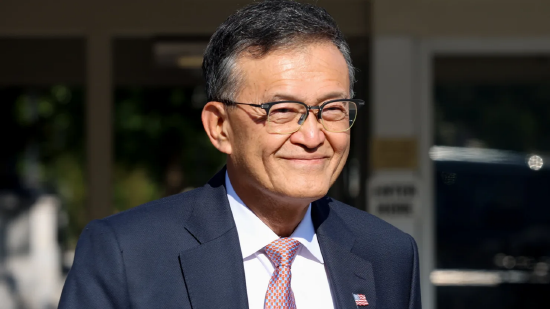
On the 14th, Chen Liwu delivered a keynote speech at the Splunk.conf26 conference held in Denver, Colorado. When Cisco President and Chief Product Officer Jitu Patel asked him about the importance of Intel's fabs, Chen Liwu said that it is crucial to have chip design, manufacturing and advanced packaging capabilities at the same time. "This is why we are involved in this field." He called Intel an iconic industry enterprise in the United States and even around the world. Splunk is an AI data management platform company, and Intel is an AI infrastructure partner for Splunk and its parent company Cisco.
Chen Liwu said that the wafer manufacturing business is very difficult and requires top-notch process technology. Yield, defect control, production cycle and process fluctuations must be strictly managed to ensure stable output. Customer needs vary, and foundries must master corresponding intellectual property and provide electronic design automation tools to serve customers. He added that advanced packaging is a top priority: integrating CPU, memory, input and output devices and silicon chips into the same package is extremely difficult and requires deep technical accumulation.
Chen Liwu made it clear that he intends to break TSMC’s dominant position in global AI chip production. "The industry is increasingly moving towards system solutions and packaging technology. This is the future." He said, "So I think it is extremely risky to rely on one company for 95% of production capacity."
These remarks are directed at U.S. companies such as Nvidia, AMD, and Apple, which have almost all AI chips manufactured by TSMC. They also release Intel’s intention to take on more foundry orders, in line with the priorities of the Trump administration.
Chen Liwu said that the foundry business is not easy to do and requires careful layout and huge capital expenditures. "The good news is that the situation has improved in the past 18 months." Intel's 14A (1.4 nanometer) process has encountered yield problems, but the company agreed in April to export 14A process technology to the Terafab project led by Tesla and SpaceX. Terafab's first product is expected to be available in mid-2028.
In June this year, Intel hired former SK Hynix CEO Li Xixi as senior vice president, responsible for advanced packaging, back-end technology research and development and manufacturing in the foundry department. This poaching brought in executives who had worked at Intel to strengthen back-end manufacturing capabilities and deal with yield problems. Industry insiders speculate that SK Hynix may cooperate with Intel to produce basic logic chips required for high-bandwidth memory.
Chen Liwu also expressed confidence in Intel's EMIB (Embedded Multi-chip Interconnect Bridge) advanced packaging technology. EMIB connects chips through silicon bridges, allowing multiple chips to operate as a single chip.
Chen Liwu emphasized the demand for Intel's core product CPU. He predicted that as the number of AI agents for inference tasks grows to the trillions level, the current shortage will continue. The GPU is the core of model training, but the CPU is responsible for overall scheduling and is regarded as a key chip in the AI inference era. The CPU can coordinately schedule a large number of GPUs running in parallel and manage various applications at the same time.
"CPU demand is extremely strong, and we can only meet the needs of 50% of customers." Chen Liwu said, "Many corporate CEOs have called me, and I can only regret to inform you that the production capacity is insufficient." He added: "The number of AI agents is huge, and millions or even trillions of agents in the future will require computing power resources. We need sufficient computing power and security capabilities to support all of this."
Comments