
Abstract:
The international KM3NeT collaboration uses the ORCA neutrino detector on the seabed of the Mediterranean Sea to test the Lorentz invariance in Einstein's theory of relativity. The research team analyzed 1.4 years of observational data and screened a total of 5,828 atmospheric neutrino candidate events; the results found no signs of disruption of this basic symmetry, but set new experimental limits for several possible deviations.
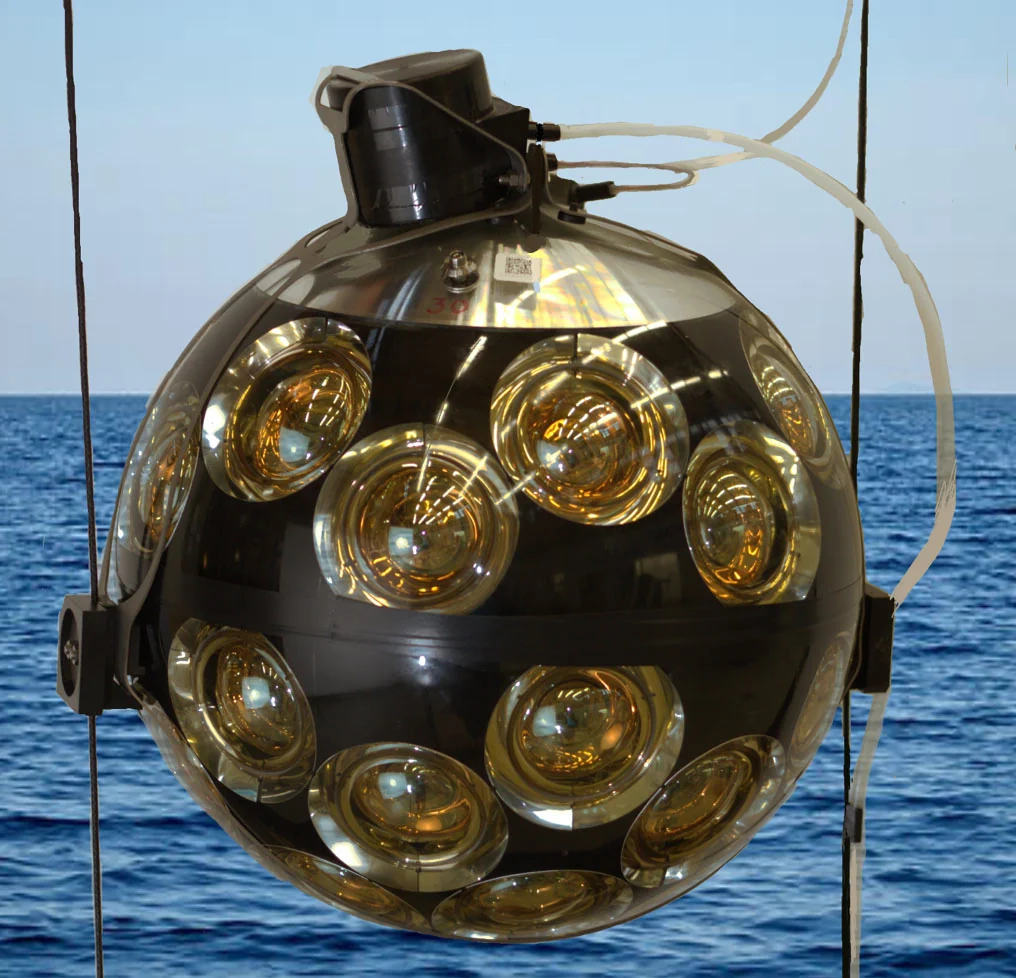
Lorentz invariance is an important foundation of the Standard Model of particle physics and the general theory of relativity, meaning that the laws of physics do not change if an observer moves at a different constant speed or in a different direction. Some quantum gravity theories believe that space and time may not be continuous on extremely small scales, and there may be slight deviations. Precisely measuring the behavior of neutrinos is one of the ways to find clues to this new physics.
Neutrinos rarely interact with matter and can pass through the earth leaving almost no trace; they also oscillate between different "flavors" during their propagation. The researchers compared the observed neutrino energy, arrival direction and oscillation with theoretical expectations to look for anomalies that may be caused by the violation of Lorentz invariance. The ORCA detector used this time had only six detection units deployed and was still partially completed.
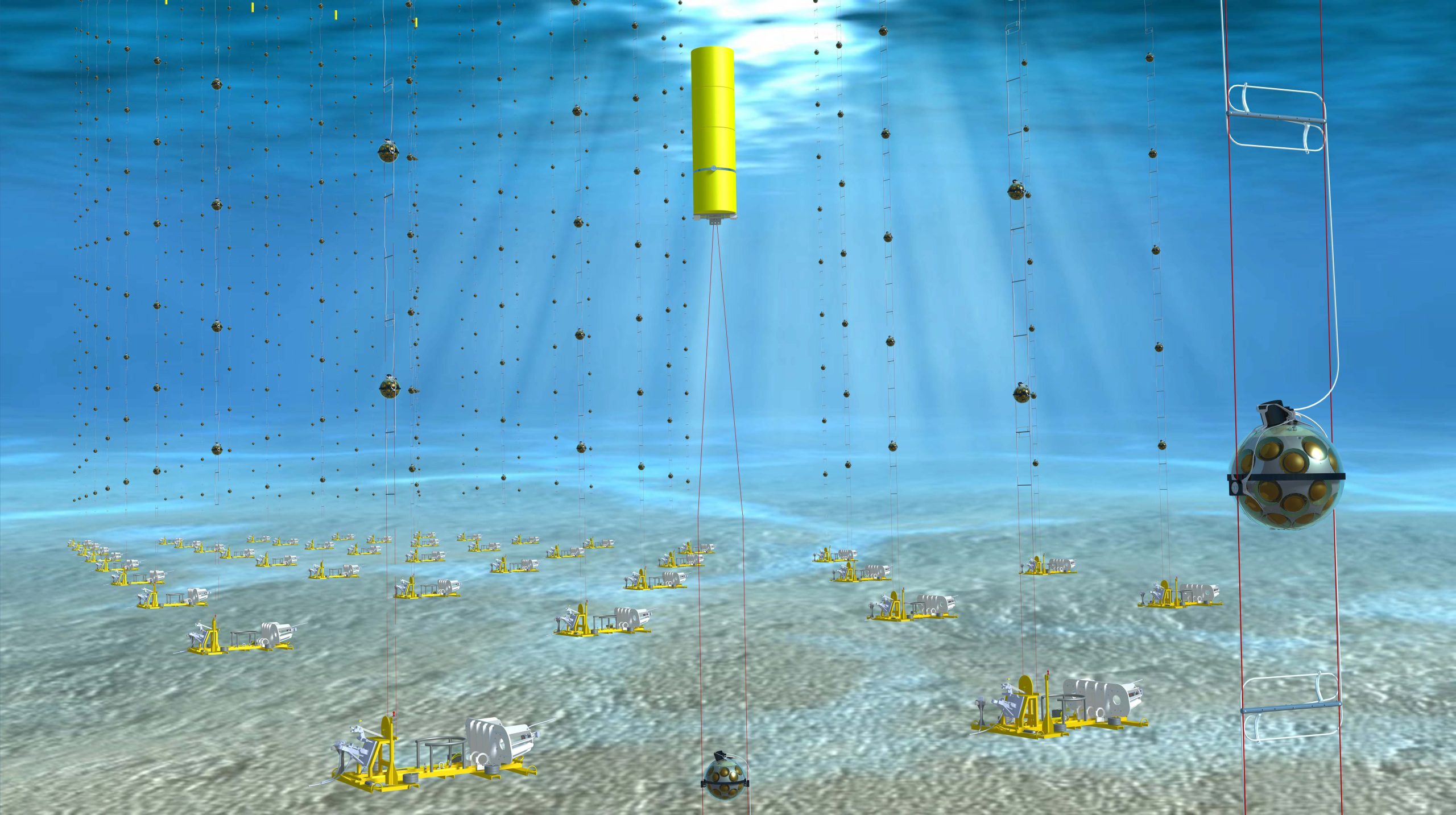
The analysis found no evidence of the destruction of Lorentz invariance, but provided competitive constraints on the specific effects that may affect the oscillations of muon neutrinos and tauon neutrinos. The study also directly constrained the differences in diagonal coefficients of several flavors in the muon and tauon neutrino sectors for the first time. The research team stated that despite the limited data volume and detector scale, the results are comparable to the longer-running IceCube and Super-Kamiokande experiments.
As ORCA expands and accumulates more data, the team hopes to further improve the measurement accuracy; another set of KM3NeT/ARCA detectors for higher energy neutrinos is expected to be used to study neutrinos from distant celestial bodies. Some theories predict that deviations from Lorentz invariance will become more pronounced as particle energy or propagation distance increases, but the astrophysical neutrino events currently recorded by ARCA are not sufficient to carry out such analysis.

Comments