
Abstract:
The European Center for Nuclear Research (CERN) has officially launched the most important round of upgrades of the Large Hadron Collider (LHC). As the first magnet connection was severed, the world's largest particle accelerator began to enter the disassembly and replacement stage, paving the way for the future era of the "High-Brightness Large Hadron Collider" (HiLumi LHC).
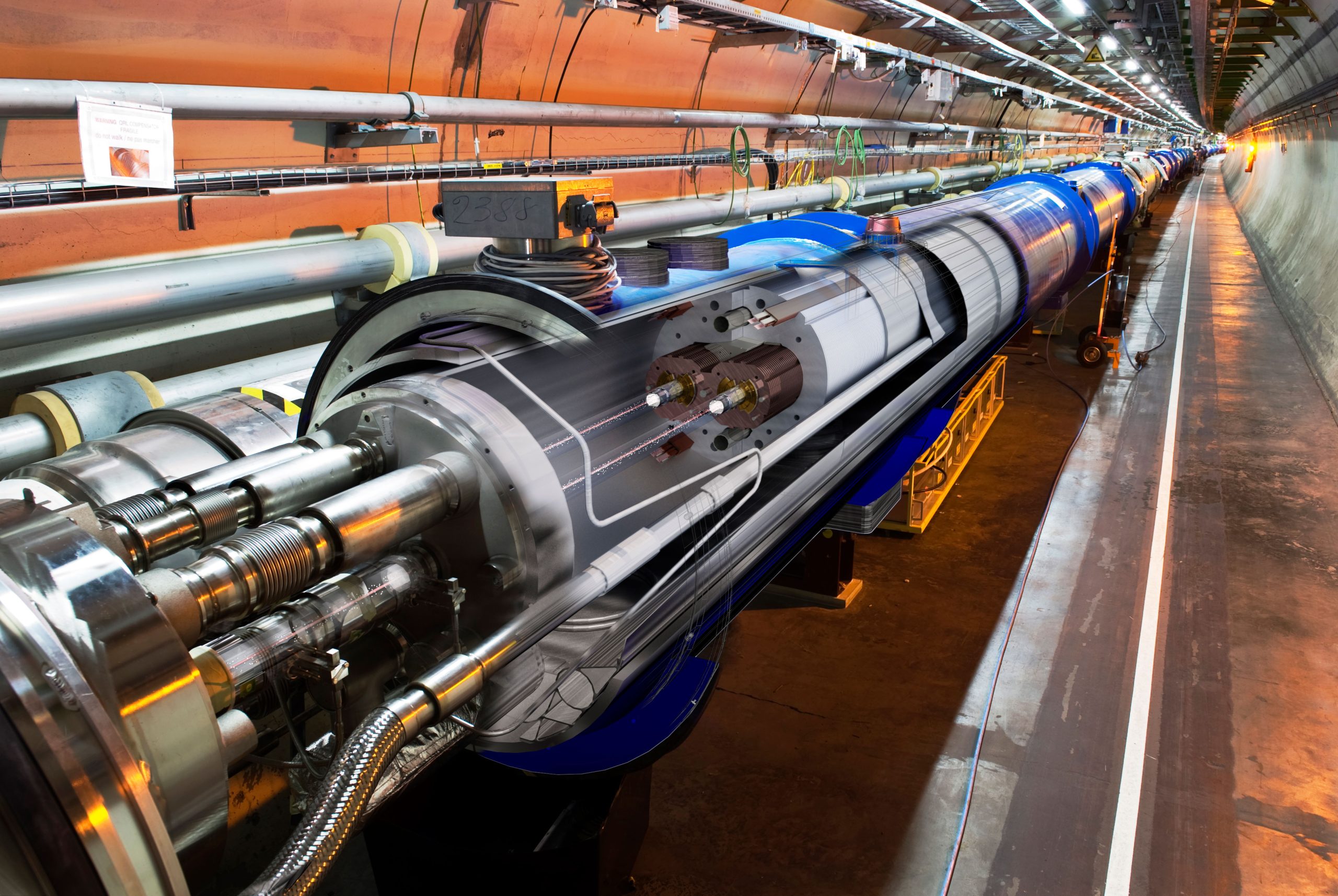
The Large Hadron Collider is 27 kilometers long and surrounds the underground border of France and Switzerland. Thousands of different types of superconducting magnets are deployed inside, including dipole magnets, quadrupole magnets, hexapole magnets, octupole magnets and decapole magnets. These magnets share the important task of guiding, controlling and compressing the particle beam.
The most critical type of equipment is called the "inner three-pole magnet set". They consist of three quadrupole magnets, which are installed on both sides of the four major experimental devices of the Large Hadron Collider. Its job is to compress the particle beam into as small a range as possible before the particles enter the detector and collide.
The more tightly the particle beam is compressed, the higher the probability of collision. The frequency with which these collisions occur is called "brightness." For particle physics experiments, the higher the brightness, the more data can be obtained, helping scientists to study more deeply the most basic physical laws of the universe.
In order to achieve future high-brightness operation goals, the existing inner three-pole magnets must be replaced by a new generation of more powerful devices. This operation is one of the core projects in the third long-term shutdown maintenance plan (LS3).
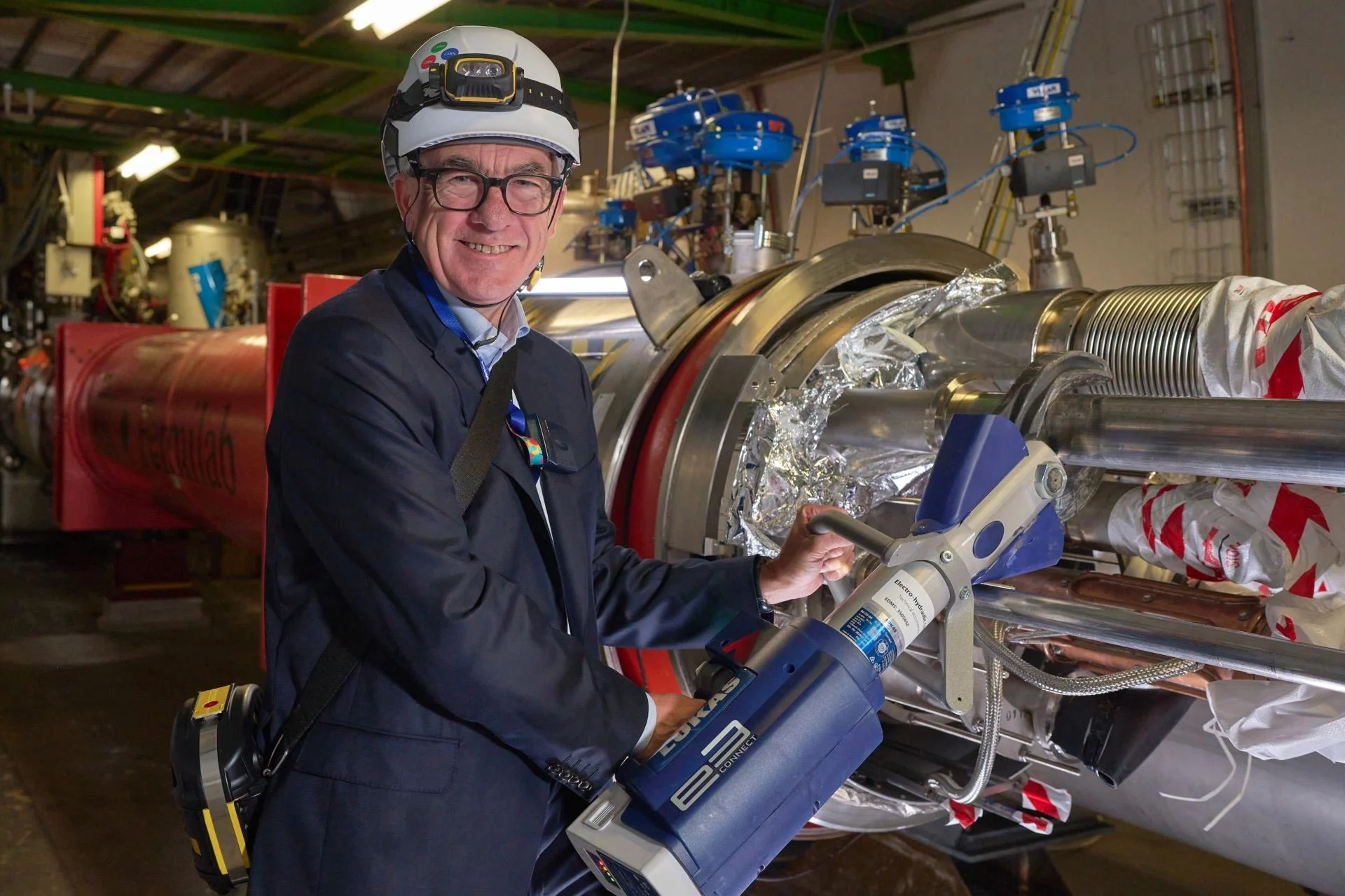
This month, the engineering team cut off the first set of magnet connections, marking the official start of the magnet replacement work. Mark Thomson, Director General of CERN, also made a special trip to the first point of the LHC where the ATLAS experimental area is located to witness this important node.
According to the project plan, 16 cryostat systems and 28 cryogenic components will be installed in the Large Hadron Collider in the future. The first of the new quadrupole magnets is expected to be transported into the tunnel and installed in early 2029.
The biggest highlight of this upgrade comes from the new generation of superconducting magnet technology.
The inner three-pole magnets currently in operation mainly use niobium-titanium superconducting materials, while new equipment in the future will use more advanced niobium-tin superconducting coils. With this material, the new magnet can generate a magnetic field strength of up to 11.3 Tesla, which is about 40% higher than existing equipment.
Stronger magnetic fields mean that particle beams can be further compressed, significantly increasing the frequency of collisions. This is the core goal of the High-Luminosity Large Hadron Collider program.
According to the design indicators, the upgraded system will enable the two major experiments of ATLAS and CMS to obtain far more data than at the current stage. In the next few years, researchers hope to use this data to more precisely measure the properties of the Higgs boson, search for signs of dark matter, and explore new physical phenomena beyond the Standard Model.
It is worth noting that not all experimental areas require replacement of the inner tripole magnet.
Because the ALICE and LHCb experiments have different research goals and operating methods from ATLAS and CMS, their existing inner tripole magnets will continue to be retained. However, these experiments will still be subject to accompanying improvements to take full advantage of future overall brightness improvements.
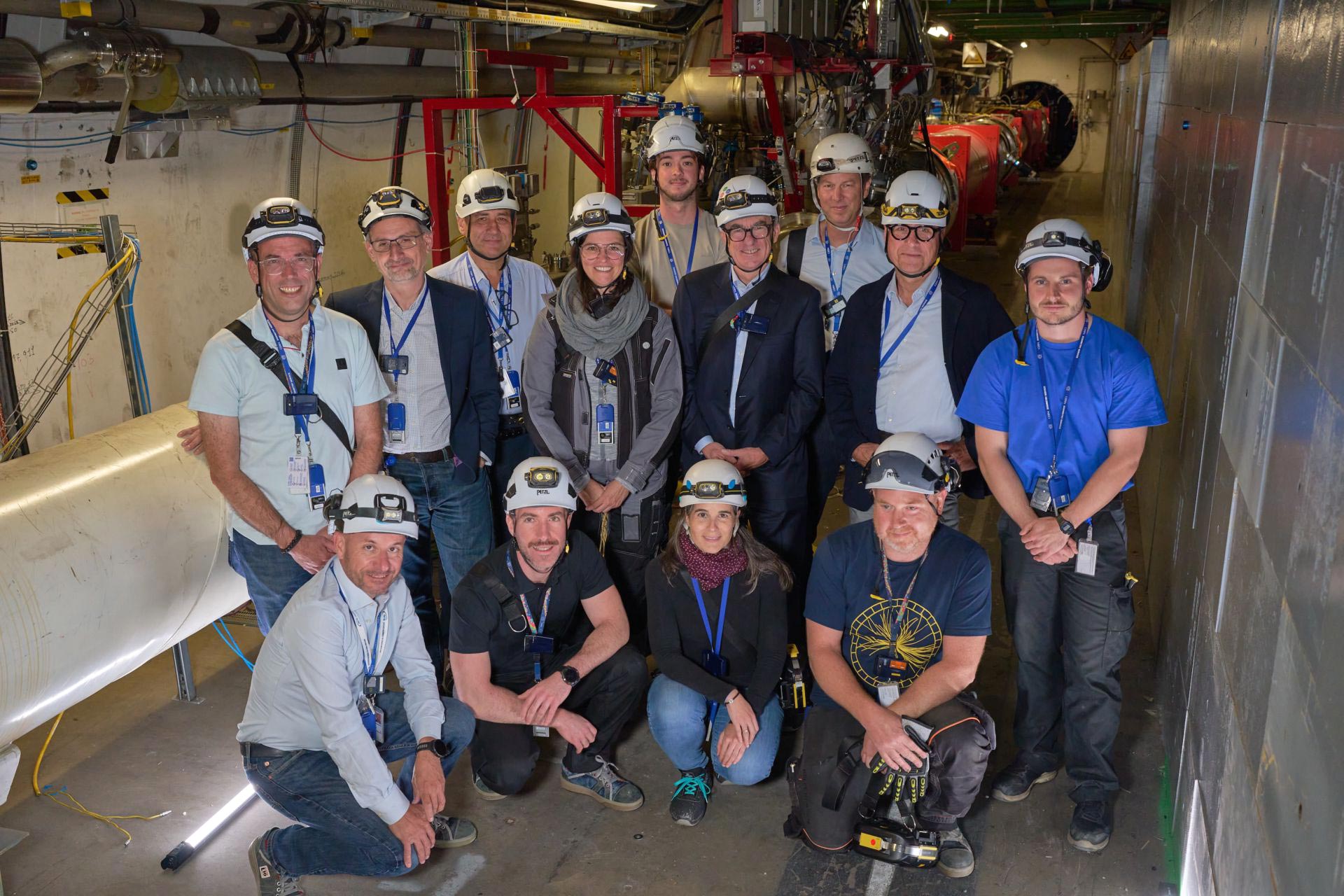
Since early September, the engineering team has gradually dismantled large accelerator components near ATLAS and CMS. The equipment removed this time included 28 superconducting magnets, including the three-pole system in the core involved in the upgrade project.
CERN stated that this upgrade is one of the most complex large-scale modification projects in the history of the Large Hadron Collider. As the dismantling work officially begins, this scientific device that helped mankind discover the Higgs boson will gradually move into a new era of high brightness, providing more powerful experimental capabilities for basic physics research in the next few decades.
Comments