
Abstract:
Meta planned a reorganization plan called "Project OT" (Organizational Transformation) at the beginning of this year, trying to reshape the way the company operates with AI agents and a leaner team. However, after a strong backlash from employees and the actual output of AI tools falling short of expectations, this plan, which may have involved large-scale layoffs, has significantly cooled down, and Meta finally gave up on further arrangements for widespread layoffs.
According to an internal planning document reviewed by Reuters and multiple people familiar with the matter, the core of Project OT is to establish an "AI native" work model: relying more on AI agents to complete tasks and replacing the original organization with smaller teams with fewer people. Internal planning once envisaged reducing the size of some teams by up to 60% through layoffs, hiring freezes and performance-related resignations.
However, Meta later discovered that its AI tools did not bring about the business efficiency improvements expected by management. Internal data shows that the amount of code generated with AI assistance has increased significantly, but the growth rate of new features or improvements that are ultimately launched for users is much lower than the increase in code output.
Meta Chief Technology Officer Andrew Bosworth said in an internal post that the number of code changes to the company's internal software platform and infrastructure increased by 220% year-on-year; however, the number of new features or feature upgrades released to users during the same period only increased by 36%. This gap highlights that the increase in development activities brought about by AI has not been smoothly translated into corresponding product deliverables.
The infrastructure team warned about possible problems caused by the proliferation of AI-generated code as early as March. An internal post stated that the system had shown "reliability warning signs"; another internal information in April pointed out that AI agents lacking sufficient supervision were carrying out "large-scale, destructive operations", and these actions are usually unlikely to be actively performed by humans.
Internal data also shows that the number of major technical and safety incidents increased by 40% year-on-year, and the time employees spent dealing with these incidents increased by 70%. Meta declined to comment to Reuters on the data.
Problems also manifested themselves outside the company. In June this year, hackers exploited a vulnerability in Meta's AI-driven customer support bot to gain access to multiple high-profile Instagram accounts, including the official account of the Obama White House that had stopped updating.
Project OT originated from Meta's attempt to accelerate product development. Last year, Meta product executive Imee Achibon launched a pilot program to form five small technical "pod" teams. Each team consists of two to three engineers and one designer, and works with the help of AI tools. Instead of the traditional six-month planning cycle, the teams were asked to develop prototypes in four-week sprint cycles.
Archibon once used a basketball game as a metaphor in an internal post, saying that using quick counterattacks can bring more and better shooting opportunities; similarly, AI tools can allow teams to explore more ideas at lower costs and with higher fidelity.
Subsequently, Meta released an "AI Native Work Manual" proposing a broader organizational adjustment plan. The traditional positions of engineers and designers will be uniformly replaced by the title of "builder"; the organization will reduce management levels, with small Pod teams reporting directly to senior business leaders, and AI will be involved to help determine work priorities.

By June, at least 11 Meta business units, including engineering and research teams, had adopted the Pod organizational structure. Under the supporting "village-style" management model, senior leaders will manage a group of 30 to 50 employees, while Pod leaders are responsible for daily work but do not have formal management authority.
This model also confuses some employees. An employee who was assigned to be in charge of the Pod team once issued an internal document stating that he had neither received management training nor been able to use performance ratings and management tools. Meta responded that the company has been testing different ways to improve organizational agility and emphasized that performance and promotion decisions are still made by humans, not AI.
Meta also developed an HR tool to identify "irreplaceable talent," including hypothetical "10x performers." People familiar with the matter said that the company originally planned to use part of the money saved from layoffs to provide high salary packages to top AI engineers.
In March this year, outside reports stated that Meta was considering implementing deeper layoffs, which made employees who had not yet learned the complete restructuring plan uneasy. The company's leadership has largely avoided discussing relevant reports with ordinary employees, but has asked senior managers to communicate that employee positions will be "evolved" due to AI. This vague statement further exacerbates employees' concerns that the advancement of automation may be a plan to reduce manpower.
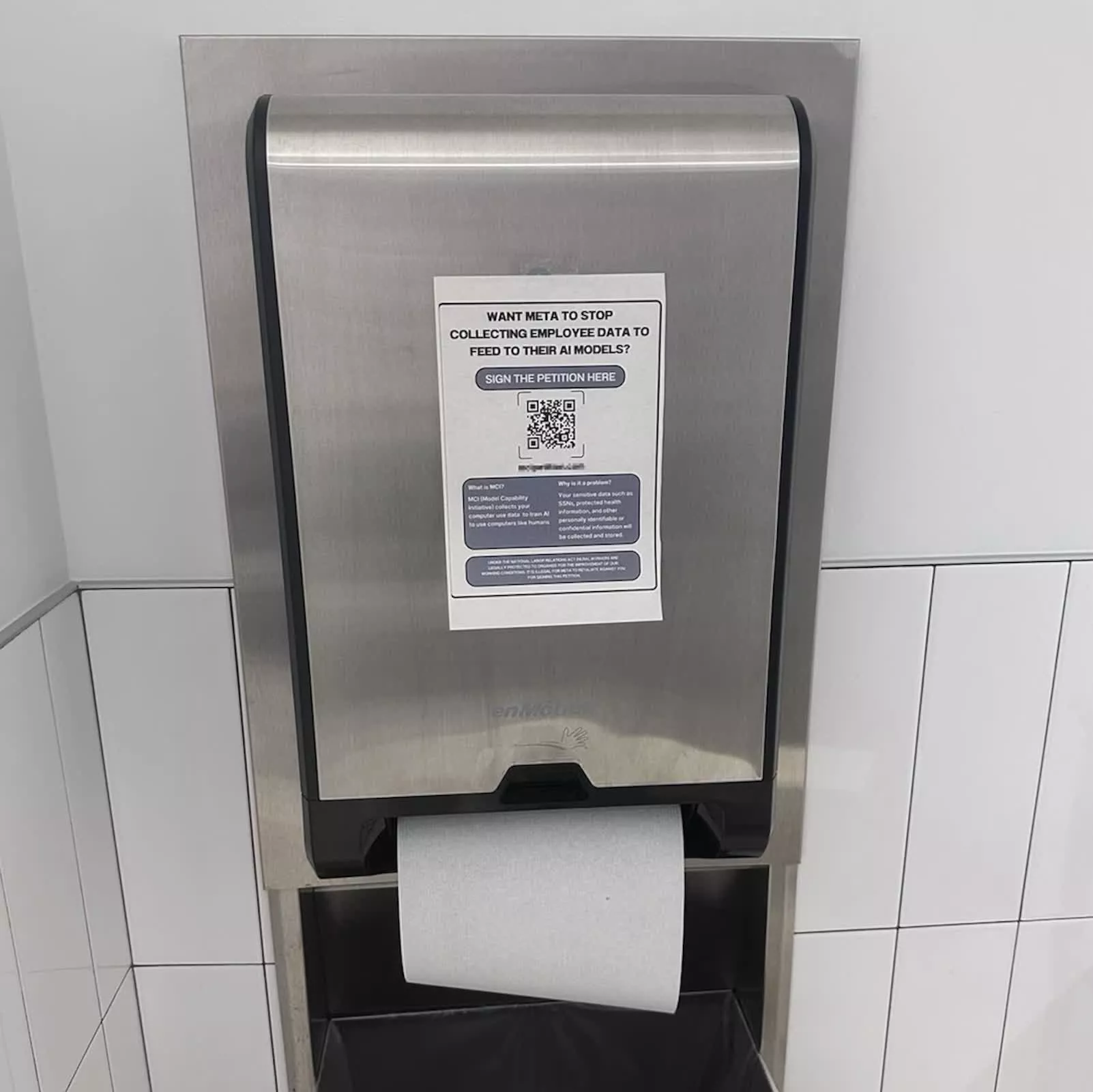
Employees also expressed anger about another arrangement: Meta plans to install tracking software on the devices of American employees to record keyboard input and mouse movements. The relevant data is intended to be used to train AI agents that can operate computers. Many employees worry that they are helping to train systems that may replace their jobs in the future.
Internal forums subsequently filled with criticism, and employee organizing and industrial action began to gain more support. According to Meta's mid-year Pulse survey, employee positive sentiment scores have dropped from 74% to 55%.
Meta also transferred some engineers to the "Applied AI Engineering" department to design software engineering problems for AI training data. The company said data from the unit helped train an AI model released in July. However, some employees criticized internally that this type of work is highly repetitive. By the end of May, the headcount of some engineering teams had been reduced by up to 30% due to internal transfers and layoffs.
Hours before the news of the layoffs was announced on May 20, Zuckerberg met with senior management and called off the second round of restructuring plans originally planned for November. However, Meta still laid off about 10% of its employees the next day.
After the layoffs were completed, Zuckerberg said he "does not anticipate additional company-wide layoffs this year" and said Meta needed to provide more stability for employees. Since then, the company has suspended the mouse tracking project and allowed some employees who were transferred to the AI engineering team to return to their original positions.
In July this year, Zuckerberg admitted that the advancement of AI agents had not "accelerated" as expected. Still, he expects the technology to bring more significant benefits within the next three to six months.
Meta plans to invest at least US$130 billion this year to purchase AI chips and build other infrastructure. As the scale of investment continues to expand, investors are increasingly demanding that Meta prove what actual returns this huge AI expenditure can bring.
Comments