
Abstract:
Tesla CEO Elon Musk updated the memory configuration of the next-generation AI5 chip twice in less than a day. On October 1, he said that in order to ensure the supply and reduce costs required for the mass production of Optimus humanoid robots, Tesla has cut the LPDDR5 memory of AI5 in half from the original plan of 144GB to 72GB, while also cutting the LPDDR6 memory of AI6 by about one-third to 144GB. On October 2, Musk replied on social platforms that Tesla had decided to increase the AI5 memory to 96GB, otherwise the company would become the only manufacturer to use the lowest density memory version of LP5.
This means that the newly disclosed memory capacity of AI5 is reduced by about one-third from the original plan, rather than half of the originally announced; the adjusted capacity currently disclosed by AI6 is still 144GB. Musk said that the memory reduction is to obtain enough chips and memory in a tight supply market to support Optimus' expansion of production and significantly reduce costs. He previously said that the impact of capacity adjustments on robot performance is expected to be "minimal". As of now, these figures come from Musk’s public statements and are not the complete chip specification sheet released by Tesla; the latest statement of 96GB is only for AI5, and there is no news of further adjustments to AI6.
AI5 is Tesla’s next-generation chip for autonomous driving computing and robotics applications. Musk previously said that the chip had been taped out in April this year and made optimistic expectations for its performance. Citing previously disclosed information, Wccftech said that AI5 uses multiple peripheral DRAM modules and is planned to be produced by TSMC and Samsung using a 2-nanometer process. The single-chip version is said to be comparable to NVIDIA's Hopper series, while the dual-chip configuration is compared with Blackwell by Musk. He has also claimed that AI5's performance per watt can be three times that of NVIDIA's products, and its cost is about one-tenth. These are Musk’s expectations or specifications reported in the media, and cannot yet be regarded as mass production performance that has been confirmed by independent benchmark testing. The report also stated that Samsung’s factory in Tyler, Texas, USA has started trial production, and the mass production target of AI5 is 2027.
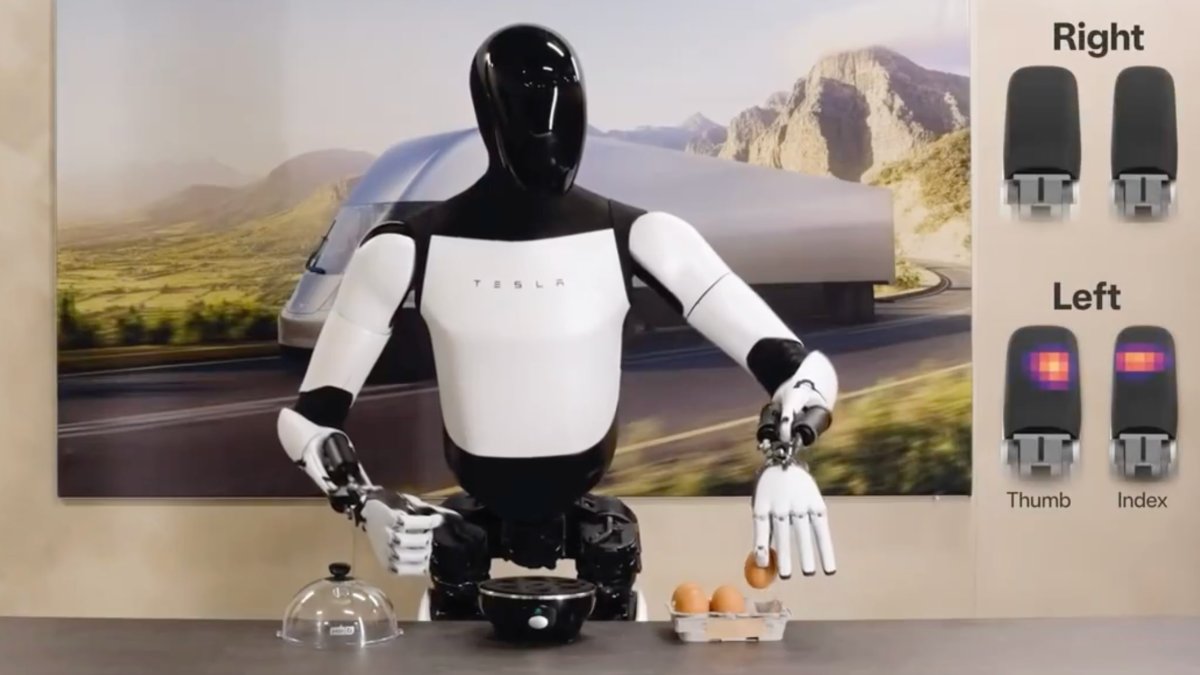
Memory configuration is particularly important for humanoid robots, which need to handle vision, motion planning and other AI reasoning tasks locally. Musk directly tied the adjustment to Optimus production ramping, indicating Tesla is making a trade-off between peak specifications and available supply. The report mentioned that memory manufacturer Micron has estimated that by the end of this decade, a humanoid robot may require about 200GB DRAM and several terabytes of NAND storage; this figure is an industry forecast, not the actual configuration that Optimus has confirmed, and cannot be directly used to judge whether the memory of AI5 is sufficient.
Wccftech also mentioned that when Musk recently talked about AI-assisted programming, he said that only by frequent use of AI programming tools can technology progress be felt in a timely manner, but this experience may also make it difficult for users to explain changes to people who do not often use AI; he later responded briefly on social platforms, "That's true." The report linked this discussion to the so-called "AI psychosis" topic, but this is not directly related to the adjustment of AI5 specifications, nor does it represent Musk's specific endorsement of relevant medical judgments.
Comments