
Abstract:
Engineers from Northwestern University in the United States have developed a new 3D printing technology called "Direct Ink Additive Lithography", referred to as DIAL. This technology combines the speed and precision of stereolithography printing with the material compatibility of extrusion printing. It can quickly manufacture complex three-dimensional objects with fine structures and diverse materials, and is expected to be used in fields such as flexible robots, medical devices, aerospace structures, advanced batteries, and tissue engineering.
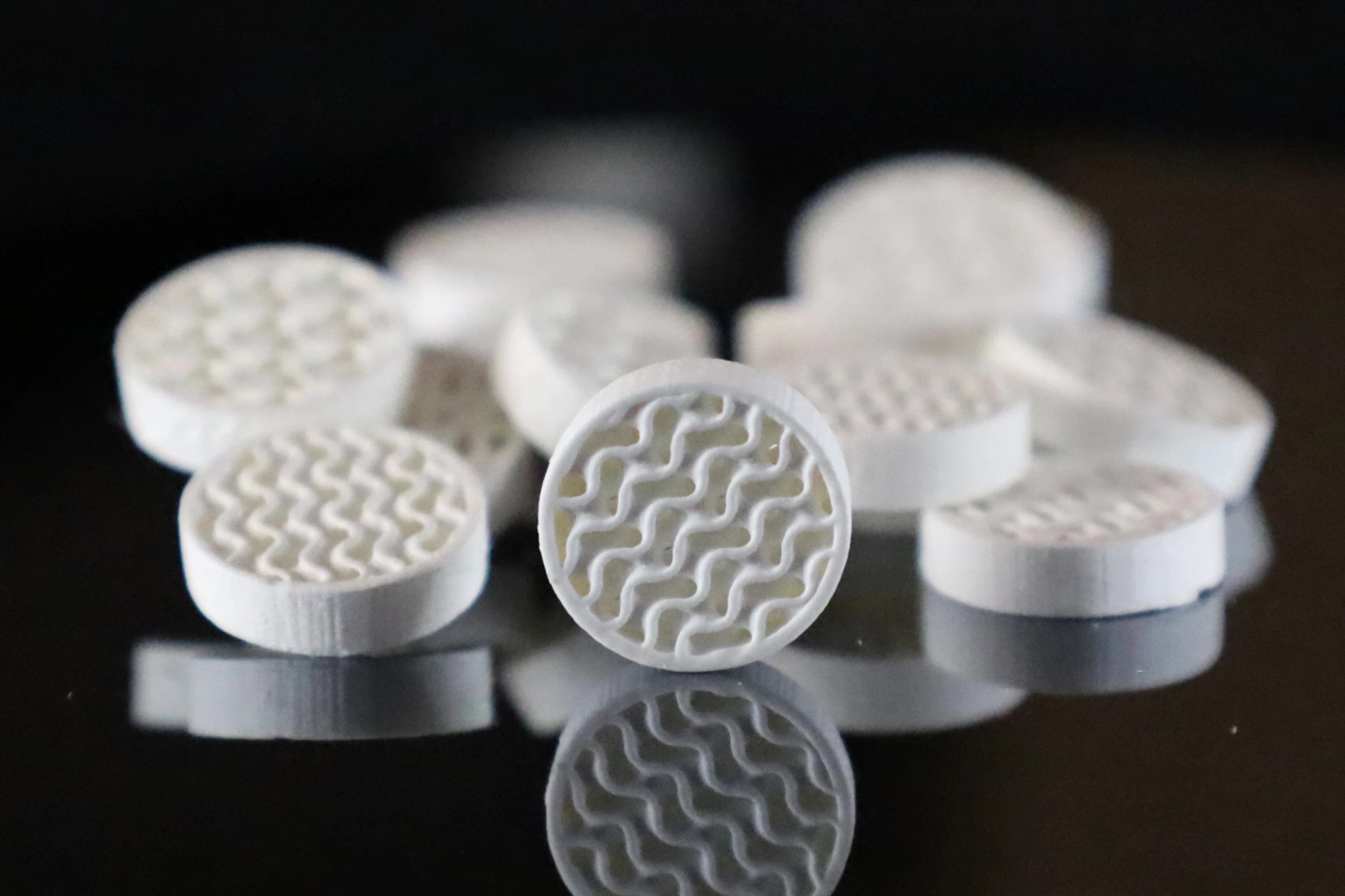
For a long time, the field of 3D printing has been facing the difficulty of achieving both speed, quality and material compatibility. The common direct ink writing technology extrudes materials line by line through nozzles and can handle a variety of viscous or particle-containing functional inks, but the printing speed is slow; to improve detail accuracy, finer nozzles are often required, and the nozzles are more likely to be clogged. Light-curing technologies such as digital light processing use projected patterns to solidify photosensitive resin as a whole, which is faster and more precise. However, it usually can only use resins with good fluidity and easy light transmission, making it difficult to process materials that are sticky, contain particles, or scatter light.
DIAL technology absorbs the advantages of both routes at the same time. It first spreads the paste ink on a flat surface through a slit nozzle, and then uses a scraper to spread it into a uniform film with a thickness of only 50 microns, which is thinner than a human hair. Subsequently, the projector projects a precisely controlled light pattern onto the ink layer, and the illuminated part undergoes a photopolymerization reaction and solidifies, forming a cross-section of the object; the unirradiated ink remains uncured. The printer then lays down a layer of ink, flattens it again and projects a new pattern, and so on until the entire object is formed. Finally, the researchers remove the uncured ink and get the finished product.
Because the projector is able to cure the entire pattern in one go, DIAL eliminates the need to trace every detail line by line like traditional extrusion printing. What's more, its printing accuracy mainly depends on the projector's pixel size and the thickness of each ink layer, rather than the nozzle diameter, so finer structures can be obtained without using extremely fine nozzles.
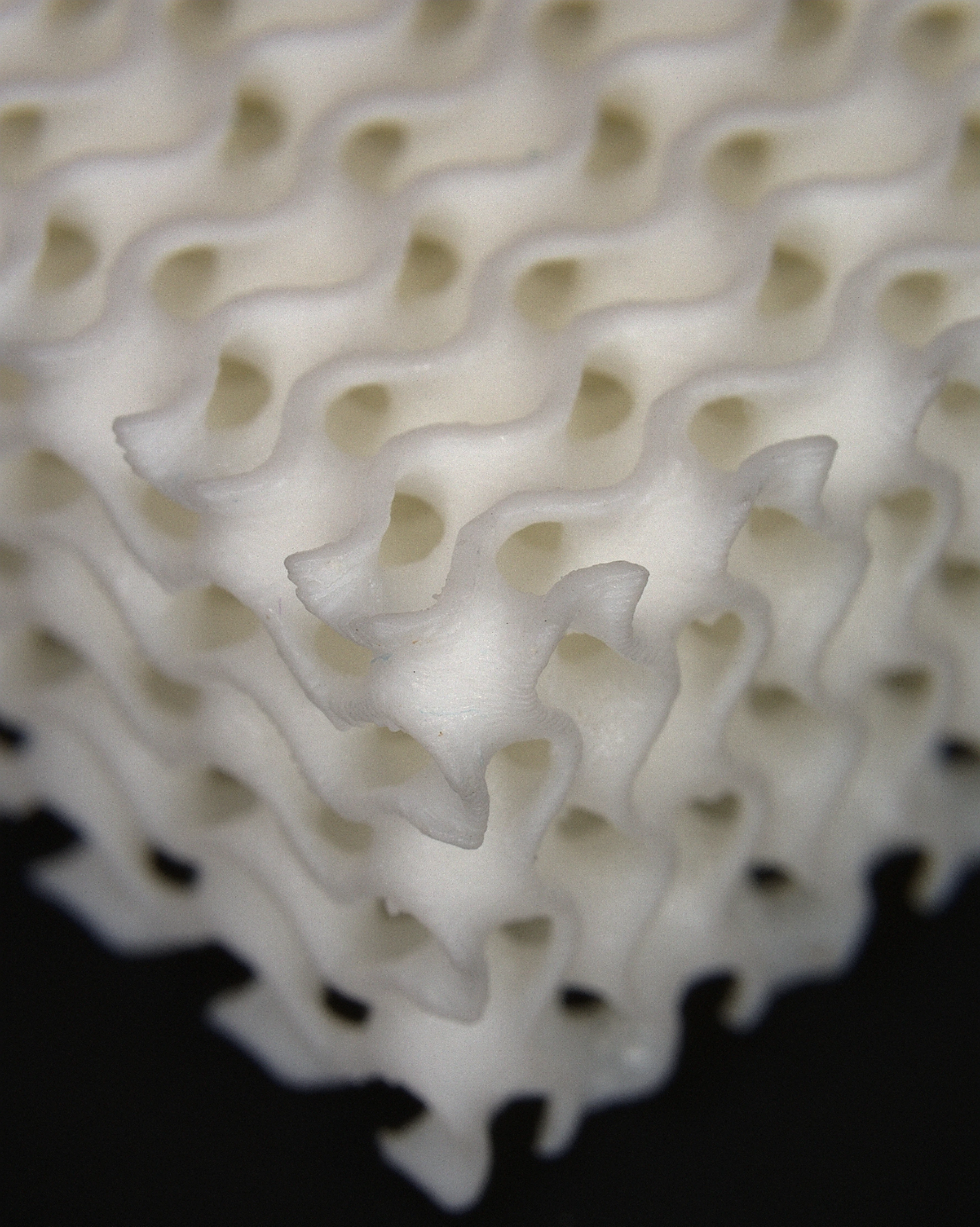
Another key innovation in this technology is the ink itself. When printing overhangs, bridges, or complex internal structures, traditional methods often require additional support material, otherwise fragile parts may collapse. Not only do these supports consume material, they must be removed afterwards, and sometimes even damage the delicate structures that need to be protected. The research team mixed photocurable resin with fumed silica nanoparticles to give the ink "yield stress" properties: the material will not flow until it is subjected to sufficient external force, and it can be flattened into a thin film after the force is applied; after the scraper leaves, it can regain its ability to resist flow and generally maintain its shape.
By adjusting the concentration of silica nanoparticles, researchers can control this property of the ink. Therefore, the uncured ink surrounding the cured structure can act as a temporary support during the subsequent printing process. After printing, the surrounding ink can be rinsed away, and excess material remaining on the printing surface can be collected and reused.
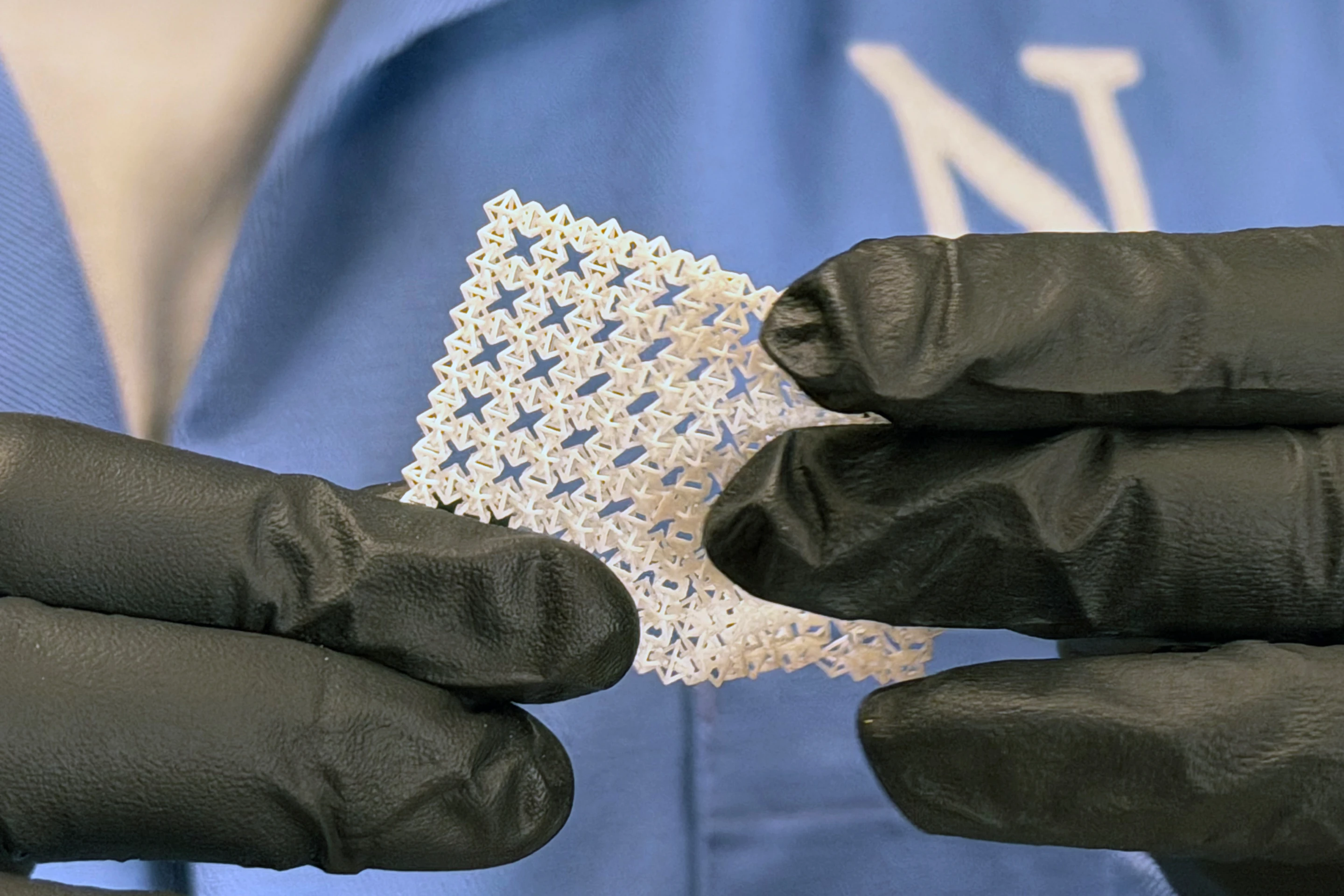
In tests, the research team printed a variety of challenging geometries and compared them with existing technologies. In an experiment on a porous mesh structure, DIAL completed printing in only 30 minutes, while traditional extrusion printing required 124 minutes. The speed was increased by more than four times, and the structure was clearer and had fewer defects. The researchers also produced complex lattice structures with wall thicknesses of just 150 microns, which their conventional extrusion printing equipment cannot replicate. Other demonstrations include fine lattice and interlocking chainmail structures, geometries that are often difficult to fabricate using traditional methods without the use of additional supports.
DIAL also demonstrated the ability to print multiple objects simultaneously and combine different materials in successive layers. In one experiment, the team moved the projector over overlapping layers of ink to print a honeycomb structure that covered an area nearly four times the area illuminated by the projector. Unlike traditional stereolithography, which relies on a tank of liquid resin, DIAL is not container-constrained and therefore may be easier to scale to larger objects.
In terms of functional materials, the researchers developed two additional ink formulations. The first is a structural electrolyte made of polymerizable ionic liquid, a liquid salt capable of conducting ions. Using this recipe, DIAL printed 15 complex porous lattices at once in 15 minutes, each about the size of a small button battery. This precisely designed electrolyte structure is expected to be used in new energy storage devices in the future.
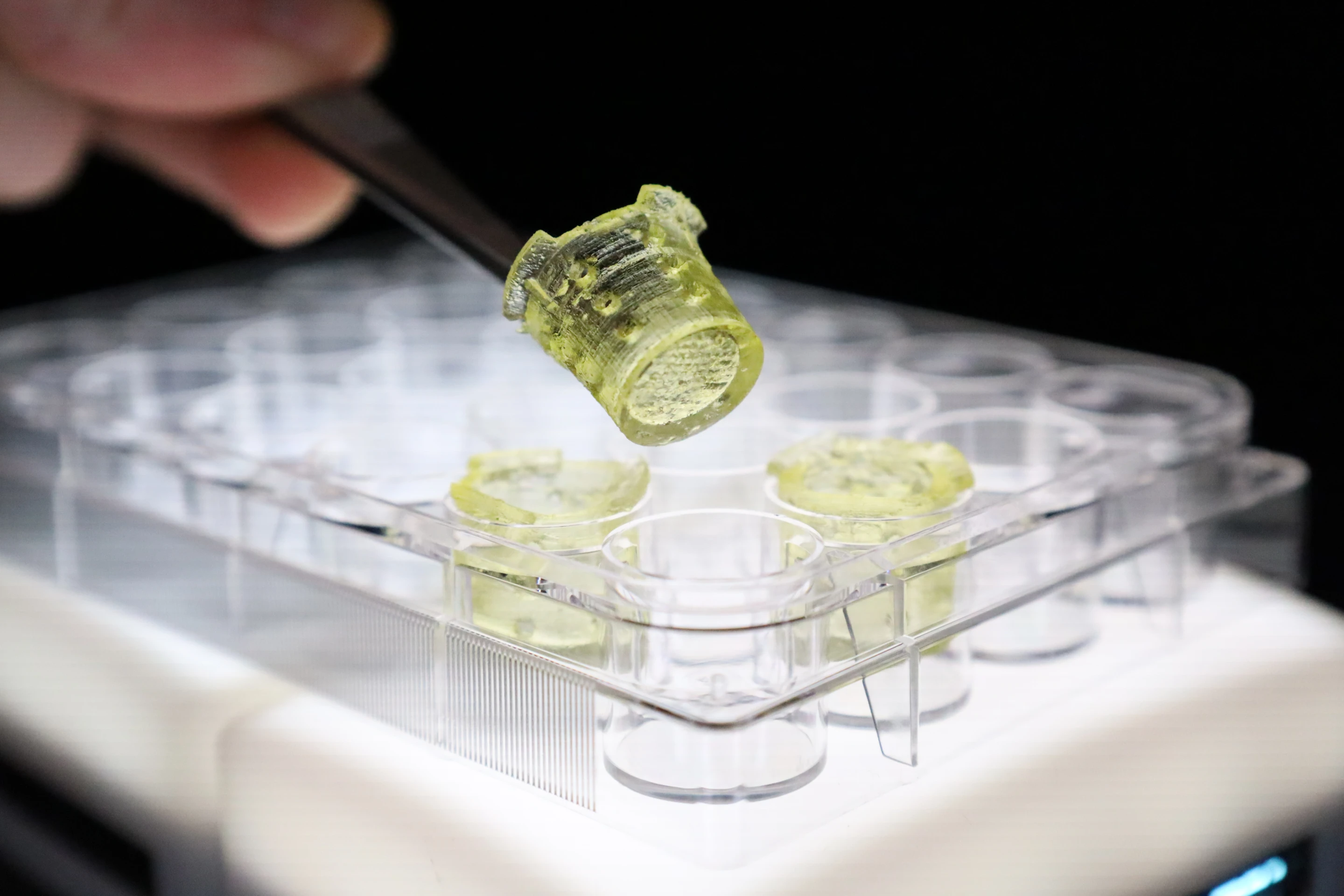
The second formulation is a hydrogel, a soft, water-rich material that can mimic the properties of some biological tissues. The team used it to print tiny containers inspired by lab cell culture plug-ins, which contain surfaces similar to the microscopic inverted pyramids used to grow cells and organoids.
It should be pointed out that the extrusion printing, projection curing and yield stress materials that DIAL relies on are not new technologies. The real breakthrough lies in integrating these elements into a complete manufacturing process. The research team believes that this combination may open up new paths for the manufacture of complex functional materials, covering applications such as flexible robotic components, customized medical devices, lightweight aerospace structures, advanced batteries, and engineered tissue environments.
Currently, DIAL is still in the laboratory stage. The performance of this process in different materials, larger production scales, and harsh industrial applications remains to be further verified. The researchers have demonstrated their manufacturing capabilities but have yet to create a fully functional finished product. The team is working to expand the technology to other materials and structures suitable for different applications.
Ryan Truby, senior author of the study, said that printing this type of material requires not only new software capabilities, new hardware or new inks, but also all three working together. The research team is also continuing to improve the printing system, including optimizing how to switch between different tools. Relevant research papers have been published in the journal Science Advances.
Comments